Most dog care conversations assume a standard schedule — owner leaves at eight, comes back at five, dog spends the day at home or in daycare. For a large portion of Jacksonville’s workforce, that assumption does not apply. Healthcare workers running twelve-hour night shifts, police officers on overnight rotations, hospitality staff covering late service, and military personnel with unpredictable hours all face the same practical gap: their dog needs care during the hours when most pet services are closed and most friends are asleep.
Night time doggy daycare fills that gap. But it is a meaningfully different service from daytime care, and understanding what it actually involves — for your dog and for the carer — helps you decide whether it is the right fit for your situation.
What Night Time Doggy Daycare Actually Involves
The first thing to understand is that night time daycare is not simply daytime care shifted to different hours. The nature of the service is fundamentally different because your dog’s needs at 11 p.m. are not the same as their needs at 11 a.m.
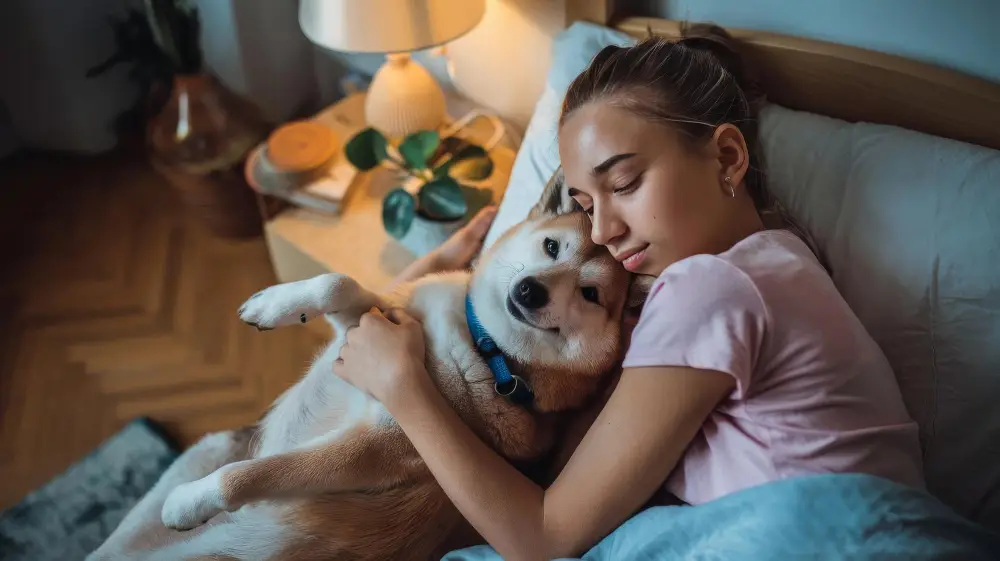
During the day, a dog needs exercise, stimulation, active engagement, and regular outdoor time. At night, the priority shifts entirely — your dog needs to wind down, sleep comfortably, have access to a potty break if they need one, and feel secure in your home without you present. The carer’s role during a night session is less about actively engaging your dog and more about being a calm, reliable presence that allows your dog to sleep normally in their own space.
Daytime Daycare vs Night Time Daycare — Key Differences
| Factor | Daytime Daycare | Night Time Daycare |
| Primary goal | Exercise, stimulation, active engagement | Calm presence, sleep security, potty access |
| Activity level | High — walks, play, enrichment | Low — rest, light interaction, brief outdoor breaks |
| Communication | Regular photo updates during active day | Check-in confirmation + morning handover update |
| Environment | Active home environment during dog’s peak hours | Calm, sleep-ready home environment after 8–9 PM |
| Outdoor time | Structured walks, heat-managed in Jacksonville | Late-night potty break, brief early morning walk |
| Carer presence | Active and engaged throughout session | Present but low-key — sleeping when dog sleeps |
| Best suited for | Working hours, energetic dogs needing output | Shift workers, dogs with nighttime anxiety, puppies |
What a Night Time Daycare Session Looks Like in Practice
A well-structured night time daycare session follows a predictable pattern built around your dog’s normal sleep routine. The carer arrives in time to settle in before your shift begins, handles the evening transition, and is present and available throughout the night without disrupting your dog’s sleep patterns unnecessarily.
| Time | Activity | Notes |
| 6–8 PM | Carer arrival & settling in | Owner departs for shift; carer does a brief orientation walk to help dog transition |
| 8–9 PM | Evening feeding (if applicable) | Meal on owner’s set schedule; calm interaction, no high-stimulation play this late |
| 9–10 PM | Wind-down & last outdoor break | Short potty walk before bedtime — kept brief and calm, no vigorous activity |
| 10 PM–5 AM | Overnight rest period | Carer sleeps; dog settles in their usual spot; carer responds if dog needs attention |
| 5–6 AM | Morning potty break | Brief early walk before heat builds; essential for dogs that cannot wait until owner returns |
| Handover | Owner return or morning update | Carer confirms overnight summary: how dog slept, appetite, any notable behavior |
The goal of every element in a night session is consistency with what your dog already does. The carer follows your dog’s established bedtime routine as closely as possible — same feeding time if applicable, same last walk timing, same sleeping area. Dogs that thrive with nighttime care tend to be ones whose owners have communicated this routine clearly before the arrangement starts.
| A good nighttime carer does not try to interact extensively with your dog once the wind-down period begins. The most reassuring thing for most dogs at night is not active company — it is knowing someone is present in the house and that the night will proceed as it normally does. |
Why This Matters Specifically in Jacksonville
Jacksonville is home to one of the largest naval stations in the United States, a significant healthcare sector anchored by major hospital systems, a busy international airport, a large hospitality and service industry, and a substantial law enforcement and emergency services workforce. All of these industries run around the clock, and the people who staff them at night face the same challenge: standard pet care services do not operate when their workday does.
Healthcare workers
Twelve-hour night shifts — typically running from 7 p.m. to 7 a.m. — are standard across Jacksonville’s hospital and clinic network. A nurse finishing a night shift at 7 a.m. has been away from home since early evening the previous day. For a dog that cannot reliably hold their bladder for twelve-plus hours, and for owners who cannot ask a neighbor to let the dog out at 3 a.m. on a Tuesday, nighttime daycare is not a convenience — it is the functional solution.
Military families
Personnel stationed at Naval Station Mayport and Naval Air Station Jacksonville frequently face duty assignments, watch schedules, and deployment-related absences that do not conform to any civilian care provider’s standard hours. Families in these situations often find themselves needing care arrangements that are flexible, reliable, and available on schedules that change week to week. Nighttime daycare that can adapt to a rotating duty roster fills a gap that most standard pet services cannot.
Hospitality and service industry workers
Restaurants, hotels, event venues, and the broader service economy in Jacksonville employ a significant number of workers whose shifts begin in mid-afternoon and run to midnight or beyond. A dog left home from 2 p.m. until after midnight is not in daycare territory — that is a ten-plus hour gap that falls almost entirely during the hours most care services do not cover.
Is Night Time Daycare Right for Your Dog?
Not every dog needs or benefits from a dedicated nighttime care arrangement. The answer depends on your dog’s specific temperament, their bladder reliability, and how they handle your absence at night.
Dogs that handle nighttime care well
Dogs that are generally settled and calm in the evenings, sleep through the night reliably when their owner is home, and do not show significant distress when left in a familiar environment tend to adapt well to nighttime care. For these dogs, the carer’s presence adds comfort and ensures potty access — they are not managing active distress, just filling the gap your absence creates.
Adult dogs with good bladder control who are accustomed to sleeping independently are typically the easiest nighttime care candidates. Older, calmer breeds that naturally wind down early in the evening and sleep solidly often barely notice the difference between their owner being home and a quiet, familiar carer being present.
Dogs that need extra consideration for night care
Puppies with limited bladder control need more active overnight attention — potty breaks at intervals rather than a single late-night outing and an early morning walk. This requires a carer who is genuinely prepared to wake up mid-night if needed, not just one who is present in the house and otherwise unavailable. Make sure this expectation is clearly established before any booking is confirmed.
Dogs with sound sensitivity — those that startle at night noises like traffic, distant thunder, or a neighbor coming home late — may need additional reassurance during nighttime sessions. A carer who knows about this in advance can position themselves close enough to respond quickly without the dog escalating from mild alertness into genuine distress.
| If your dog has never spent a night without you, the first nighttime care session is not the night before a twelve-hour shift. Do a trial run on an evening when you are accessible — stay nearby or overnight at a friend’s — so any issues can be addressed before you are fully unavailable. A single trial night tells you a great deal about how your dog handles the arrangement. |
Night Time Daycare vs Overnight Pet Sitting: The Difference
These two services overlap significantly but are not identical, and the distinction matters when you are choosing what to book.
Overnight pet sitting typically refers to a sitter staying at your home for the full night — arriving in the evening, sleeping over, and leaving after the morning routine is handled. The focus is on the dog having company overnight and not being left alone. Night time daycare is the same arrangement, but framed specifically around a shift worker’s schedule — the session aligns with your working hours rather than a generic overnight window.
The practical difference is in how the arrangement is structured and communicated. A nighttime daycare booking is built around your shift times, includes an explicit handover at the start and end of your working window, and is typically recurring rather than occasional. It is designed to be a repeating professional arrangement rather than a one-off solution.
| If you work night shifts more than occasionally, a recurring nighttime daycare arrangement with a consistent carer produces better outcomes than booking overnight sitting on an ad hoc basis each time. Consistency matters for your dog, and a carer who knows your home and your dog’s routine handles the night more smoothly than someone new every time. |
How to Set Up Night Time Daycare Successfully
Share the full nighttime routine
Your carer needs to know what your dog’s evening looks like in detail — not just feeding and potty times, but how your dog signals they need to go out at night, where they sleep, what they react to, and what your typical bedtime routine involves. A carer replicating your routine as closely as possible produces a far smoother night than one improvising around general pet care principles.
Do a trial before a critical night
As noted above, a brief trial run before your first full shift-night confirms that the arrangement works before it needs to work. An evening where you are reachable, even if not home, gives you the chance to course-correct anything that comes up rather than troubleshooting at 3 a.m. before a twelve-hour shift.
Set clear communication expectations
Establish upfront what communication during the night looks like. Most owners do not want to be texted at 2 a.m. unless something is wrong, and most carers understand this. What you want to know is that everything is fine without being woken up to hear it. A brief confirmation text when the carer arrives and a morning summary message covering how the night went is the standard that most professional nighttime carers work to.
The Right Fit for the Right Schedule
Night time doggy daycare exists because a significant portion of Jacksonville’s workforce operates outside the hours that standard pet care services cover. For shift workers, healthcare professionals, military families, and anyone else whose work runs through the night, it is not an unusual request — it is the arrangement that makes responsible dog ownership compatible with a non-standard career.
Whether it is right for your dog comes down to temperament, bladder reliability, and how well they settle without you. Most adult dogs with a stable routine and a calm carer who knows the household handle nighttime care without significant difficulty. The arrangement that works is one built on clear communication, a genuine trial before the stakes are high, and a carer who understands that nighttime care is quieter, lower-key work — not just daytime care in the dark.