If you’ve got a dog who loses his mind the second you pick up a suitcase, you already know the drill. Boarding facilities stress him out. Friends can’t always commit to staying over. Kennels feel cold and clinical. And every time you travel, you spend the whole trip worrying about whether your dog is eating, sleeping, or just pacing in a crate somewhere wondering where you went.
For anxious dogs, overnight pet care at home is almost always the better choice. Not sometimes. Not usually. Almost always. Here’s why.
Anxious Dogs Struggle With New Environments
Dogs with anxiety build their sense of safety around routines and familiar spaces. They know which corner of the couch is theirs. They know the sound of the AC kicking on. They know what the mailman’s footsteps sound like and which neighbor’s dog they can bark at through the window.
Take all that away and drop them into a boarding facility, and you’ve stripped out every single thing that helps them feel okay. Now they’re surrounded by strange dogs, strange people, strange smells, and strange noises, all at once. Even dogs who seem okay at first often start showing stress signals by day two or three.
What Stress Actually Does to Your Dog
Short-term stress in dogs isn’t just emotional. It shows up physically:
- Appetite loss (some dogs won’t eat for days in boarding)
- Stomach upset and diarrhea
- Excessive panting and drooling
- Pacing and circling
- Sleep disruption
- Compulsive licking or chewing
Chronic or repeated stress from boarding stays can actually shift a dog’s baseline anxiety higher over time. That means each trip gets harder, not easier.
Why Home-Based Overnight Care Works Differently
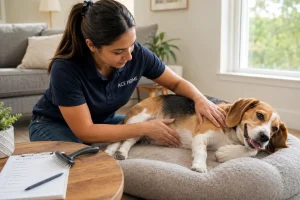
When a pet sitter comes to your home and stays overnight, your dog never leaves his territory. His bed, his bowls, his smells, his yard, his view out the window, all of it stays the same. The only new variable is a person who’s there to feed him, walk him, and keep him company.
That single change is way easier for an anxious dog to process than a complete environment swap.
Routines Stay Intact
A good overnight sitter follows your dog’s existing schedule. Morning walk at 6:30? Done. Breakfast at 7? Done. Mid-afternoon backyard break? Done. Evening cuddle on the couch during whatever show you usually watch? Also done.
Boarding facilities can’t replicate this. They run on their own schedule because they have to, with feedings happening in batches and walks scheduled around staff availability. Your dog eats when it’s his turn, not when he’s used to eating.
Medication & Health Management Is Simpler
Anxious dogs are often on medications: SSRIs, situational anti-anxiety meds, thyroid support, joint supplements, you name it. At home, a sitter can give meds exactly when you normally would, with the same food, in the same spot. No confusion, no missed doses because the facility got busy, no accidental double-dosing.
This matters even more for seniors and dogs with chronic conditions. The consistency keeps them stable.
The Social & Emotional Side
Dogs with separation anxiety don’t just miss you. They miss having someone around, period. An empty house at night is worse for them than a house with any friendly human in it.
Overnight sitters fill that gap. Your dog gets to:
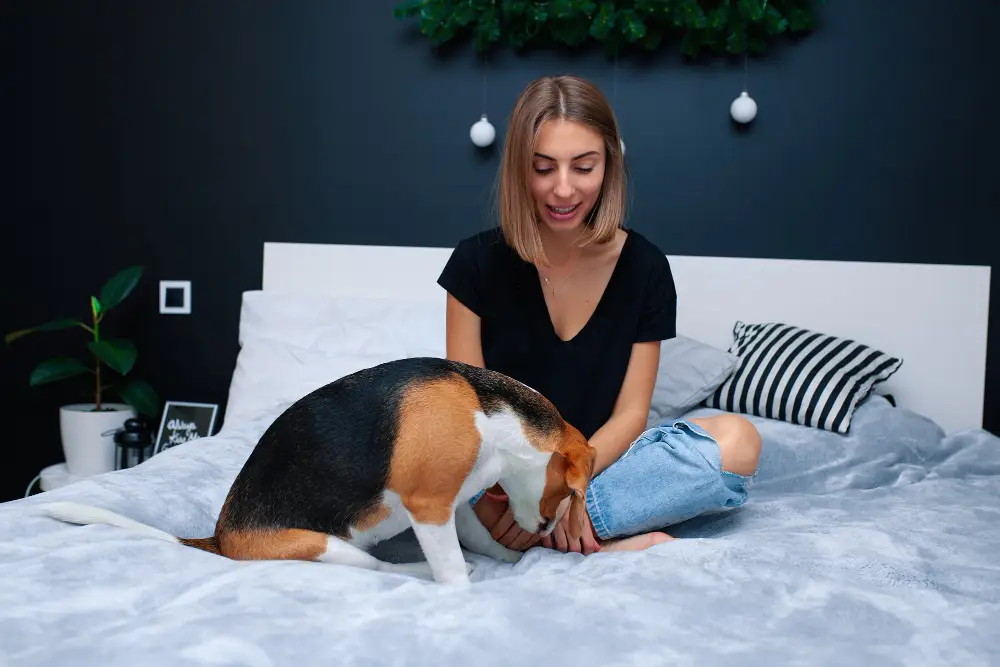
- Sleep in his normal spot with someone in the house
- Get late-night bathroom breaks without waiting until morning
- Have someone there during thunderstorms or fireworks
- Enjoy morning greetings and evening wind-downs
- Skip the loneliness that triggers destructive behavior
For dogs who panic when left alone, this is the single biggest difference.
No Exposure to Other Dogs’ Stress
Boarding kennels are loud. Really loud. Dogs bark in waves, and that sound carries and keeps going. An anxious dog in a kennel is picking up on every other stressed dog’s signals, which amplifies his own anxiety. You drop off one worried dog and pick up a much more worried dog.
At home, there’s none of that. Your dog stays in his quiet space, and his nervous system gets the rest it needs.
What to Look for in an Overnight Sitter
Not every sitter is equipped to handle anxious dogs. When you’re interviewing someone, ask about:
- Experience with anxiety behaviors specifically
- Willingness to follow your exact routine without shortcuts
- Comfort with administering medications
- How they handle thunderstorms, fireworks, or unexpected triggers
- Whether they’ll send daily photo and video updates
A sitter who shows up, follows your written instructions, and treats your dog like their own is worth their weight in gold. One who improvises or rushes through visits is going to make your anxious dog worse.
The Meet-&-Greet Matters
Always do a meet-and-greet before booking. Watch how your dog reacts to the sitter. Dogs read people fast, and if your pup is wary or uncomfortable, that’s information. A good sitter will get down on the floor, let your dog approach on his own terms, and not force interaction.
Coming Home to a Calm Dog
The best part of home-based overnight care shows up when you get back. Instead of picking up a wired, exhausted, stomach-upset dog from a facility, you walk through your door and find your pup basically the same as when you left. Calm. Fed. Well-rested. Maybe a little extra excited to see you, but not traumatized.
For anxious dogs, that kind of continuity isn’t a luxury. It’s the difference between travel being manageable and travel being something you dread.