If you love cats but sneeze, itch, or wheeze around them, you’ve probably searched for a hypoallergenic cat. Here’s the honest truth up front: no cat is 100% hypoallergenic. But some breeds produce less of the protein that triggers allergies, or shed less of it around your home, which can make a real difference for many allergy sufferers.
This guide explains what actually causes cat allergies, lists 12 of the most allergy-friendly cat breeds, and shares practical tips to cut down on allergens no matter which cat you bring home. As an in-home pet care service in Jacksonville, we care for cats of every breed, see our Jacksonville cat care guide.
Are there really hypoallergenic cats?
Saliva Protein Reducers
Some breeds naturally synthesize significantly lower levels of the Fel d 1 protein in their saliva and skin glands.
Low-Shedding & Curly Coats
Breeds with tight curls or single coats trap dead hair and dander closer to the body rather than floating it into the air.
Hairless Varieties
Hairless cats have zero fur to scatter allergens around, although they still produce proteins and need skin oil wipes.
What causes cat allergies?
Cat allergies come from the immune system reacting to Fel d 1 in a cat’s saliva and skin secretions. It isn’t the hair length that matters most, it’s how much of this protein the cat produces and how much dander it spreads. That’s why some long-haired cats are surprisingly tolerable, while a short-haired cat might still set off symptoms.
12 of the best hypoallergenic (lower allergen) cat breeds
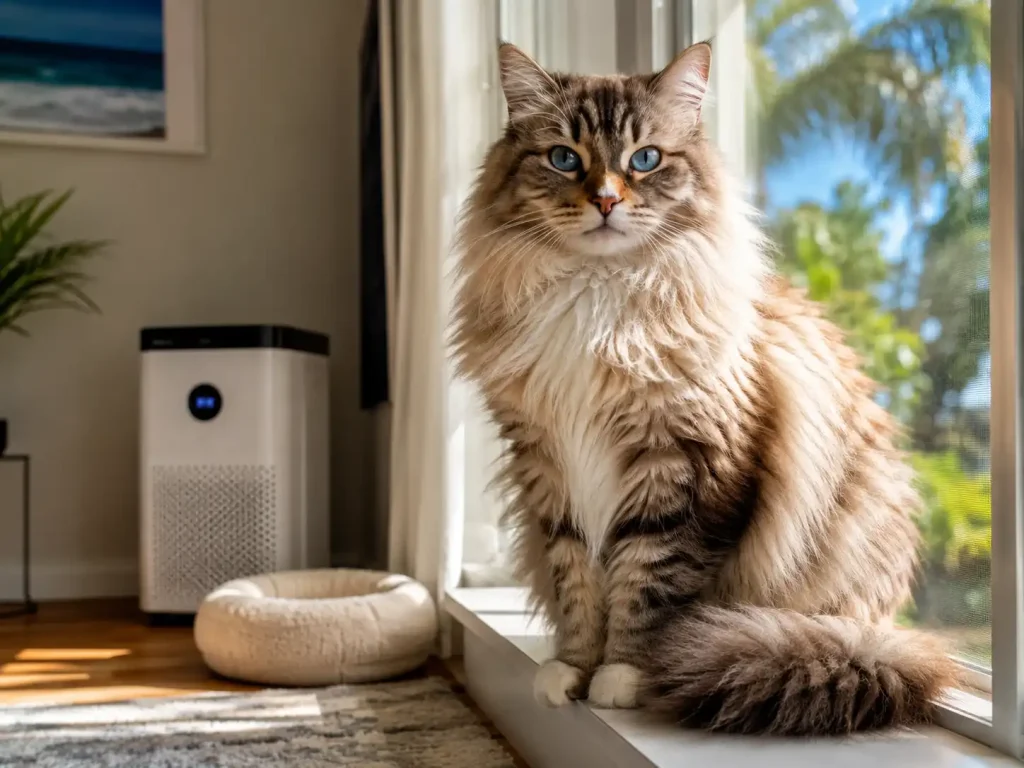
- Siberian. Despite a thick, long coat, Siberians are often reported to produce lower levels of Fel d 1, making them a favorite among allergy sufferers. They’re affectionate, playful, and dog-like in their loyalty.
- Balinese. Sometimes called the “long-haired Siamese,” the Balinese is also said to produce less Fel d 1. Smart, talkative, and people-oriented.
- Russian Blue. This plush, silver-blue cat tends to produce less Fel d 1, and its dense coat may hold dander closer to the body. Gentle, quiet, and a bit reserved with strangers.
- Bengal. Bengals have a short, sleek, pelt-like coat that sheds little and needs minimal grooming, so less allergen gets spread around. Active, curious, and strikingly wild-looking.
- Cornish Rex. With a short, soft, curly coat and very little shedding, the Cornish Rex spreads less dander. Playful, social, and famously people-loving.
- Devon Rex. Another curly-coated charmer with fine, sparse hair and low shedding. Mischievous, affectionate, and often described as “pixie-like.”
- Sphynx. The hairless Sphynx has no fur to trap and fling dander, but it still produces Fel d 1, and needs regular bathing to remove skin oils. Outgoing, warm, and devoted to their people.
- Oriental Shorthair. A short, fine, low-shedding coat means less allergen spread. Sleek, vocal, and deeply bonded to their humans.
- Siamese. The classic Siamese has a short coat that sheds relatively little. Famously chatty, social, and affectionate.
- Javanese. With a fine single coat and no dense undercoat, the Javanese sheds little. Intelligent, athletic, and talkative.
- Colorpoint Shorthair. A close Siamese relative with a short, low-maintenance coat and a loving, people-focused personality.
- LaPerm. Known for a distinctive curly coat that tends to shed less, the LaPerm is gentle, curious, and affectionate.
Remember: “lower-allergen” isn’t “allergen-free.” Always meet and spend time with an individual cat first to see how you react.
Tips to reduce cat allergens at home
Whatever breed you choose, these steps help keep symptoms down:
- Groom and bathe your cat regularly to remove dander (and keep up with brushing).
- Spay or neuter, neutered cats, and females, generally produce less Fel d 1.
- Use a HEPA air purifier and vacuum often with a HEPA filter.
- Keep the cat out of your bedroom and off your pillow.
- Wash your hands after petting, and wash cat bedding frequently.
- Talk to an allergist about antihistamines, nasal sprays, or allergy immunotherapy (shots).
A quick note on hypoallergenic cat food
If you searched “hypoallergenic cat food,” that’s a different topic, it refers to special diets for cats with food sensitivities, not food that makes your cat less allergenic to you. The two aren’t related, so don’t expect a special food to ease your own allergies.
Thinking of adopting?
Plenty of lower-allergen breeds, and wonderful mixed-breed cats, are waiting in shelters and rescues. Before you commit, spend time with the specific cat to gauge your reaction, and set up your home with the allergen-reducing habits above. If you’d like trusted, gentle care for your new cat while you’re away, our professional cat sitting in Jacksonville is here to help.
Frequently asked questions
Do hypoallergenic cats really exist? Not in the sense of being allergen-free, no cat is 100% hypoallergenic. But some breeds produce less of the Fel d 1 protein that triggers allergies, or shed less dander, which makes them easier for many allergy sufferers to live with.
What is the most hypoallergenic cat? There’s no single winner, but breeds often named among the most allergy-friendly include the Siberian, Balinese, Russian Blue, and the Rex breeds (Cornish and Devon). Individual cats vary, so meet one before deciding.
Are hypoallergenic cats non-shedding? Many lower-allergen breeds shed less (and the Sphynx is hairless), which reduces how much dander spreads, but shedding isn’t the whole story. The key allergen, Fel d 1, comes from saliva and skin, not the hair itself.
Why do some long-haired cats like the Siberian cause fewer allergies? Because allergies are driven by the Fel d 1 protein, not hair length. Siberians are often reported to produce less of this protein, so despite their long coat, many allergy sufferers tolerate them well.
How can I reduce cat allergies at home? Groom and bathe your cat, keep them out of your bedroom, use a HEPA air purifier, vacuum and wash bedding often, wash your hands after petting, and ask an allergist about medication or immunotherapy.
Is “hypoallergenic cat food” the same thing? No. Hypoallergenic cat food is a special diet for cats with food sensitivities, it has nothing to do with reducing your own allergy to the cat.