Finding a new lump on your dog can send your mind straight to the worst-case scenario. Take a breath: lumps and bumps are very common, especially as dogs get older, and many of them are completely harmless. But here’s the honest truth that every owner should know, you genuinely cannot tell whether a lump is harmless or serious just by looking at or feeling it. That’s why any new lump is worth a vet check.
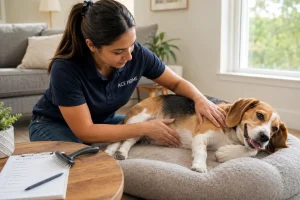
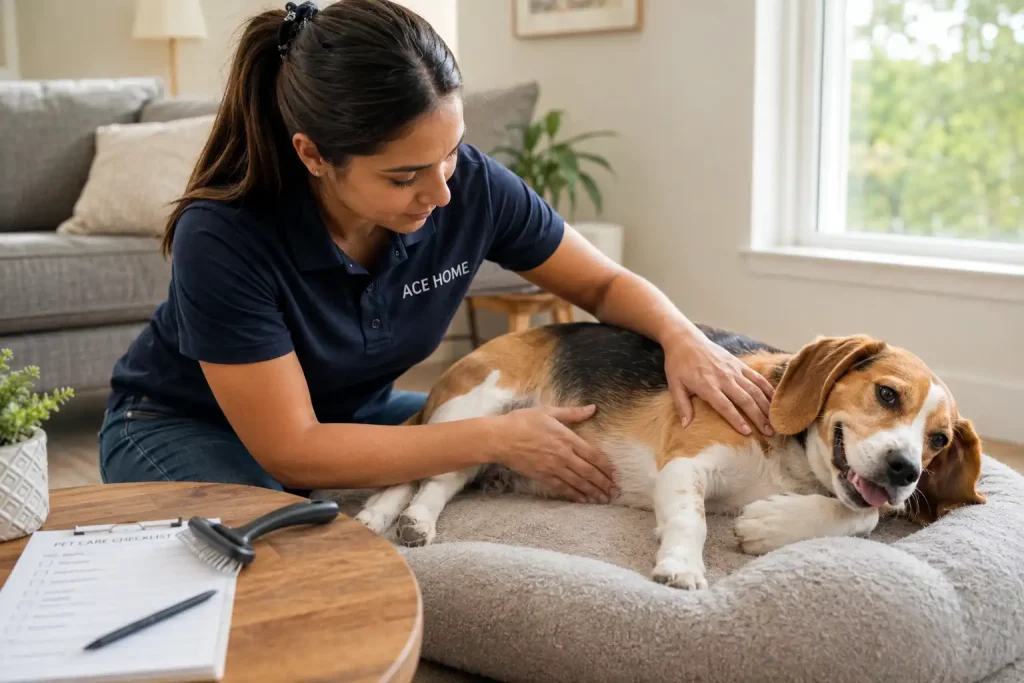
This guide explains the common types of lumps, how to tell which ones need urgent attention, what the “is it cancer?” question really comes down to, and what to do when you find one. As an in-home pet care service in Jacksonville, noticing a new bump during everyday handling is one of the quiet ways daily care helps.
Is my dog’s lump cancer?
This is the question on everyone’s mind, and the most important thing to understand is this: you can’t diagnose a lump by sight or touch. A soft, squishy lump is often a harmless fatty mass, but some cancers (mast cell tumors in particular) can feel soft, small, or unremarkable and still be serious. Likewise, plenty of firm lumps turn out to be benign.
The only way to know is for your vet to sample the lump, usually with a quick, simple fine needle aspirate (FNA), where a few cells are drawn out with a needle and examined under a microscope, or sometimes a biopsy. The reassuring part: many lumps are benign, and even many that aren’t are very treatable when caught early. The unhelpful part is guessing at home, so don’t lose sleep, but do get it checked.
Common types of lumps and bumps
| 🔬 Lump Type | 📋 What it is like | 🛡️ Clinical Concern Level |
|---|---|---|
| Lipoma (Fatty Tumor) | Soft, movable, directly under the skin; highly common in older or overweight dogs. | Usually benign; monitor changes. |
| Sebaceous Cyst | A blocked oil gland; can fill, rupture, discharge cheesy fluid, and refill. | Usually benign. |
| Wart (Papilloma) | Cauliflower-like growths, often around the muzzle in younger dogs (viral origin). | Usually benign. |
| Skin Tag | Small, soft, fibrous stalks extending outward from the skin surface. | Benign. |
| Histiocytoma | Fast-growing, raised red “button-like” sore; typically seen in dogs under 3 years. | Benign, often regresses naturally. |
| Abscess | Warm, painful swelling that may ooze pus, typically from a bite or puncture wound. | Requires active treatment and drainage. |
| Swollen Lymph Node | Firm swelling under the jaw, neck, armpits, groin, or behind the knees. | Needs urgent clinical diagnostics. |
| Mast Cell Tumor (MCT) | “The Great Pretender.” Can feel soft, firm, small, or inflamed. Can mimic anything. | Can be cancerous; FNA required. |
| Other Malignant Tumors | Melanoma, soft-tissue sarcoma, osteosarcoma, or mammary gland tumors. | Can be cancerous; requires biopsy. |
Because that bottom group can mimic the harmless ones, a vet sample is the only reliable way to tell them apart.
What does the lump feel like?
Texture offers clues (not a diagnosis):
- Soft and movable, under the skin: often a fatty lump (lipoma), but still worth confirming.
- Squishy or fluid-filled: could be a cyst or abscess.
- Hard, firm, or fixed in place (won’t move): more concerning and should be checked promptly.
- Red and inflamed: could be a histiocytoma, an infection, or an irritated spot.
- Dark or black, or changing color: worth a prompt look, as some pigmented growths need evaluation.
Remember the theme: feel is a hint, not an answer.
Red flags, when to worry
Have a lump checked sooner rather than later if it:
🚨 WARNING: When a Lump Demands Immediate Clinical Testing
Never ignore or wait out any lump that feels hard, is firmly fixed to the underlying muscle, grows rapidly over a couple of weeks, or begins bleeding and oozing. Cancers like Mast Cell Tumors can pretend to be soft and harmless, making immediate Fine Needle Aspirate (FNA) cell tests under a microscope the only reliable way to rule out malignancy.
Any of these warrant a prompt vet visit. Even without them, a brand-new lump deserves a check.
Where lumps show up
Lumps can appear anywhere, on the chest, back, legs, neck, belly, paws, head, or tail. Location can be a small clue (a firm swelling under the jaw or neck may be a lymph node; lumps near the mammary chain in an unspayed female need prompt attention), but wherever it is, the approach is the same: note it and have it checked.
What to do if you find a lump
- Don’t squeeze, pop, or pick at it, that can cause pain, infection, or spread irritation.
- Note the details. Measure it, note the exact location, and write down the date, so you can track any change. A photo helps.
- Watch for red flags (above) while you arrange a visit.
- See your vet. For a new lump, a quick FNA often gives answers the same day. If your dog has many lumps, your vet can map and monitor them.
How vets diagnose and treat lumps
Your vet will examine the lump and usually do a fine needle aspirate or biopsy to identify the cells. Benign, stable lumps (like many lipomas) are often simply monitored. Lumps that are growing, bothering your dog, or found to be cancerous are typically removed, and early removal usually means a simpler procedure and a better outcome.
Senior dogs and young dogs
Older dogs develop more lumps, most are benign lipomas, but because the risk of tumors also rises with age, new lumps in seniors should always be checked; see our senior dog care guide. Young dogs more often get warts (papillomas) and histiocytomas, which are usually benign, though still worth confirming.
A quick Jacksonville note
Frequently asked questions
Is my dog’s lump cancer? You can’t tell from looking or feeling, harmless and serious lumps can feel similar. The only reliable way to know is a vet’s fine needle aspirate or biopsy. Many lumps are benign, but any new one should be checked.
My dog has a hard, immovable lump, should I worry? A lump that’s hard and fixed in place is more concerning than a soft, movable one and should be checked promptly. That said, texture alone isn’t a diagnosis, your vet will need to sample it.
What is a fatty lump on a dog? A fatty lump (lipoma) is a soft, movable mass under the skin, common in older and heavier dogs, and usually benign. It should still be confirmed by your vet, since other lumps can feel similar.
My dog has a soft, squishy lump, is it dangerous? Soft, squishy lumps are often fatty masses or cysts, but a few serious lumps can also feel soft, so it’s best to have your vet sample it to be sure.
When should I worry about a lump on my dog? See your vet promptly if a lump is growing fast, changing, hard or fixed, ulcerated or bleeding, painful, near lymph nodes, or if your dog seems unwell. Any new lump deserves a check.
Should I pop or squeeze my dog’s lump? No. Squeezing or popping a lump can cause pain, infection, or make things worse. Leave it alone and have your vet examine it.