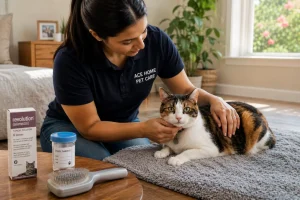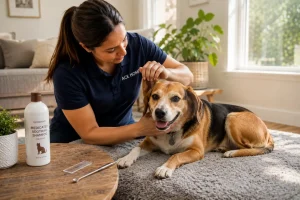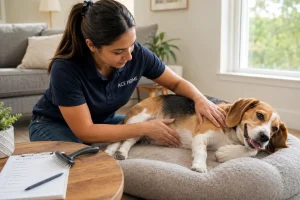
Handing over care of your pet to someone else — even someone you trust — requires more than leaving out extra food and hoping for the best. The sitter who shows up at your home is only as prepared as the information you give them. Most problems that come up during a pet sitting stay are not caused by careless sitters. They are caused by gaps in what the owner communicated before they left.
Here is a clear breakdown of what your sitter needs to know before you walk out the door — organized so nothing gets overlooked.
The Full Information Checklist at a Glance
Use this as a reference before your next trip or extended absence. Each category is covered in more detail below.
| Category | What to Include |
| Feeding | Food brand, exact amount, meal times, allergies or restrictions |
| Water | Bowl location, refill frequency, filtered vs tap preference |
| Walks & Potty | Frequency, preferred routes, on-leash rules, waste bag location |
| Medication | Drug name, dose, timing, method of administration, storage location |
| Behavioral | Triggers, fears, calming signals, what NOT to do around your pet |
| Escape Risks | Fence gaps, gate latches, door behaviors, leash rules before opening any door |
| Vet Contact | Clinic name, address, phone, patient ID, after-hours emergency protocol |
| Emergency Contact | Your number, backup contact, who can make decisions if unreachable |
| Home Access | Key details, alarm code, parking, any tricky doors or locks |
| Supplies Location | Food, treats, leash, toys, cleaning supplies, waste bags |
Feeding — More Specific Than You Think You Need to Be
Most owners tell their sitter what their pet eats. Fewer specify how much, when, exactly where the food is kept, and what to do if their pet refuses a meal. All of that matters.
Be exact about portions and timing
A cup of food is not a universal measurement. If your dog gets three-quarters of a cup of dry kibble twice a day, write that down. If your cat gets half a pouch of wet food in the morning and a small amount of dry left out overnight, be that specific. Vague instructions lead to overfeeding, underfeeding, or your sitter making calls they should not have to make without your input.
Mention food sensitivities and treat rules
If your pet cannot have certain ingredients, has reacted badly to table scraps in the past, or has a history of stealing food and getting sick, your sitter needs that information upfront. Also clarify whether treats are allowed, what kind, and in what quantity — especially if your dog is on a weight management plan or has a sensitive stomach.
What to do if they refuse to eat
Some pets go off food when their owner is away. Note whether this is typical behavior for your pet, at what point the sitter should be concerned rather than patient, and whether anything usually helps — slightly warming the food, adding a small amount of low-sodium broth, or simply giving the pet more time and space before trying again.
Behavioral Details Only You Know
This is the category that gets skipped most often, and it is the most important one. A sitter can follow written instructions for feeding and walking without much explanation. Accurately reading your pet’s behavior in real time is something else entirely — and it requires context only you have.
Specific triggers and known fears
Does your dog react to cyclists, skateboarders, or certain sounds? Does your cat hide for hours after loud noises from nearby construction or a passing storm? Is there a neighbor’s dog that reliably sets yours off through the fence? Sitters who know about triggers ahead of time can avoid or manage situations before they escalate. List what sets your pet off — sounds, animals, people, objects, situations — and what your pet typically does when it happens.
How your pet tells you what they need
Every animal communicates differently. One dog scratches at the door to go out. Another circles a specific spot in the hallway. A cat might sit next to their water bowl when it runs low or meow in a distinct way when they want company versus when they want to be left alone. Your sitter will not know these signals without being told. Write them down clearly — they make a bigger difference than most owners expect.
What actually calms your pet down
Jacksonville’s summer storm season means thunder is a realistic scenario your sitter may face. If your dog gets anxious during storms, note what helps — a particular toy, a crate they feel secure in, a specific room, background noise from a television, or simply being near a person. If your cat settles faster when a certain room stays accessible or a window is left partially open, include that. Small specifics produce noticeably better outcomes.
| The more behavioral context you give your sitter upfront, the less guesswork they have to do — and the calmer your pet’s experience will be throughout the stay. |
Emergency Information — Have It Ready Before You Need It
Your veterinarian’s full contact details
Leave the clinic name, address, phone number, and your pet’s patient ID. Note your vet’s hours and what the after-hours protocol is — whether calls route to an emergency clinic or whether the sitter needs to go somewhere else directly. Jacksonville has emergency veterinary facilities available around the clock, and a sitter who already knows where to go does not lose critical time figuring it out mid-crisis.
A reachable contact and a backup
Give your sitter a number they can actually reach you at throughout your time away. If you are traveling internationally or will have limited phone access, note when you expect to be reachable and designate a local backup — a family member, close friend, or trusted neighbor — who can make care decisions on your behalf if you genuinely cannot be reached and something urgent comes up.
| Do not assume your sitter has your vet’s information stored from a previous visit. Confirm it every time, and make sure it is current. Practices change numbers, move locations, and update their after-hours arrangements. |
Home Access and Practical Logistics
Your sitter needs to get in, move around your home without confusion, and find everything they need without calling you for directions to the storage closet.
Keys, codes, and entry specifics
Be clear about which key opens which lock, whether there is an alarm code and how long they have to enter it after opening the door, where to park if your building or neighborhood has restrictions, and whether any door sticks, needs to be lifted slightly to close properly, or has another quirk worth knowing. These feel like minor details until a sitter is standing outside your home at six in the morning unable to get in.
Where supplies are stored
Walk your sitter through — or write down — the location of the pet food, the leash and harness, treats, any medication, cleaning supplies for accidents, waste bags, and your pet’s favorite toys. A sitter who has to search the kitchen for a trash bag while your dog is waiting on the back step is a sitter whose attention is split when it should not be.
Known escape risks in your home
If your fence has a gap near the back corner, if a gate latch needs to be lifted before it will catch, or if your cat has figured out how to open the bathroom door from the inside, your sitter needs to know before they find out themselves. Walk them through any vulnerabilities during the initial visit and include them again in your written instructions as a reminder.
Write It Down — Every Time
Verbal instructions during a rushed departure are easy to misremember and impossible to reference later. Put your pet’s care information in writing before every trip — whether that is a printed page left on the kitchen counter, a shared note on your phone, or a simple document sent to your sitter the day before you leave. A prepared sitter should ask for this. If they do not, provide it anyway.
The practical goal is straightforward: your sitter should be able to care for your pet confidently, handle any reasonable situation that comes up, and not need to contact you for guidance on things you could have answered in advance. The more complete the information you leave behind, the closer you get to that outcome for both your pet and yourself.