Jacksonville’s summer is not simply hot. It is a combination of heat, humidity, and solar intensity that creates heat index readings well above air temperature — conditions that are genuinely dangerous for dogs and cats within exposures that owners from cooler climates would not recognize as risky. A 92-degree day in Jacksonville with 85 percent relative humidity produces a heat index above 110 degrees. A dog exercising in that environment is not slightly uncomfortable. They are at real risk of heat exhaustion within minutes of sustained activity.
This guide covers everything Jacksonville pet owners need to understand about summer heat safety — from the specific months and conditions that require management, to the difference between heat exhaustion and heat stroke, to the hazards that go beyond outdoor walks, to how to keep pets mentally engaged when outdoor time is genuinely unsafe.
The Heat Index Problem — Why Temperature Alone Misleads
Air temperature is what weather apps display. Heat index is what your pet’s body experiences. The difference matters significantly in Jacksonville because the city’s subtropical humidity — often running between 75 and 90 percent throughout the summer — creates a feel-like temperature that can exceed the actual temperature by fifteen to twenty degrees or more.
A dog walking on a 90-degree Jacksonville morning at 70 percent humidity is experiencing conditions equivalent to approximately 106 degrees in dry heat. Their cooling system — panting, which works by evaporating moisture from the airway — is dramatically less effective in high humidity because the saturated air cannot absorb additional moisture efficiently. The dog is working harder to cool down and making less progress than they would at the same temperature in lower humidity.
When does Jacksonville summer become dangerous for pets?
April and May produce conditions that already require management for many dogs — flat-faced breeds, overweight animals, seniors, and dogs with any respiratory or cardiovascular condition should be on a summer schedule by mid-April. For healthy adult dogs of average build, the window of dangerous outdoor conditions typically runs from late May through early October, with July and August representing the most severe months when midday heat index values routinely reach 110 degrees or above.
The practical guidance is to treat any day with a heat index above 90 degrees as a day requiring managed outdoor activity — early morning before 9 a.m. and evening after 6 p.m., with the midday period avoided entirely for any exercise beyond a brief potty break.
Heat Exhaustion vs Heat Stroke — Knowing the Difference Saves Lives
Heat exhaustion and heat stroke are distinct conditions that require different responses. Treating heat stroke like heat exhaustion — assuming the dog just needs water and rest — can result in a preventable death. Understanding the difference is one of the most important pieces of safety knowledge a Jacksonville pet owner can have.
| ⚠️ Heat Exhaustion | 🚨 Heat Stroke | |
| Body temperature | Elevated but not critical — 103–104°F | Critical — above 104°F. Organ damage begins |
| Panting | Heavy, excessive — dog cannot cool down | Extreme, labored, or may stop entirely as condition worsens |
| Gum color | Pale pink or bright red | Bright red, then grey or blue — emergency sign |
| Drool | Excessive, thick | Heavy drool or foam, may stop if dog becomes unresponsive |
| Movement | Weakness, stumbling, reluctance to continue | Collapse, inability to stand, seizure, unresponsiveness |
| Mental state | Confused, disoriented, anxious | Severely disoriented, unresponsive, loss of consciousness |
| First response | Move to shade/AC, offer water, cool with tepid water on paw pads and underbelly | Emergency vet immediately — cool while driving, do NOT use ice or very cold water |
| Vet required? | Call vet — may be able to manage at home initially if mild and caught early | YES — immediately. Heat stroke is life-threatening |
| NEVER use ice water or very cold water to cool a dog suspected of heat stroke. Cold water causes peripheral blood vessels to constrict, which traps heat in the body’s core and can worsen the condition. Use tepid or room-temperature water on the paw pads, underbelly, and armpits — areas with less fur and closer blood vessels — while driving to the emergency vet. |
Hot Surfaces Beyond the Pavement — What Jacksonville Owners Miss
Most Jacksonville dog owners know to check pavement temperature before walks. Fewer recognize that asphalt and concrete are not the only surfaces that reach dangerous temperatures in Jacksonville’s summer sun.
Artificial turf and rubber surfaces
Artificial turf in Florida’s direct sun reaches surface temperatures dramatically higher than ambient air temperature — studies have measured artificial turf surface temperatures above 150 degrees Fahrenheit on sunny summer days. If your yard, your dog park, or any surface your dog uses is artificial turf, treat it as a burned surface risk during the peak sun hours of a summer day. The same applies to rubber-backed outdoor mats and synthetic grass used around pools and patios.
Metal surfaces and vehicle interiors
A car parked in Jacksonville’s summer sun reaches lethal interior temperatures for a dog within minutes. The interior of a vehicle parked in full sun on a 90-degree day can reach 130 degrees within twenty minutes. This is not a situation where cracking windows helps meaningfully — the temperature rise in a summer-sun vehicle happens faster than most owners expect and exceeds safe limits long before it feels critical.
Never leave a pet in a parked vehicle during a Jacksonville summer — not for a quick errand, not in the shade, not with the windows cracked. Florida law permits individuals to break a vehicle window to rescue a pet visibly in distress from heat. That intervention should not be necessary.
Concrete patios and pool decks
Concrete and paving stones in direct sun absorb and radiate significant heat. A dog lying on a concrete patio at midday during a Jacksonville summer is on a surface that can measure above 130 degrees Fahrenheit even when air temperature is 90. Dogs that seek out cool spots instinctively are already showing a preference — if your dog is pressed against a wall, lying on tile, or seeking shade actively, they are self-regulating and should be moved indoors.
Which Dogs Face the Highest Risk in Jacksonville’s Summer
Flat-faced and brachycephalic breeds
Bulldogs, French bulldogs, Boston terriers, pugs, boxers, and similar flat-faced breeds have anatomically compromised airways that make panting — the dog’s primary cooling mechanism — significantly less efficient. These breeds can develop heat-related distress at temperatures and durations that a mixed-breed dog of similar size would handle without difficulty. In Jacksonville’s summer, brachycephalic dogs should be kept to very brief outdoor excursions during the hottest months and should never be exercised in midday conditions regardless of air temperature.
Senior dogs and those with medical conditions
Older dogs, dogs with heart disease, obesity, or thyroid conditions, and those on certain medications all have reduced heat tolerance compared to healthy adult dogs. If your dog has any chronic health condition, discuss their summer activity limits specifically with your veterinarian before summer begins — not after a heat-related incident.
Dark-coated dogs
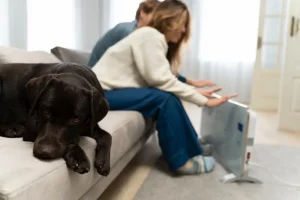
A dog with a dark or black coat absorbs significantly more solar radiation than a light-coated dog in the same conditions. This is an additional risk factor during any outdoor exposure in direct sun. If you have a black-coated Labrador or a dark German Shepherd, factor their coat color into your heat management decisions — they are at elevated risk compared to a similarly sized light-coated dog in the same conditions.
Hydration in Jacksonville’s Summer — What You Need to Have Ready
A dog that is dehydrated before exercise starts is at significantly higher risk of heat-related illness than one that is well-hydrated. In Jacksonville’s summer, ensure fresh water is available at all times — refilled frequently, as warm water in a bowl sitting in a warm home is less likely to be consumed than cool, fresh water.
Signs of dehydration in dogs
Skin tent test: gently lift the skin between the shoulder blades — it should return immediately. A delay of more than one to two seconds indicates dehydration. Dry or tacky gums, sunken eyes, and reduced urination are additional indicators. A dehydrated dog that is also being exercised in summer heat is compounding two risk factors simultaneously.
Water for walks
Carry water for any outdoor activity during Jacksonville’s summer months — even brief walks. Collapsible silicone bowls weigh almost nothing and allow you to offer your dog water at any point during a walk without equipment planning. For any walk longer than fifteen minutes during the safe morning or evening window, water is not optional.
Keeping Dogs Mentally Engaged When Outdoor Time Is Limited
A dog whose daily outdoor time is genuinely restricted by Jacksonville’s summer heat needs indoor alternatives that address the mental stimulation that outdoor exploration provides. Physical exercise is not the only component of a dog’s daily needs — problem-solving, novel stimulation, and interaction all matter, and all can be provided indoors.
Puzzle feeders that require a dog to work for their food replace some of the cognitive engagement that outdoor exploration provides. Sniff mats, frozen Kongs, and lick mats offer sustained engagement without physical exertion. Short training sessions — five to ten minutes of focused skill work — provide the kind of mental engagement that tires dogs in a different way than physical exercise but is equally effective for settling.
Indoor play sessions during peak heat hours, combined with properly timed walks at the cool ends of the day, produce a more balanced day than simply reducing all activity during summer. The goal is to adapt the schedule to the conditions rather than eliminate engagement entirely.
Summer in Jacksonville Requires a Different Pet Care Approach
The behaviors, routines, and assumptions that work for pet care in March and October do not transfer directly to July in Jacksonville. Summer requires adjusted walk timing, expanded knowledge of heat risk, awareness of hot surfaces beyond pavement, and indoor management strategies that substitute for the outdoor time that peak heat makes unavailable.
Owners who make these adjustments proactively — before the first hot week rather than in response to the first heat-related incident — protect their pets from the genuine medical risks that Jacksonville’s summer presents to animals that cannot regulate their own environment.