Beach rules in the Jacksonville area changed in 2023 when Neptune Beach simplified their ordinance, and the rules at Jacksonville Beach versus Ponte Vedra Beach versus Atlantic Beach are different enough that you can be perfectly legal on one beach and ticketed on the next. This is the current 2026 reference, plus everything we wish more beach articles covered: tides, jellyfish, saltwater health, and how to actually keep your dog safe in the ocean.
Quick Reference: Leash Rules by Beach
| Beach | When Dogs Allowed | Leash Required | Max Leash Length |
| Jacksonville Beach | Oct 1 – Mar 31 anytime; Apr 1 – Sept 30 NOT 9am to 5pm | Yes, always | 8 feet |
| Neptune Beach | Year-round, no time limits | Yes, except briefly while swimming | 5 feet |
| Atlantic Beach | Year-round, no time limits | Yes, except briefly while swimming | 5 feet |
| Ponte Vedra (St. Johns County) | Year-round, anytime | Yes, even in the water | 12 feet (per Animal Code) |
Verify with your local city before publishing or planning – municipal ordinances can update.
Jacksonville Beach Specifics
Jacksonville Beach is the most restrictive of the local beaches. From April 1 through September 30, dogs are NOT allowed on the beach between 9am and 5pm. This is enforced. Animal Control Officers patrol and citations are real.
Working schedule: – October 1 to March 31: any hour, leashed – April 1 to September 30: before 9am or after 5pm only, leashed
Off-leash alternative: Paws Park at 468 Penman Road South, the city-sponsored dog park. Small dog area, large dog area, water bowls, benches, handicap accessible.
Penalties: Citations can run into the hundreds depending on the violation. Picking up after your dog is not optional – waste violations are also ticketed.
If you cannot meet the schedule, the smart move is to use Paws Park during restricted hours or drive 10 minutes north to Atlantic or Neptune Beach where the rules allow daytime access year-round.
Neptune Beach (Updated 2023)
Neptune Beach simplified their ordinance in 2023. Current rules:
- Dogs allowed year-round, no time restrictions
- Maximum leash length 5 feet
- Off-leash is permitted briefly while the dog is actively swimming, but leash must go back on as soon as the dog leaves the water
- If your dog stays on the beach longer than 30 minutes, you must provide drinkable water and shade
- Current rabies vaccination tag required to be on the dog
That 30-minute water-and-shade rule is unusual and important. It is an active welfare requirement, not just a recommendation.
Atlantic Beach
Atlantic Beach follows the same updated 2023 rules as Neptune Beach. Same 5-foot leash, same year-round access, same swimming exception, same 30-minute water-and-shade requirement.
Ponte Vedra Beach (St. Johns County)
Ponte Vedra sits in St. Johns County, which has its own beach code and animal code. Notable differences from the Duval County beaches:
- Dogs allowed at any time, year-round
- Must be leashed at all times – including in the water (this is unusual)
- Max leash length 12 feet per the Animal Code
- Pick up after your dog (waste bags available at many access points)
The “leashed in the water” rule is the part that surprises new Ponte Vedra residents most. There is no exemption for actively swimming. Officers do issue warnings and citations for off-leash water play.
Atlantic Beach versus Neptune Beach versus Jacksonville Beach: Practical Choice
If you live in Jacksonville Beach but want daytime summer beach access with your dog, drive to Neptune or Atlantic Beach. The difference is real:
- Jacksonville Beach (April-September): 9am to 5pm closed to dogs
- Neptune/Atlantic Beach: open all day, year-round (with leash and other rules)
The cities are adjacent. The drive from south Jacksonville Beach to Neptune Beach is under 10 minutes.
Tides: Why They Matter for Your Dog
Beach articles rarely mention this. Tide changes affect:
- Available beach width. High tide can leave only soft, hot sand with no firm wet-sand walking lane.
- Rip currents. Outgoing tides increase rip current strength. If your dog swims, this is the most dangerous time.
- Wildlife on shore. Low tide exposes tide pools, dead fish, and washed-up jellyfish. Dogs sniff and ingest things you do not want.
Check the tide before you go. Local marine forecast sites and most weather apps include daily tide times for Jacksonville and Ponte Vedra. Mid-tide on an incoming swing is generally the safest window for dogs.
Saltwater Safety Essentials
Three real risks that the chamber-of-commerce dog-beach articles never cover:
- Salt poisoning. Dogs who drink seawater can develop salt toxicity, especially smaller dogs. Symptoms: vomiting, diarrhea, lethargy, weakness, and at severe doses, seizures. Bring fresh water and offer it frequently. If your dog drinks a significant amount of seawater, contact your vet.
- Jellyfish stings. Northeast Florida waters have moon jellies, sea nettles, and occasionally cannonball jellies. Most stings on dogs are mild but painful. Treat with rinse of fresh water (NOT fresh water on a sting site initially – this can fire more nematocysts; use seawater for rinsing first, then fresh water after the area is cleared). If your dog is showing systemic reaction (vomiting, breathing difficulty), get to a vet.
- Vibrio bacteria. Florida warm coastal waters carry Vibrio bacteria that can cause serious infection in pets (and humans) with open wounds. If your dog has any cut, sore, or fresh surgical site, keep them out of the ocean.
Rip Currents and Dogs: Why You Do Not Follow In
If your dog gets caught in a rip current, do not enter the water after them. The number of human drownings in Northeast Florida tied to rescue attempts is real. Instead:
- Call to your dog from the shore, parallel to where you can see them
- Most dogs, if given a clear directional cue, can swim parallel to the shore out of the current
- If your dog cannot swim out, call 911 immediately for water rescue assistance
- Once your dog is back on shore, check for ingested seawater symptoms (salt poisoning)
Train recall before you go to the beach. A reliable recall is the single biggest piece of beach safety equipment you can give yourself.
Hot Sand and Paw Pad Burns
From May through September in Jacksonville, beach sand can hit 120 degrees or higher in afternoon sun. Paw pad burns are a real summer ER vet visit cause.
The hand-test: if you cannot comfortably hold the back of your hand on the sand for 5 seconds, your dog cannot walk on it for an extended period. Pick early morning or after sunset, or use protective booties.
Pre-Beach and Post-Beach Checklist
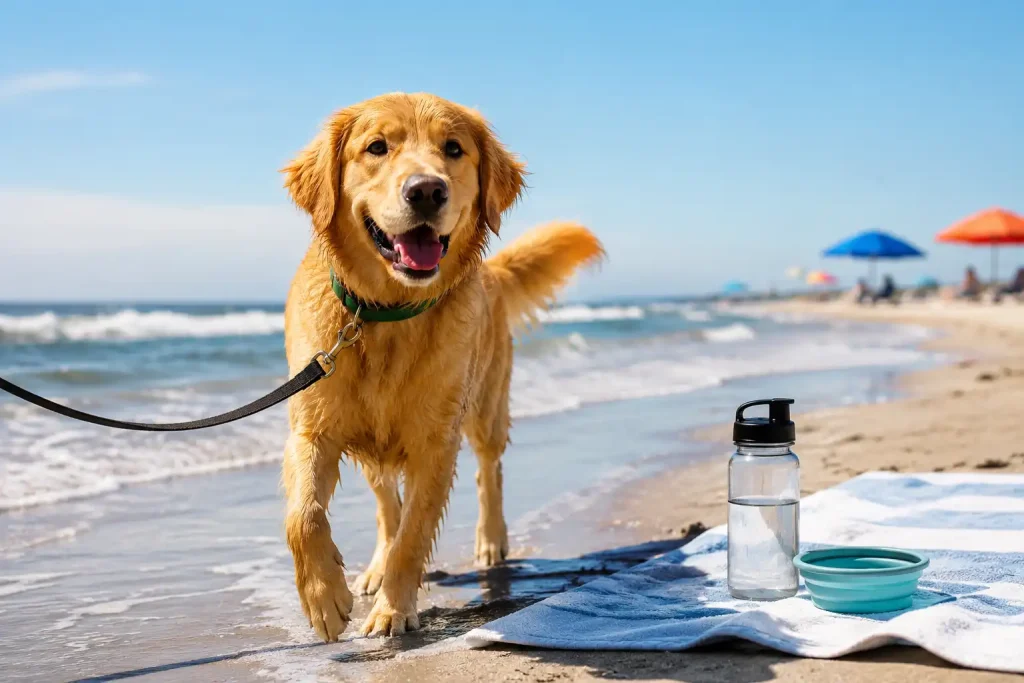
Before you go: – Current rabies tag on collar (required in all four beaches) – Fresh water bottle (16+ oz per dog) – Collapsible water bowl – Poop bags (twice as many as you think you need) – Sun shade (umbrella or canopy) – Leash within current ordinance length
After the beach: – Freshwater rinse of your dog (especially paws, eyes, ears) – Check ears for water (rinse with dog ear cleaner if your dog is prone to infection) – Check between toes for sand pack and sandburs – Watch for next 24 hours for GI upset from seawater ingestion
Frequently Asked Questions
Can my dog be off-leash at any Jacksonville-area beach?
Only briefly at Neptune and Atlantic Beach while actively swimming. Everywhere else – Jacksonville Beach, Ponte Vedra, St. Augustine – leash is required at all times, including in the water at Ponte Vedra.
What is the closest dog-friendly beach to Mandarin?
Jacksonville Beach is the closest geographically (about 25 minutes). If you need daytime summer hours, Neptune Beach is only marginally further and has more flexible rules during peak heat months.
Are there fines for off-leash dogs at Jacksonville-area beaches?
Yes. Animal Control Officers patrol, especially during peak tourist seasons. Fines vary by violation but are real.
Can I take my puppy to the beach?
Avoid until your puppy is fully vaccinated (around 18-20 weeks, 1-2 weeks after the final DHPP). Beaches have communal dog traffic. For pre-vaccinated socialization options, see our puppy socialization timeline.
Are there dog-friendly beaches with shade?
Limited. Florida beaches have minimal natural shade. Bring your own (umbrella, canopy, pop-up tent) for any visit longer than a quick walk. Atlantic Beach has some shaded picnic areas near beach access points; check before you go.
What about Hanna Park beach?
Kathryn Abbey Hanna Park has a 1.5-mile beach where dogs are permitted in designated areas, on a leash up to 8 feet. Parking fee applies. Good option if Jacksonville Beach hours are restricting you.
When Your Trip Plans Include the Beach
If you are traveling and will be away from your pet during what would be a beach day for them, our in-home pet care and professional dog walking services keep your dog moving while you are gone.
We cover the Ponte Vedra and Jacksonville Beach areas. See Ponte Vedra pet care services and Jacksonville Beach pet care services.