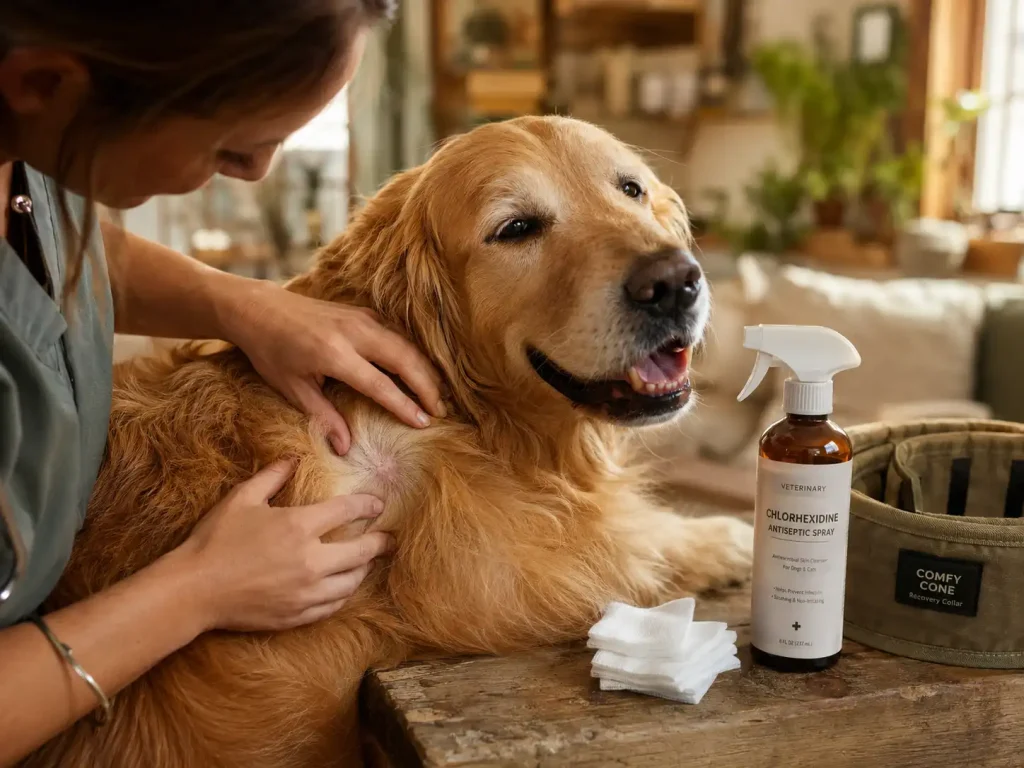
A hot spot can appear almost out of nowhere, one minute your dog’s skin looks fine, and a few hours later there’s a red, wet, angry sore. Hot spots are uncomfortable, can spread fast, and tend to come back if the underlying cause isn’t addressed. The good news is that most are very treatable, and there’s a lot you can do to prevent them, especially in our warm, humid Florida climate.
This guide explains what hot spots are, what triggers them, how to treat them (including safe home care), what the healing stages look like, and how to stop them returning. As an in-home pet care service in Jacksonville, catching a hot spot early, before your dog licks it into a bigger problem, is something we watch for.
What is a hot spot?
A hot spot, known to vets as acute moist dermatitis, is a localized area of inflamed, infected skin. It usually looks like a red, moist, raw, oozing patch, often round, with hair loss around it, and it can be painful, itchy, and smelly. Hot spots develop and spread quickly because they’re driven by a cycle: something makes the skin itch or hurt, the dog licks, scratches, or chews the spot, and that damage makes it worse, which makes them lick more.
What causes hot spots on dogs?
A hot spot is almost always a symptom of an underlying trigger that started the itching. Common causes include:
- Fleas and flea allergy, one of the most common triggers.
- Allergies, environmental (pollen, grass) or food-related.
- Trapped moisture, after swimming, bathing, or rain, especially in thick or double coats and in humid weather.
- Ear infections or anal gland problems, which make a dog lick or chew nearby skin.
- Matted or dirty coat, which traps moisture and irritation.
- Insect bites or stings.
- Boredom or stress, leading to repetitive licking.
Thick-coated breeds and dogs in hot, humid climates are especially prone, which is why hot spots are practically a summer rite of passage here.
How do dogs get hot spots?
It comes down to the itch-scratch-lick cycle. Anything that makes a patch of skin itchy or sore, a flea bite, an allergy flare, moisture under the coat, prompts the dog to lick and chew. That constant moisture and trauma break down the skin and let bacteria move in, creating the raw, oozing sore within hours. Stopping the licking and treating the trigger is how you break the cycle.
Causes at a glance
| 🐕 Trigger Condition | 🔎 Identifying Clue | 🛡️ Recommended Support |
|---|---|---|
| Fleas / Flea Allergy | Intense scratching near lower back, tail base; visible flea dirt. | Year-round flea preventive protocol. |
| Environmental Allergies | Seasonal or year-round itching, paw licking, red belly. | Vet-guided allergy plan. |
| Trapped Moisture | Frequent swimming/bathing; humid coastal conditions. | Dry the coat thoroughly down to the skin. |
| Ear Infection | Head shaking, scratching at ears, sour ear canal odor. | Veterinary ear drops and cleaning. |
| Matted or Dirty Coat | Heavy tangles, trapped dirt, or wet mats holding dampness. | Regular brush outs and clinical grooming. |
| Boredom / Stress | Licking one specific leg or wrist area repeatedly. | Provide enrichment toys, puzzle feeders, and exercise. |
How to treat hot spots on dogs
Treatment has two parts: heal the sore, and fix what caused it.
At the vet, treatment often includes clipping the hair around the spot, cleaning it, and prescribing topical or oral antibiotics and anti-itch medication, plus an e-collar (cone) to stop licking. Your vet will also look for the underlying trigger (fleas, allergies, ears) so it doesn’t keep happening.
At home (for a small, mild spot, ideally with your vet’s okay):
- Trim the hair around the spot so air can reach it and it can dry out.
- Gently clean it with a vet-safe antiseptic (like a chlorhexidine solution), not harsh human products.
- Keep it dry.
- Stop the licking with a cone or recovery collar, this is the single most important step.
- Use only vet-recommended sprays or treatments.
What not to do: don’t apply human creams or ointments unless your vet approves, some are toxic if your dog licks them. And don’t ignore the trigger, treating the sore without addressing fleas or allergies just sets up the next one.
Hot spot healing stages
With proper treatment, a hot spot typically heals over one to two weeks, moving through these stages:
- Raw and oozing (the active sore), red, wet, and painful.
- Drying and scabbing, the surface dries out and a scab forms as inflammation settles.
- Healing skin and regrowth, the scab falls away and hair starts to grow back.
Signs it’s healing well: less redness, drying out, no new spread, and your dog leaving it alone. Signs it’s not healing (call your vet): it’s spreading, more painful, oozing pus, smells bad, or isn’t improving within a few days.
Are hot spots contagious?
No, the hot spot itself isn’t contagious to other pets or people. However, some underlying triggers (like fleas, or certain skin parasites) can affect other animals, so it’s worth sorting out the cause. If you’re unsure whether a sore is a hot spot or something like mange, have your vet take a look.
When to see a vet
See your vet if the hot spot is large, very painful, spreading, smelly, or oozing pus, if your dog keeps getting them, or if home care doesn’t show improvement within a couple of days. Recurring hot spots are a strong sign of an underlying allergy or flea problem that needs a proper plan.
How to prevent hot spots
- Keep up with year-round flea control.
- Dry your dog thoroughly after swimming, baths, and rainy days, moisture under the coat is a big trigger here.
- Groom regularly and prevent mats, see our guide on how often to bathe your dog.
- Manage allergies with your vet’s help.
- Treat ear infections
- Provide exercise and enrichment to reduce stress-licking.
A quick Jacksonville note
Our heat, humidity, and beach-and-pool season make hot spots especially common, trapped moisture in a thick coat is a perfect setup. Drying your dog well after a swim and keeping up with flea control go a long way; see our guide on keeping your pet safe in the summer heat. If you’d like trained eyes on your dog’s skin and coat while you’re at work or away, our in-home pet care in Jacksonville helps catch a hot spot before it blows up, and if you find a firm lump rather than a sore, see lumps and bumps on dogs.
Frequently asked questions
What is a hot spot on a dog? A hot spot (acute moist dermatitis) is a red, moist, oozing, often painful sore that develops quickly when a dog licks, scratches, or chews an itchy patch of skin, letting bacteria take hold.
What causes hot spots on dogs? They’re triggered by something that makes the skin itch, commonly fleas, allergies, trapped moisture after swimming or bathing, ear infections, matted fur, or insect bites, followed by licking that creates the sore.
How do I treat a hot spot on my dog at home? For a small, mild spot, trim the hair around it, gently clean it with a vet-safe antiseptic, keep it dry, and prevent licking with a cone. Avoid human creams, and see your vet if it’s large, painful, spreading, or not improving.
What are the healing stages of a dog hot spot? A hot spot usually goes from raw and oozing, to drying and scabbing, to healing skin and hair regrowth, typically over one to two weeks with treatment. Spreading, pus, or a bad smell means it needs a vet.
Are hot spots on dogs contagious? The hot spot itself isn’t contagious, but underlying causes like fleas or parasites can affect other pets, so it’s worth identifying and treating the trigger.
How do I stop my dog getting hot spots again? Address the underlying cause, year-round flea control, allergy management, drying the coat after swims and baths, regular grooming, and treating ear issues all help prevent repeats.