If you have a cat and someone is bringing flowers into your home, there is one thing that matters more than everything else: are there any lilies in that arrangement? True lily exposure causes acute kidney failure in cats, and even tiny amounts can be lethal. This is not a theoretical risk that mostly affects pets who eat a whole plant. A cat that brushes against lily pollen and grooms it off can be exposed to a deadly dose.
This is what every cat owner needs to know, in plain language.
Why Lilies Are So Toxic to Cats
The exact toxic mechanism is still not fully understood, but the result is clear: ingestion (even minor) causes injury to the kidney tubules. Untreated, the kidneys fail. This happens fast.
Cats are uniquely susceptible. Dogs that eat lilies often experience mild GI upset, not kidney failure. The cat-specific severity is what makes this danger so easy to underestimate.
Every part of the plant is toxic – petals, leaves, stems, pollen, and even the water from the vase. Pollen on fur or paws that gets ingested during grooming is enough.
Which Lilies Are Dangerous
This is where confusion sets in. Plant names are inconsistent and many flowers are called “lilies” without being in the dangerous category.
Highly Toxic (Cause Kidney Failure)
These are the ones to absolutely avoid:
- Easter lily (Lilium longiflorum) – the classic white spring trumpet lily
- Tiger lily (Lilium lancifolium) – orange with black spots
- Asiatic lily (Lilium asiatic) – bright colors, common in mixed arrangements
- Oriental lily (Lilium orientalis) – large, fragrant
- Stargazer lily (Oriental hybrid) – pink and white, very common
- Daylily (Hemerocallis species) – technically a different genus but causes the same kidney failure in cats
- Rubrum lily – red Oriental variety
- Japanese show lily – another Oriental variety
If you see any flower labeled “lily” in a florist arrangement and you have cats at home, default to assuming it is one of these unless you can confirm otherwise.
Less Toxic (But Still Avoid for Cats)
These plants are called “lilies” but are different species. They cause mild oral irritation, not kidney failure. Keep them away from your cat anyway, but they are not the same emergency:
- Peace lily (Spathiphyllum) – causes drooling and oral irritation
- Calla lily (Zantedeschia) – oral irritation
- Lily of the valley (Convallaria majalis) – different toxicity profile, contains cardiac glycosides, can be serious for cats and dogs but mechanism differs
- Peruvian lily (Alstroemeria) – mostly mild GI upset
Practical Rule
If you cannot identify the exact lily species, treat any exposure as potentially serious until proven otherwise. The cost of overreacting (ER visit, baseline kidney values) is dramatically lower than the cost of underreacting (kidney failure, death).
Symptoms of Lily Poisoning by Hour
The clinical course is well-documented and follows a predictable pattern.
0-2 hours after exposure:
- Vomiting
- Drooling
- Loss of appetite
- Hiding or lethargy
These early symptoms are easy to dismiss as a hairball or mild upset. Do not dismiss them if there is any chance of lily exposure.
12-24 hours:
- Vomiting may continue or stop
- Increased thirst
- Increased urination (early kidney injury)
- Continued lethargy
24-72 hours:
- Kidney failure progressing
- Decreased urination (kidneys shutting down)
- Severe dehydration
- Possible neurological symptoms (seizures in severe cases)
By 72 hours, untreated cases have very poor prognosis. The window for effective treatment is the first 18-24 hours, ideally within the first 6 hours.
What to Do If You Suspect Exposure
If you see your cat near a lily, see chewed petals, see pollen on their fur, find lily debris on the floor, or your cat starts vomiting near a lily arrangement:
Step 1: Get to the ER vet immediately.
Do not wait to see if symptoms develop. Do not wait for your regular vet to open. Do not try home treatment. This is one of the cases where every hour matters.
Step 2: Bring evidence if you can.
- A photo of the plant
- The plant tag if you have it
- An actual cutting if it is safe to bring
Step 3: Call ahead.
Call the ER vet on the way so they can prep IV fluids and run baseline blood work immediately on arrival.
Step 4: Treatment expectations.
Standard treatment is aggressive IV fluid therapy for 48-72 hours to flush the kidneys and prevent or limit damage. Decontamination (induced vomiting, activated charcoal) is given if exposure was very recent. Blood work is monitored to track kidney function.
Outcomes are dramatically better when treatment starts within 6 hours of exposure. Delayed treatment significantly worsens prognosis.
For Jacksonville-area emergency vet options, see our Fleming Island emergency vets guide or have your local 24-hour clinic’s number saved.
Safer Spring Flower Alternatives
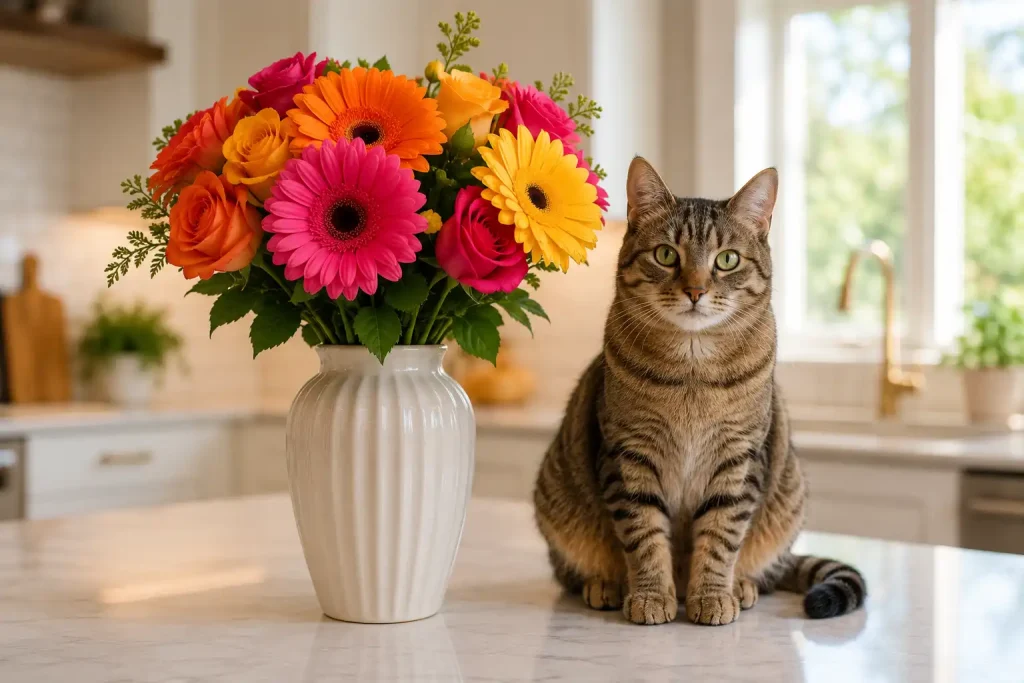
If you want to bring flowers into a cat household, these are generally safer:
- Roses (no thorns are best, or remove them)
- Sunflowers
- Orchids (generally non-toxic, but check species)
- Snapdragons
- Carnations (mild oral irritation if eaten, not deadly)
- Gerbera daisies
- Marigolds
- African violets (non-toxic and beautiful indoors)
- Phalaenopsis orchids
Always confirm specific cultivars before bringing any plant home if you have cats.
Preventing Future Exposure
If you have cats:
- Tell visitors not to bring lily arrangements
- Tell your florist when ordering for delivery to your home
- If lilies are received as a gift, give them to a friend without cats or compost them outside immediately
- Be cautious with Easter, Mother’s Day, sympathy bouquets, and Valentine’s Day arrangements – these are peak lily seasons
- Educate other people in your household, especially kids who may bring flowers home from school events
Frequently Asked Questions
My cat sniffed a lily but did not eat it. Is that dangerous?
Sniffing alone is generally lower risk than eating. The danger is pollen transfer to fur, which the cat then grooms off. If you saw pollen contact, treat as a potential exposure. If just a sniff with no visible contact, monitor closely and call your vet.
How much lily is dangerous to a cat?
There is no established safe dose. Cases of severe toxicity have occurred from a single petal or small amount of pollen. Treat any exposure as potentially serious.
Are lilies dangerous to dogs?
Dogs can experience mild GI upset from lily ingestion (vomiting, diarrhea), but they do not typically develop the kidney failure that cats do. The cat-specific severity is what makes lilies uniquely dangerous in cat households.
Can my vet test for lily exposure?
Yes – baseline kidney values (BUN, creatinine, SDMA) can be checked. Early kidney injury shows on blood work before clinical symptoms in many cases. Asking for these tests is standard if exposure is suspected.
What if I cannot afford the ER visit?
Be honest with the vet. Some ER vets work with payment plans. CareCredit is a deferred-interest medical credit card. Rescue organizations sometimes have emergency assistance funds. But do not delay the visit waiting to figure out finances – the time-to-treatment window is too short.
Is there a way to make my home cat-safe without giving up flowers?
Yes. Stick to the safer alternatives list above. Confirm any new plant by checking ASPCA’s toxic plants database before bringing it home. Many beautiful flowers are perfectly safe.
A One-Sentence Summary You Can Share
If you take one thing from this article: any true lily in a home with cats is a potential life-or-death event. Replace them with roses or another safe option.
If you have cats and want care while you travel that includes the kind of awareness that catches a lily before it becomes a problem, our professional cat sitting and in-home pet care services are built around this kind of attention to detail.