Halloween calls to the Pet Poison Helpline increase 12% over baseline. Chocolate ingestion is the most common cause, followed by xylitol exposure, then raisin/grape ingestion and wrapper/decoration choking. Add to that the lost-pet incidents from open doors during trick-or-treating, and Halloween consistently ranks alongside July 4 as one of the most dangerous holidays for pets.
This is a working guide to keeping your Jacksonville dog or cat safe through October 31.
Chocolate and Candy Dangers
Chocolate is the most common Halloween pet poisoning. The toxic ingredient is theobromine, a stimulant dogs metabolize very slowly compared to humans.
Chocolate Toxic Dose by Type
Toxic dose effects depend on chocolate type and dog weight:
- Mild signs (vomiting, diarrhea): 20 mg theobromine per kg body weight
- Cardiovascular effects (rapid heart rate, arrhythmia): 40-50 mg/kg
- Seizure risk: 60+ mg/kg
- Lethal range: 100+ mg/kg
Theobromine content varies by chocolate type:
- White chocolate: minimal theobromine (still avoid – high fat and sugar)
- Milk chocolate: roughly 50-60 mg per ounce
- Dark chocolate: 130-450 mg per ounce
- Baking chocolate: 390+ mg per ounce
- Cocoa powder: 700+ mg per ounce
Practical translation: a single ounce of dark chocolate can cause significant toxicity in a 20-pound dog. Baker’s chocolate is more dangerous still. Always assume any chocolate ingestion is potentially serious until you have spoken with a vet or poison control.
Symptoms of Chocolate Poisoning
Onset typically 6-12 hours after ingestion. Signs include:
- Vomiting and diarrhea
- Restlessness, agitation, pacing
- Excessive thirst and urination
- Rapid heart rate or arrhythmia
- Muscle tremors
- Seizures
- Collapse
If you suspect chocolate ingestion, do not wait for symptoms. Call your vet, your nearest 24-hour emergency clinic (see our Fleming Island emergency vets for area options), or the ASPCA Animal Poison Control Center at 1-888-426-4435.
Xylitol: The Hidden Killer in Sugar-Free Candy
Xylitol is often more dangerous than chocolate and far less recognized. It is an artificial sweetener used in sugar-free candy, gum, mints, baked goods, and (increasingly) peanut butter.
In dogs, xylitol causes a massive insulin release within 30 minutes, leading to dangerous hypoglycemia (low blood sugar). Higher doses cause liver failure.
Toxic dose: roughly 0.1 g per kg body weight for hypoglycemia. A single piece of xylitol-containing gum can be dangerous to a small dog.
Symptoms:
- Drooling
- Vomiting
- Weakness or stumbling
- Collapse
- Seizures
Onset is fast – within 30 minutes for hypoglycemia. Liver failure signs can appear 24-48 hours later.
If you suspect xylitol exposure, treat it as a true emergency. Do not wait. Go to the ER vet immediately. This is one of the cases where every minute matters.
Other Halloween Candy Hazards
Raisins and grapes (common in trail mix and some treat bags) can cause kidney failure. Toxic dose varies but small amounts can cause harm.
Macadamia nuts are toxic to dogs (weakness, vomiting, tremors).
Candy wrappers (foil, plastic, sticks from lollipops) can cause intestinal obstruction requiring surgery.
Hard candies are choking hazards, especially for small dogs.
Glow sticks and glow jewelry are not lethal but contain dibutyl phthalate, which is irritating. Most dogs that bite into them have intense oral irritation and drooling but recover.
Costume Safety
Costumes are cute but pose real risks:
Rules:
- Nothing around the neck that restricts breathing
- Nothing covering the eyes or ears (impairs vision and hearing)
- Nothing your pet can chew off and swallow
- No paint, dye, or anything that could be ingested during grooming
- Test fit for 5-10 minutes before the actual event to verify your pet tolerates it
Watch for stress signs:
- Tucked tail
- Frozen posture
- Refusing to move
- Trying to remove the costume
- Lip licking or yawning (stress signals)
If your pet hates costumes, do not force it. A bandana works. A non-costume photo works. Their dignity matters and is worth more than the Instagram post.
Doorbell Anxiety Management
The bigger Halloween problem in most homes is the parade of strangers at the door over 2-3 hours. Even non-anxious dogs can find this destabilizing.
Pre-Halloween Desensitization (Start Now)
If Halloween is 2+ weeks away:
- Record your own doorbell sound on your phone
- Play it at low volume during pleasant activities (meals, play)
- Pair each doorbell with a high-value treat
- Gradually increase volume
- After a few days, have a family member ring the actual doorbell during a calm moment
This is real desensitization. It works on most dogs given enough sessions.
Day-of Setup
If you cannot desensitize in advance:
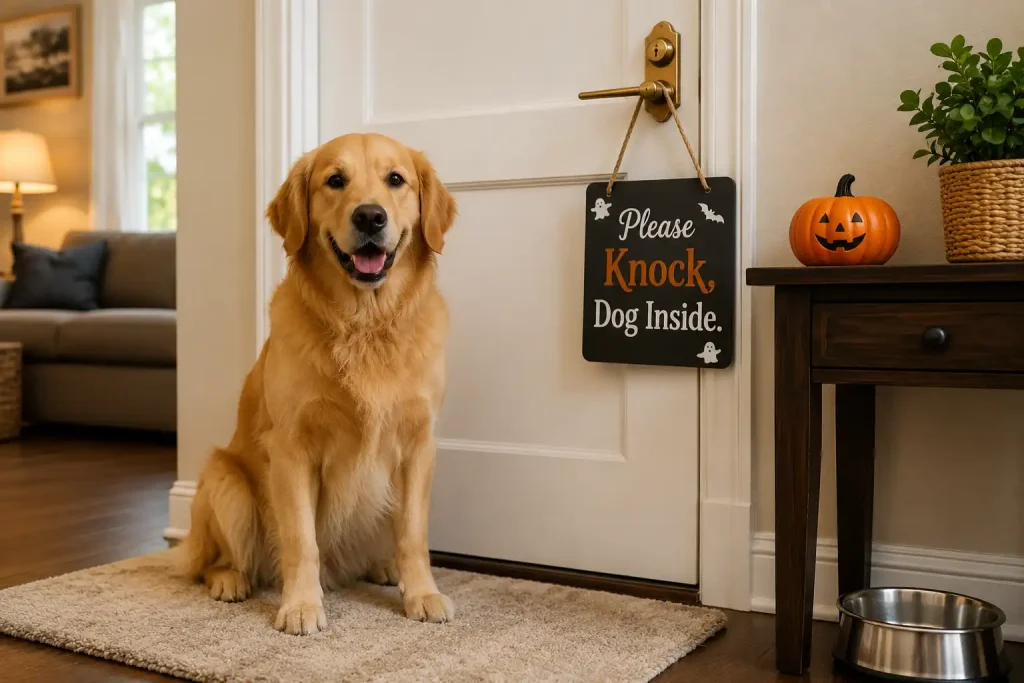
- Tape a sign over the doorbell that says “Please knock – dog inside” or set up a candy bowl on the porch with a note
- Put your dog in a back room with a long-lasting chew, white noise, and the door closed
- Do not bring your dog to the door
- Consider asking a household member to handle the door while you stay with the dog
For dogs with severe doorbell or stranger anxiety, the cleanest answer is sitter coverage during peak trick-or-treat hours (typically 6-9pm in Jacksonville). Our pet sitting services include holiday evening coverage.
Lost Pet Prevention
Halloween is one of the highest lost-pet days of the year. Causes:
- Open front doors during trick-or-treating
- Spooked dogs bolting at unexpected costumes or sounds
- Gates left open by costumed visitors
Pre-Halloween Checklist
- Verify current rabies tag and ID tag on collar
- Verify microchip registration is current (call the registry, do not just assume)
- Take a fresh photo of your pet (good lighting, full body, clear face)
- Pet should be inside with door secured before any trick-or-treaters arrive
If Your Pet Escapes
Same protocol as our July 4 guide: check the home first, then yard, then immediate block. Call the microchip registry to flag missing. Post in neighborhood Facebook groups immediately. Drive a wider perimeter within the first hour. See our microchipping guide for the full ID protocol.
Indoor Cat Safety (Especially Black Cats)
There is folklore around black cats being targeted at Halloween. Most experts now consider this threat overstated in practice, but the broader concern – cats escaping during high-traffic open-door events – is very real.
Practical steps:
- Keep all cats indoors October 28 through November 2
- Move litter box and food/water to an interior room where your cat will stay during trick-or-treat hours
- Black cats and very dark-colored cats can be harder to find at night if they escape – extra care
What to Do If Your Pet Eats Halloween Candy
A decision tree:
Step 1: Identify what they ate, as specifically as possible.
- Wrapper if you have it
- Estimated quantity
- Time of ingestion
Step 2: Look up toxicity quickly.
- For chocolate: enter the type, amount, and your dog’s weight into a chocolate toxicity calculator (vet sites have free ones), or call ASPCA Poison Control (1-888-426-4435)
- For xylitol: do NOT delay. Any xylitol ingestion is potentially serious. Go to the ER vet now.
Step 3: Act based on severity.
- Mild exposure (small amount of milk chocolate, large dog): monitor for symptoms, call your regular vet’s after-hours line
- Moderate exposure (dark chocolate, gum/sugar-free candy, raisins): call poison control AND head toward ER vet while you talk
- Severe exposure or unknown amount: go to ER vet immediately
Do not induce vomiting at home unless directed by a vet. Some toxins are more dangerous coming back up.
Frequently Asked Questions
How much chocolate is dangerous to my dog?
Roughly 9 mg of theobromine per pound is the threshold for mild symptoms. A 20-pound dog could be made sick by approximately 0.9 ounces of baking chocolate or 8 ounces of milk chocolate. Lethal doses are higher but the gap between sick and serious is not large for small dogs and dark chocolate.
Is xylitol really worse than chocolate?
For dogs, yes, in terms of speed and severity at small amounts. A single piece of xylitol-containing gum can cause hypoglycemia in a small dog. Chocolate generally requires more volume for serious effects. Both are dangerous; xylitol gets less attention than it should.
Can I give my cat a Halloween costume?
Most cats hate costumes. If your cat genuinely tolerates one (rare), follow the same rules – nothing restricting breathing, vision, or hearing, nothing ingestible. Most cat owners are better off with a festive collar.
What time should I stop letting trick-or-treaters in?
Whatever works for your household, but most Jacksonville neighborhoods have peak traffic from 6-8:30pm. After 9pm, things typically slow down. Plan your dog’s safe-room time around your local peak.
Should I take my dog out to see decorations?
If your dog enjoys it and is not reactive, sure – but during off-peak times (early evening before traffic builds, or late night after trick-or-treating ends). The peak trick-or-treat window is rarely a pleasant dog walk.
What about Halloween parties at my house with kids and pets?
A houseful of costumed kids running around with candy is a recipe for an emergency vet visit. Keep your pet in a closed, quiet room with a chew toy and white noise for the duration. Resume normal access after guests leave and visible candy is put away.
Have a Plan, Have a Backup
Halloween done well takes the same approach as July 4 – plan the safe space, prep the supplies, and decide in advance whether you need sitter coverage. Done as an afterthought, it goes wrong.
If you want sitter coverage on Halloween evening for a reactive dog, an escape-prone cat, or just peace of mind while you take the kids out, our pet sitting and in-home pet care services cover holiday hours. Book by mid-October.