Florida’s year-round growing season means year-round lawn care. The chemicals that go on lawns – fertilizers, herbicides, insecticides, mosquito sprays – all create potential pet exposure points. Most lawn service companies downplay these risks because risk awareness reduces their business. Most pet content is too general to be actionable.
This is the honest guide to lawn and pesticide exposure for Jacksonville pet owners.
Why Florida Lawn Care Differs
Florida lawns get treated more frequently than lawns in colder states. Typical treatment patterns:
- Quarterly fertilization (4 times per year minimum)
- Spot herbicide application as weeds appear
- Pre-emergent herbicide applications in spring and fall
- Quarterly or monthly mosquito sprays in many neighborhoods
- Insecticide applications for ants, chinch bugs, mole crickets, and other pests
Each treatment is a potential exposure point. Multiply across multiple types and multiple applications per year, and Florida pets have meaningfully more chemical exposure than pets in colder-climate states.
Common Treatments and Their Pet Risks
Fertilizers
Most fertilizers are not acutely toxic but can cause issues:
Slow-release granular fertilizers are generally low-risk if applied correctly. Risk increases if pets eat granules directly (some are flavored or attractive). Iron-fortified fertilizers can cause iron toxicity if eaten in quantity.
Quick-release liquid fertilizers can be more irritating. Lawn should be dry before pets re-enter.
Wait time after application: Typically 24-48 hours, or until thoroughly dry and any granules have dissolved or been watered in.
Herbicides
Several herbicide categories, with varying pet risk:
2,4-D and similar broadleaf herbicides are commonly used. Acute toxicity is moderate. Some research has suggested long-term exposure associations with certain pet cancers, though causation is not definitively established. Wait until completely dry before pet access.
Glyphosate (Roundup) is widely used. Acute risk is generally low; long-term exposure has been the subject of ongoing scientific and legal review. Wait until dry before pet access.
Pre-emergent herbicides are designed to remain in soil for weeks to months. The active period is when granules are wet and absorbing into soil. Standard wait time after application varies by product.
Spot weed killers are typically more concentrated. Read labels and follow specific waiting periods, often 24-48 hours.
Insecticides
This category requires the most caution:
Organophosphates and carbamates (older insecticide classes) are highly toxic and largely phased out for residential use, but some remain available. Avoid these in pet-occupied yards.
Pyrethrins and pyrethroids are more modern and generally lower risk for dogs at proper application rates. However, they are highly toxic to cats. Cats should not access freshly treated areas, and indoor-outdoor cats should be kept in until pyrethroid treatments dry completely.
Neonicotinoids are common in many residential products. Generally lower acute pet risk than older insecticides but still warrant proper waiting periods.
Mosquito Sprays (Residential Fogger Services)
A category that has expanded dramatically in Florida and deserves specific attention.
How they work: Companies spray a pyrethroid-based insecticide across the entire yard (lawn, shrubs, tree leaves) on a scheduled basis. They typically charge monthly or quarterly.
Pet considerations:
- Pets should not be in the yard during application or for several hours after (until completely dry)
- Cats are particularly vulnerable; an indoor cat that lounges on a screened porch where overspray reached can be exposed
- Residue on grass blades transfers to paws when pets walk through
- Some pets show skin irritation from contact with treated grass
- Some Florida vets have voiced concern about cumulative exposure for pets in monthly-sprayed yards
Practical questions to ask your mosquito spray company:
- Specific products used (research them)
- Required wait time before pets re-enter (verify against product label, do not just take their word)
- Whether they spray pet bowls and toys (they should not)
- Whether their applicator is trained in pet-occupied yard protocols
- Whether they offer pet-safer alternatives or natural mosquito control options
If you have cats, especially indoor-outdoor cats, monthly mosquito spraying is worth a serious conversation with your vet before continuing.
Pet-Safe Lawn Care Companies in Jacksonville
Several Jacksonville-area lawn care companies advertise pet-safe protocols. Things to ask before hiring:
- Specific products used and pet impact information for each
- Notification before treatment so you can secure pets
- Posted signage on treated areas
- Wait time recommendations
- Whether they offer reduced-chemical or natural approach options
Be cautious about marketing language – “pet-friendly” and “safe for pets when dry” can be applied to products that still carry meaningful exposure risk. Ask for specifics.
Waiting Periods After Application
Standard guidelines (verify with each specific product):
- Granular fertilizer: 24-48 hours, or until watered in and dissolved
- Liquid fertilizer: until completely dry (typically 4-6 hours minimum)
- Most herbicides: 24-48 hours, or until completely dry
- Pre-emergent herbicides: typically dry within hours but follow label
- Insecticides: 24-48 hours minimum, longer for stronger products
- Mosquito sprays: until completely dry plus a safety margin (typically 6-12 hours minimum)
When in doubt, longer waits are better. The lawn looks the same after 24 hours vs. 6 hours, but exposure risk decreases substantially.
Neighbor Lawn Drift: What You Can Do
This is the part most pet owners do not think about. Your neighbor’s lawn treatment can affect your pet through:
- Wind drift: Liquid sprays and granules can be carried by wind into your yard during or after application
- Runoff: Heavy rain after treatment can wash chemicals into adjacent properties
- Shared property lines: Treated areas can directly border your pet’s outdoor space
- Pets walking past freshly treated yards on walks
Practical actions:
- Know when neighbors treat. Many communities post signs after treatment – watch for them
- On walks, choose routes that avoid freshly treated yards (look for signs and recently green-up patterns)
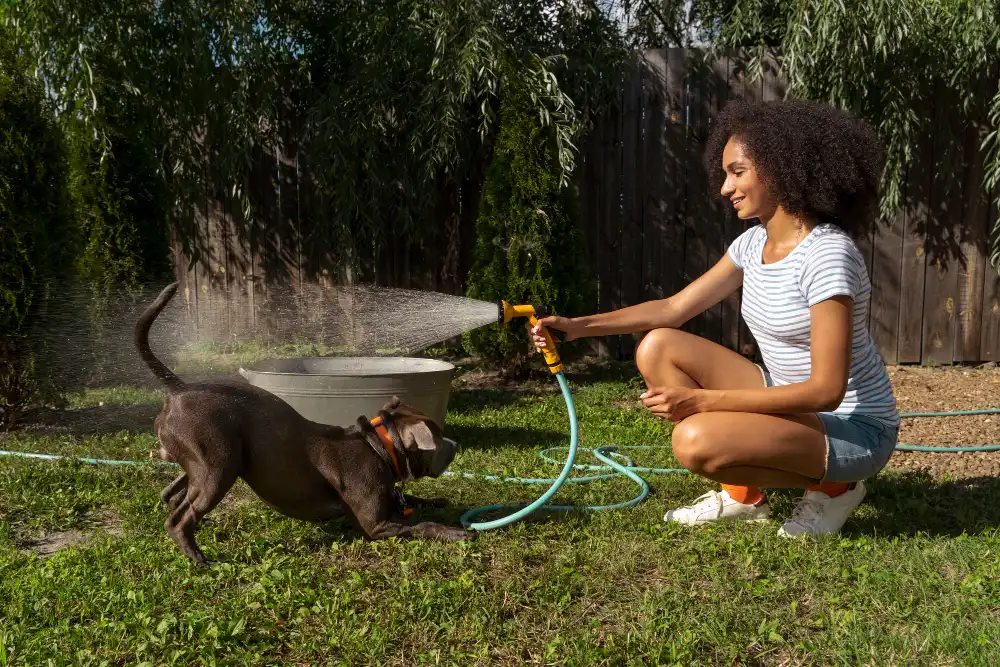
- Rinse paws when returning from walks during heavy treatment seasons
- For neighbors directly bordering your yard, consider a friendly conversation about timing
This is not paranoia – drift exposure is real and well-documented.
Signs of Chemical Exposure
If your pet has been exposed to lawn chemicals, watch for:
- Vomiting or diarrhea
- Excessive drooling
- Skin irritation, redness, or itching especially on paws and belly
- Tremors or unsteadiness
- Lethargy
- Loss of appetite
- Seizures (severe exposure)
If you suspect significant chemical exposure, contact your vet or the ASPCA Poison Control at 888-426-4435 or Pet Poison Helpline at 855-764-7661. For severe symptoms, go to the ER vet immediately. See our emergency vets near Fleming Island guide for area options.
Natural and Pet-Safer Alternatives
If you want to reduce chemical exposure:
For lawn fertilization:
- Compost-based fertilizers
- Corn gluten meal (acts as both fertilizer and pre-emergent)
- Less frequent applications
For weed control:
- Hand pulling for small areas
- Vinegar-based herbicides (less effective than chemicals but lower risk)
- Acceptance of some weeds in lawn
For mosquito control:
- Eliminate standing water (the highest-impact intervention)
- Bti (Bacillus thuringiensis israelensis) tablets for standing water that cannot be eliminated
- Outdoor fans (mosquitoes are weak fliers)
- Personal repellents during outdoor time rather than yard-wide spraying
For ants and other yard pests:
- Diatomaceous earth (effective and pet-safe)
- Targeted bait stations rather than broadcast spraying
- Beneficial nematodes for certain pests
Frequently Asked Questions
Is it safe to walk my dog on grass that was treated this week?
If treated more than 48 hours ago and the area is completely dry, generally yes. If you do not know the treatment status, choose a different route or rinse paws after.
Can my dog get poisoned from eating treated grass?
Yes, especially with granular products that have not dissolved or recent liquid applications. If you see your dog eating grass on a treated lawn, intervene and rinse the mouth.
Are “natural” mosquito sprays pet-safe?
“Natural” does not automatically mean safe. Cedar oil, garlic-based products, and essential oils can still cause irritation. Read specific product labels and ask about pet impact.
How do I know if my lawn service is using pet-safe products?
Ask for specific product names and MSDS sheets. “Pet-safe” with no specifics is a marketing claim.
My dog walked on a freshly treated lawn before I saw the sign. What should I do?
Rinse paws thoroughly with water and mild soap. Watch for symptoms over the next 24 hours. If anything concerning develops, contact your vet.
Is grass-eating safe?
Some grass eating is normal canine behavior. The issue is what is on the grass. Untreated grass eating in moderation is typically fine. Treated grass eating is a real exposure risk.
A Florida Reality Worth Managing
Florida pets have meaningfully more potential chemical exposure than pets in lower-treatment states. The cumulative effect over years is the part most owners do not think about. Awareness, asking lawn care companies for specifics, choosing walking routes thoughtfully, and rinsing paws after exposure all reduce the cumulative load.
If you want a sitter who knows to watch for lawn treatment signs on walks and avoid freshly treated yards, our in-home pet care and dog walking services include this attention to detail as standard.