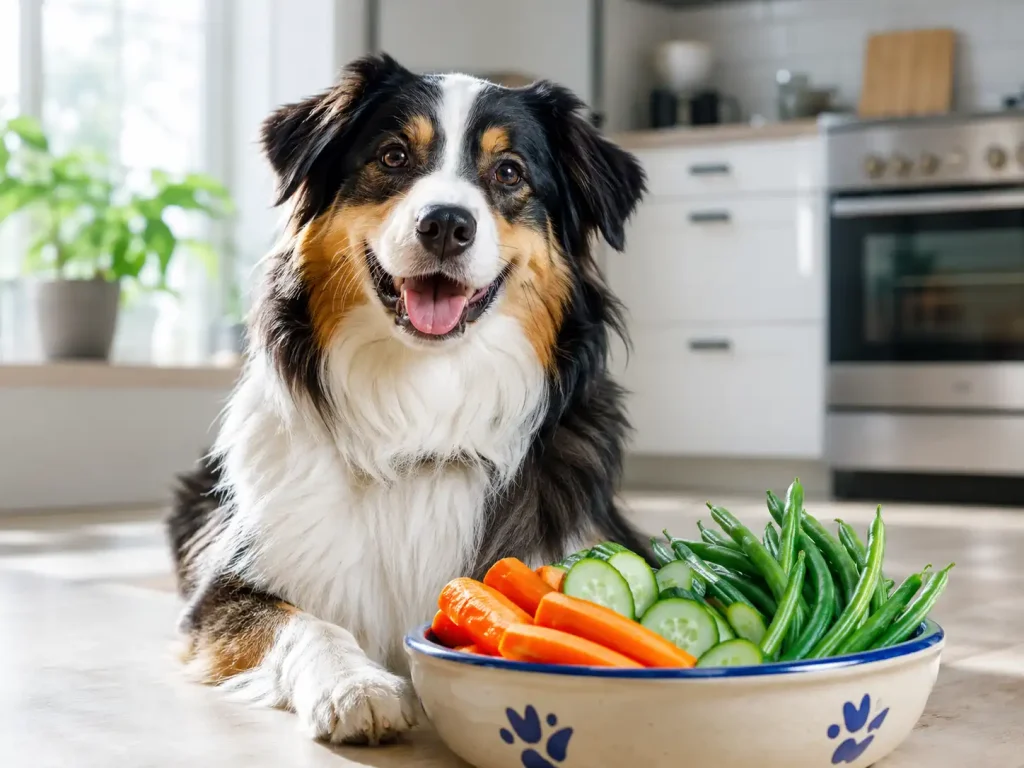
A lot of dogs love vegetables, and the right ones make a genuinely healthy, low-calorie treat. But “human food is fine for dogs” is a dangerous assumption. Some vegetables are nutritious and safe, a handful need to be limited or prepared a specific way, and a few are outright toxic and land dogs in the emergency vet.
This guide cuts through it: a quick at-a-glance chart, the safe vegetables worth feeding (with how to prepare each), the ones to never give, serving sizes by dog size, and special cautions for dogs with conditions like diabetes or a history of bladder stones. As an in-home pet care service in Jacksonville, we get asked about safe snacks constantly, so we built the resource we wish existed.
One ground rule first: dogs are omnivores and do not need vegetables the way they need a complete, balanced dog food. Veggies are a bonus, an occasional treat or topper, not a meal. And always check with your veterinarian before adding a new food, especially if your dog has a health condition or is on a prescription diet.
| 🟢 Safe (In Moderation) | 🟡 Feed with Caution | 🔴 Never Feed (Toxic) |
|---|---|---|
| Carrots, Green Beans | Spinach & Kale (Oxalates) | Onions, Garlic, Leeks, Chives |
| Cucumber, Plain Pumpkin | Broccoli, Cabbage (Gas Triggers) | Wild Mushrooms |
| Sweet Potato (Cooked) | Cauliflower, Brussels Sprouts | Raw or Green Potatoes |
| Zucchini, Bell Peppers | White Potato (Cooked Only) | Green/Unripe Tomatoes |
| Celery, Lettuce, Squash | Beets, Peas, Corn Kernels | Corn on the Cob, Avocado |
“In moderation” applies to everything here. Even the safest vegetable should stay within the 10% treat rule (see below).
Why feed your dog vegetables at all?
Used as treats or meal toppers, vegetables offer real benefits:
- Weight management. Most veggies are low in calories and high in fiber, so they help a dog feel full. Swapping a few high-calorie treats for green beans or carrots is one of the easiest ways to help an overweight dog.
- Digestive health. Fiber supports regular, healthy digestion. Plain pumpkin in particular can help with both mild diarrhea and constipation.
- Vitamins and antioxidants. Vegetables deliver vitamins A, C, and K, plus antioxidants that support the immune system.
- High-water vegetables like cucumber, celery, and lettuce add moisture, which matters a lot during a Florida summer.
- Training and enrichment. A crunchy carrot or a frozen veggie makes a satisfying, low-calorie reward.
Safe vegetables dogs can eat
Here are the vegetables you can feed with confidence, including the best way to prepare each. Green vegetables get their own emphasis here, since they tend to be the lowest in sugar and calories.
Green vegetables (the lowest-calorie, lowest-sugar options)
Green beans. One of the best all-around dog veggies. Low in calories, filling, and rich in fiber plus vitamins A, C, and K. Serve them raw, steamed, or boiled with no salt or seasoning, and skip salted canned versions. Vets often recommend a “green bean topper” to help dieting dogs feel satisfied.
Cucumber. About 96% water, so it is hydrating, low-calorie, and low-sugar, ideal for overweight dogs and hot days. Slice into bite-sized pieces and serve raw.
Broccoli. High in fiber and vitamin C. Best served cooked and plain in small amounts. Two cautions: broccoli florets contain isothiocyanates that can irritate the stomach in large quantities (keep it under 10% of the diet), and thick raw stalks can be a choking or obstruction risk, especially in small dogs.
Celery. Crunchy, hydrating, low in calories. De-string it and cut into small pieces so the stringy fibers do not cause a problem.
Peas. Green peas, snow peas, and sugar snap peas are a good source of vitamins A, C, and K plus fiber. Steam or boil them, and avoid salty canned peas. Note: peas contain purines, so dogs with kidney issues or a history of urate stones should skip them.
Zucchini. Low-calorie and full of fiber, antioxidants, and vitamins. Serve raw or steamed, plain. Never feed zucchini that has been cooked with garlic, onion, or salad dressing (dressings can also hide xylitol).
Leafy greens (lettuce, spinach, kale). Romaine, arugula, and other lettuces are low-calorie and hydrating. Spinach and kale are nutrient-dense but contain oxalates and (in kale) high calcium, which can contribute to bladder or kidney stones in susceptible dogs, so feed these two only in small amounts and skip them if your dog is stone-prone.
Brussels sprouts. Packed with fiber, antioxidants, and vitamins. Serve cooked and cut in half so the round shape is not a choking hazard. Expect gas if your dog eats too many.
Other safe vegetables
Carrots. A classic for good reason: high in fiber and beta-carotene, low in calories, and satisfying to crunch. Most dogs love the natural sweetness. Serve raw (in size-appropriate pieces to avoid choking) or cooked. Because they are higher in sugar, go easy with diabetic or overweight dogs.
Pumpkin (plain). A digestive superstar. Plain canned pumpkin or cooked fresh pumpkin (never pumpkin pie filling, which is loaded with sugar and spices) helps firm up loose stool and ease constipation. Start with one to two tablespoons mixed into food.
Sweet potato. High in fiber and vitamin A. Always serve cooked, never raw, and cut into small pieces. Higher in sugar, so limit for diabetic or overweight dogs.
Bell peppers. Any color is safe and rich in vitamins A, C, and E plus antioxidants. Red peppers have the most nutrients. Remove the stem and seeds and chop small; serve raw or lightly cooked.
Butternut and other winter squash. High in fiber, vitamin C, and antioxidants. Serve cooked and plain.
Cauliflower and cabbage. Both are safe, fiber-rich, and full of vitamins. Both can cause gas, so keep portions small and serve cooked for easier digestion.
Corn (kernels only). Plain corn kernels are safe and a common, digestible ingredient in dog food. The critical rule: never give corn on the cob. A swallowed cob does not break down and can cause a life-threatening intestinal blockage.
White potato (cooked only). Plain, cooked white potato is fine in small amounts. Raw potato is not, because raw and green potatoes contain solanine, a compound that causes stomach upset and can be toxic. Always cook, and never feed green-tinged potato.
Beets. Safe in moderation and a source of fiber and folate, but higher in sugar, so keep portions small.
Mushrooms (store-bought, plain only). Plain white button mushrooms from the grocery store, washed and unseasoned, are safe. Never let your dog eat wild mushrooms (see below).
Vegetables dogs should never eat
🛑 Warning: Hidden Allium & Toxicity Risk
The primary hazard often stems from hidden ingredients in human foods, such as garlic powder or onion extracts embedded in store-bought broths, seasonings, or gravies. Never share prepared human dishes or seasoned leftovers with your pet.
Some vegetables are toxic, and a few are dangerous because of how they are prepared. If your dog eats any of these, especially in quantity, call your veterinarian or an animal poison control line right away.
Onions, garlic, leeks, chives, and shallots. This entire allium family is toxic to dogs (and cats). It damages red blood cells and can cause a dangerous anemia. Toxicity builds up, so even small repeated amounts matter. The real risk is hidden allium: garlic or onion powder in broths, gravies, baby food, table scraps, and seasoned leftovers. This is why you never season a dog’s veggies and never share cooked human dishes.
Wild mushrooms. Many wild mushroom species are toxic and some are deadly, and they are extremely hard to identify. Treat any mushroom growing in your yard or on a walk as off-limits, and check your yard if your dog likes to forage.
Raw or green potatoes. Solanine in raw and green potatoes causes GI upset and can be toxic. Cook potatoes fully and discard any with green skin.
Green/unripe tomatoes and tomato plants. The ripe red flesh of a tomato is generally safe in small amounts, but the green parts, the stems, leaves, and unripe fruit contain solanine. If you garden, keep your dog away from the tomato plants.
Rhubarb. The leaves are high in oxalates and toxic, and can affect the kidneys.
Avocado. Technically a fruit, but commonly asked about. It contains persin and is high in fat; skip it.
Anything heavily seasoned, buttered, fried, or cooked into a dish. The vegetable itself may be safe, but added salt, butter, oil, onion, garlic, or xylitol-containing ingredients are not. (Xylitol, a sweetener found in some sauces, peanut butter, and baked goods, is extremely toxic to dogs.)
For a fuller rundown of dangerous foods, see our guide to toxic foods for dogs and cats, and if your dog forages in the yard, our list of toxic plants in Jacksonville yards and homes.
Raw or cooked: how to serve vegetables to dogs
Some vegetables are safer or more digestible one way than another:
- Better cooked: Cruciferous vegetables (broccoli, cauliflower, cabbage, Brussels sprouts) are gentler on the stomach cooked. Sweet potato, butternut squash, and white potato must be cooked. Cooking should be plain: steaming or boiling with no salt, oil, butter, or seasoning.
- Fine raw: Carrots, cucumber, green beans, celery, and bell peppers are all fine raw and many dogs prefer the crunch.
- Always: Wash thoroughly, remove stems/cores/seeds/pits, and cut into pieces sized for your dog to prevent choking or blockage.
How much is safe? Serving sizes and the 10% rule
The golden rule of treats: all treats combined, vegetables included, should make up no more than 10% of your dog’s daily calories. The other 90% should come from a complete, balanced dog food.
As a rough starting point for plain, dog-safe vegetables (adjust down for the 10% rule and your vet’s advice):
- Toy and small dogs (under 20 lb): about 1 to 2 tablespoons of chopped vegetable
- Medium dogs (20 to 50 lb): about 2 to 3 tablespoons, or a few small pieces
- Large dogs (over 50 lb): up to about a quarter cup
When in doubt, less is better. Too much of even a safe vegetable causes gas, loose stool, or an upset stomach.
How to introduce a new vegetable safely
- Pick one vegetable at a time so you can tell what agrees with your dog.
- Start tiny, a piece or two, and prepare it properly (washed, plain, correctly sized).
- Wait 24 hours and watch for vomiting, diarrhea, gas, or itching.
- Build up slowly only if your dog tolerates it well, staying within the 10% rule.
Special health considerations
Some dogs need extra care, and this is where most online lists fall short:
- Diabetic or overweight dogs: Limit higher-sugar vegetables like carrots, sweet potato, beets, and peas. Lean toward green beans, cucumber, celery, and leafy lettuce.
- Dogs prone to bladder or kidney stones: Limit oxalate-rich greens (spinach, kale) and purine-containing peas. Ask your vet which veggies fit their specific stone type.
- Dogs with a history of pancreatitis: Keep everything plain and fat-free, never cooked in oil or butter.
- Dogs on a prescription or therapeutic diet: Do not add anything, even healthy veggies, without your vet’s okay, since extras can undermine the diet.
- Puppies and seniors: Vegetables are fine at every life stage, but keep pieces small and soft for puppies and seniors with dental issues, and introduce new foods gradually.
If you ever notice ongoing soft stool, low appetite, or signs of discomfort after introducing veggies, our guide on recognizing pain and subtle changes in dogs and cats can help you read the signs.
A Florida tip: frozen veggies for the heat
In Jacksonville’s long, hot summers, frozen vegetables double as cooling enrichment. Frozen green beans, cucumber slices, or carrot coins give a heat-beating, low-calorie treat that also slows down fast eaters. Stuff a rubber toy with plain pumpkin and freeze it for a longer-lasting summer project. Just keep portions within the 10% rule, and remember that hydration and shade matter most on the hottest days.
When to call your vet
Contact your veterinarian (or an emergency vet) if your dog:
- Ate any onion, garlic, leek, chive, or shallot, or a dish seasoned with them
- Ate a wild mushroom, raw/green potato, rhubarb, or a corn cob
- Shows vomiting, diarrhea, weakness, pale gums, or a swollen belly
- Is straining, retching, or seems blocked after eating a large or hard piece
Not sure whether it is urgent? Our guide on ER vet versus regular vet walks through the decision.
Frequently asked questions
What vegetables can dogs eat safely? Safe vegetables for dogs include carrots, green beans, cucumber, plain pumpkin, cooked sweet potato, peas, zucchini, bell peppers, celery, leafy lettuce, broccoli, cauliflower, cabbage, Brussels sprouts, and butternut squash. Serve them plain, washed, and cut into appropriate pieces.
What green vegetables are good for dogs? Green beans, cucumber, broccoli, celery, peas, zucchini, and leafy lettuce are all good green options, low in sugar and calories. Spinach and kale are fine in small amounts but should be limited for dogs prone to bladder or kidney stones.
What vegetables are toxic to dogs? Onions, garlic, leeks, chives, and shallots are toxic, as are wild mushrooms, raw or green potatoes, rhubarb, and the green parts of tomato plants. Avocado should also be avoided.
Can dogs eat raw vegetables? Some, yes. Carrots, cucumber, green beans, celery, and bell peppers are fine raw. Potatoes and sweet potatoes must be cooked, and cruciferous vegetables like broccoli are easier to digest cooked. Always serve plain and properly sized.
How much vegetable can I give my dog? Keep all treats, including vegetables, to no more than 10% of your dog’s daily calories. A few tablespoons is plenty for most dogs, and small dogs need much less.
Can vegetables replace my dog’s regular food? No. Dogs need a complete, balanced diet. Vegetables are a treat or topper, not a meal, and should never make up the bulk of what your dog eats.