You’ve made the decision. There’s a puppy coming home maybe in a week, maybe next month and suddenly every browser tab is some version of “what do I actually need?” If you live in Jacksonville, almost all the advice you’re reading was written for somewhere else. It doesn’t account for our heat, our year-round fleas, our hurricane season, or the simple reality that your new puppy can’t safely walk across the asphalt on July 4th.
This is the Jacksonville-specific guide we wish every new puppy owner had written from the perspective of professionals who walk into homes during weeks 1, 2, and 3 of puppy ownership and see what’s actually going wrong (and right). Bookmark it. You’ll come back to different sections at different stages.
Before You Bring Your Puppy Home (Week 0)
The work you do before pickup day determines how the next two months feel. Most new owners overspend on toys and under-prepare on logistics. Flip that.
Choose Your Jacksonville Veterinarian
Pick your vet before pickup day. You’ll likely need a first-week visit, and being able to say “we’re already established with Dr. X” speeds everything up if something goes wrong.
When choosing a vet practice in the Jacksonville area, consider:
- Drive time from home. A vet 20 minutes away in normal traffic is 45 minutes in 5pm traffic, and an emergency at 6pm matters. Pick close.
- Practice size and same-vet continuity. Small practices give you the same vet each visit; larger groups give you broader hours but rotating doctors. Both work choose your priority.
- Emergency partner. Ask: “Who do you refer to after hours?” A good practice has an answer in three seconds. Save that ER vet’s number now.
- Puppy package pricing. Most practices bundle the first vaccine series and spay/neuter discount. Compare across 2-3 practices.
Jacksonville has strong veterinary coverage across Mandarin, Southside, Riverside, Avondale, and the beaches. If you’re new to the area, ask in your neighborhood Facebook group for recommendations local intel beats Google reviews here.
Florida-Adapted Supplies Checklist
The standard “puppy starter list” you’ll find on national sites is fine, but Florida changes a few items:
- Crate Wire crates breathe better than plastic in our humidity. Plastic gets musty fast. Size for adult dimensions with a divider for puppyhood.
- Bedding Skip thick stuffed beds the first month. Puppies overheat and chew. Use machine-washable flat mats.
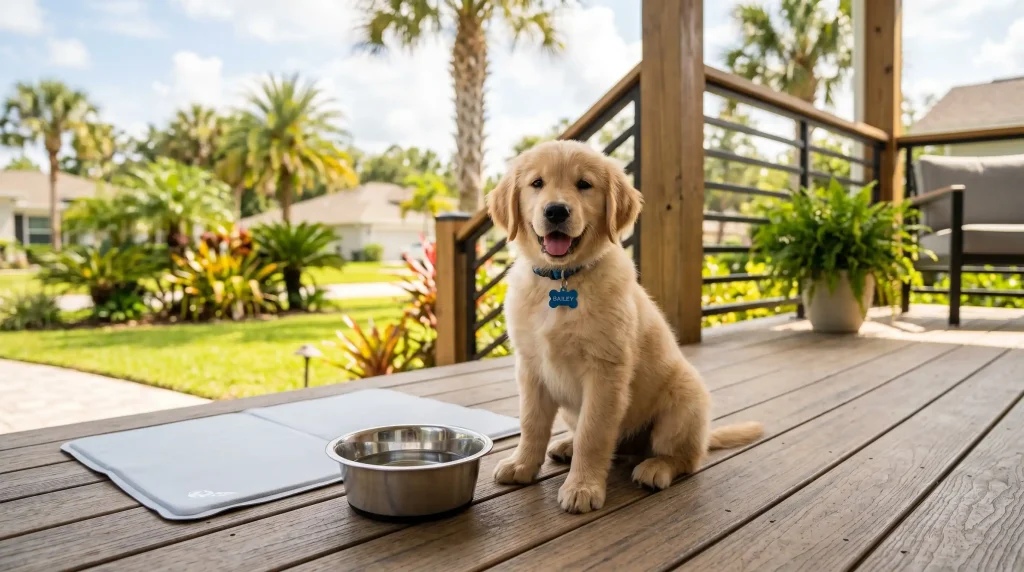
- Cooling mat Pressure-activated gel mats (not ice-cold) help during summer afternoons even with AC on. Buy one.
- Stainless steel bowls Plastic harbors bacteria fast in humidity and many puppies develop chin acne from plastic bowls.
- Long lead (15-20ft) More useful than a flexi-leash for early recall training in our backyards.
- Enzymatic cleaner Buy two bottles. You’ll need them.
- Vet-approved flea/tick preventive In Florida, you start month one. We’ll get to this.
What you don’t need yet: a giant toy collection, fancy treats, designer harnesses. Wait until your puppy’s adult size and chew style are obvious.
Puppy-Proofing a Florida Home
Most puppy-proofing guides cover electrical cords and toxic foods. Florida adds layers:
- Sago palms. If you have one in your yard, your puppy can die from chewing it. This isn’t an exaggeration. Sago palm ingestion is one of the most common deadly poisonings in Florida vet ERs. Either remove the plant or completely fence it off. We cover this in detail in our toxic plants in Jacksonville yards guide.
- Pool safety. A puppy can drown in a pool in minutes. Train pool exit (steps location) before allowing access. Some owners install a pool alarm specifically for the puppy phase.
- Lanai/screened porch heat. A lanai facing west reaches dangerous temperatures by 11am in summer. It’s not a safe puppy zone in July or August.
- Garage chemicals. Spilled antifreeze or rodent bait kills puppies fast. Audit your garage floor.
- Cocoa mulch is toxic. Pine bark and cypress are safer choices.
The First 30 Days
The first month sets the trajectory. Almost every “behavior problem” we see at 6 months traces back to a missed step in the first 30 days.
The Vaccination Timeline
Your puppy’s vaccine series determines what they can do, where they can go, and when. The typical Jacksonville schedule looks like:
- Weeks 6-8: First DHPP (some breeders give this)
- Weeks 10-12: Second DHPP + first leptospirosis (recommended in Florida due to standing water and wildlife)
- Weeks 14-16: Third DHPP + rabies
- Weeks 16+: Bordetella (kennel cough) if attending daycare or boarding
Your puppy is fully covered roughly two weeks after the final DHPP (around 18-20 weeks). Before that, you have to balance protection from disease against the critical socialization window and we’ll get to that.
House Training in Florida Humidity
Here’s something every Jacksonville owner discovers and no national guide mentions: Florida puppies pee more often. Heat means more water intake. AC running means dry indoor air means even more thirst. A puppy whose ideal “hold time” might be 3 hours in November is closer to 2 hours in August.
Build your schedule around this reality. A common rule is “one hour per month of age plus one” for hold time, but in summer, assume one hour less than that.
The Jacksonville-specific timeline: – After every meal: outside within 5 minutes – After every nap: outside before any play – Mid-afternoon (the hot part): a deliberate extra check – Last potty break: between 10-11pm if you sleep around midnight
Indoor pee pads can buy you time but extend total training time. Use them only if necessary, and never in the same spot you want clean.
Building a Sitter Relationship Early
Here’s the move most new owners miss. They wait until their first work trip at month 4 or 5 to find a pet sitter. By then, their dog is set in its ways and the sitter is a stranger handling an anxious puppy.
The better move: introduce a sitter in weeks 2-4, when your puppy is forming its idea of “normal people who come to the house.” Even one or two paid drop-in visits during this window means the sitter is a recognized face for the rest of your dog’s life.
We cover the puppy-specific sitter selection process in detail in our puppy-experienced sitter guide. The short version: ask any sitter you’re interviewing what vaccination stage they require before they’ll take a puppy, how they handle nipping and bite inhibition, and what their philosophy is on socialization outings.
Months 2–6: The Socialization Window
The 3-to-16-week window is the most important behavioral period of your dog’s entire life. What your puppy experiences during these weeks and what they don’t shapes their adult temperament. Skip this window and you’ll spend years compensating.
When to Start Daycare
Jacksonville daycares typically won’t accept a puppy until: – DHPP series is complete – Rabies is current – Bordetella has been given at least 7 days prior – The puppy is at least 16 weeks old (some require older)
That said, age and vaccines aren’t the only readiness check. A puppy that’s nervous, easily overstimulated, or hasn’t yet mastered basic frustration tolerance will have a bad first day at a busy facility. We outline a behavior-based readiness check in our puppy daycare timeline post.
A reasonable plan: start with trial half-days at 18-20 weeks if your puppy is socially confident. If not, build skills through structured play with vaccinated household-known dogs first.
Where to Socialize in Jacksonville
Public dog parks are not where you safely socialize an under-vaccinated puppy. They’re great later when your dog has impulse control, recall, and is fully vaccinated. For the early window, you want controlled, vaccinated, healthy social exposure.
Some Jacksonville-area options that work well during the socialization window: – Puppy classes Most reputable Jacksonville trainers run a puppy-only socialization class. These are designed for the under-vaccinated window and use only fully vaccinated peers in a sanitized environment. – Pet-friendly outdoor cafés and patios Carrying your puppy through these environments (before they’re fully vaccinated) builds tolerance for noise, crowds, and novelty without ground exposure. We list good spots in our pet-friendly Southside cafés guide. – Vetted private play dates A friend’s vaccinated, friendly adult dog is one of the best teachers. – Park observation Sit on a bench at a Jacksonville dog park at low-traffic hours and let your puppy watch from your lap, away from the fence.
Once fully vaccinated (around weeks 18-20), expand to ground-level interaction in the same environments.
For the full week-by-week plan, see our Jacksonville puppy socialization timeline.
Crate Training in a Florida Home
Crate training matters more in Florida than almost anywhere else, for one reason most owners don’t think about until it’s too late: hurricane evacuations. If you ever need to leave your home with your pet on short notice and at some point, living in Jacksonville, you will a crate-trained dog is the difference between an evacuation that works and one that goes badly.
It also matters for: – Sitter visits when you’re traveling – Vet stays – Recovery from spay/neuter or any future surgery – Safe rest during the puppy chewing phase
Crate placement in a Florida home is non-obvious. Avoid: – Garages (heat extremes) – Laundry rooms (heat from dryer, isolation) – Direct afternoon sun through west windows – Lanais (overheats)
Place the crate in an AC-zoned room close to family activity. Bedroom corners work well for night, living room for daytime quiet.
For the full crate protocol adapted to Florida homes, see our puppy crate training guide for Florida.
Months 6–12: Adolescence
This is the period almost no one warns new owners about. Around 6 months, the perfect puppy who was finally listening starts ignoring you, testing limits, and acting like a different dog. It’s hormonal and developmental not “bad training.” It will pass if you stay consistent.
Walking Schedule by Breed
In Jacksonville, walking schedules need to flex with the heat index. Some breed-specific notes:
- Working breeds (German Shepherd, Husky, Border Collie) Need 1.5-2 hours daily exercise. In summer, split into pre-dawn and post-sunset.
- Sporting breeds (Labs, Goldens, Doodles) 1-2 hours daily. Heat-tolerant but still need cool-time walks in summer.
- Brachycephalic breeds (Frenchies, Bulldogs, Pugs) 30-45 minutes only, and never in the heat. These breeds have specific risks we cover in our brachycephalic breeds in Florida heat guide.
- Toy breeds (Yorkies, Pomeranians, Maltese) Short walks plus indoor play. Heat-sensitive. Booties on hot pavement.
- Hounds Heat-tolerant if conditioned, but check paws after long walks.
Use the “back of your hand” rule on Jacksonville pavement from May through September. If you can’t comfortably hold the back of your hand on the sidewalk for 5 seconds, your puppy’s paws can’t handle it either.
Behavior Changes to Watch For
During months 6-12, expect: – Selective hearing Their recall regresses. Re-train with high-value rewards. – Resource guarding emergence If you see early signs, address now before it cements. A trainer is worth the cost here. – Fear periods Brief windows where your dog suddenly becomes spooked by familiar things. Don’t force exposure. Wait it out. – Reactivity onset If your dog starts barking and lunging at other dogs on leash, see our leash-reactive dog Jacksonville guide immediately. Early intervention is far easier than late.
Jacksonville Puppy Resources
Beyond the vet, you’ll want a few standing professional relationships:
- A trusted dog walker Especially for the working-from-home crowd whose schedule is unpredictable. See our Jacksonville dog walking services.
- A professional pet sitter For travel, hospital stays, and life-happens events. See our professional pet sitting services.
- A daycare option Whether daily or occasional, having a vetted facility relationship matters by months 6-8. See our dog daycare services.
- A trainer Even if you only do one class series, the foundation pays dividends for 15 years.
- An emergency vet number saved in your phone Not searched in a panic at 11pm.
If you live in one of our service areas, here’s where to start: – Pet care in Mandarin – Pet care in Southside Jacksonville – Pet care in Fleming Island – Pet care in Ponte Vedra – Pet care in Jacksonville Beach
Frequently Asked Questions
When can my Jacksonville puppy go to a dog park?
Wait until 1-2 weeks after the final DHPP shot (around 18-20 weeks), when full immunity has developed. Even then, choose off-peak hours for the first visits and stay close. Public dog parks have unvaccinated dogs occasionally and your puppy is still vulnerable until fully built up.
How often do puppies need to potty in Florida heat?
Most puppies need to go out roughly every (age in months + 1) hours during the day, but Florida heat means more water intake. In summer, subtract an hour from that estimate. An 8-week-old puppy in August may need to go out every 90 minutes; the same puppy in February may stretch to 2-3 hours.
When should I hire a pet sitter for my new puppy?
Ideally between weeks 2 and 4 after homecoming even before you “need” one for travel. Early sitter introduction means your puppy doesn’t see them as a stranger later. Look for sitters who require completed first vaccinations, have explicit puppy experience, and offer half-hour drop-in visits during the introduction phase.
What’s the biggest mistake new Jacksonville puppy owners make?
Two tie for first: missing the socialization window (weeks 3-16) by being too cautious about disease exposure, and underestimating Florida heat for outdoor schedule planning. Both cause years of downstream issues.
Can I take my under-vaccinated puppy out at all?
Yes but with discretion. Carry them in pet-friendly stores, hold them on patios, attend reputable puppy classes (sanitized indoor environments with vaccinated peers), and do car rides. Avoid: public ground, dog parks, communal pet potty areas, unfamiliar dogs.
How much should I budget for the first year of puppy ownership?
In Jacksonville, plan for roughly $2,500–$4,500 for the first 12 months, including initial supplies, vaccinations, spay/neuter, monthly preventives, food, training class, and unexpected vet visits. Pet sitting, daycare, and walks are separate. See our Jacksonville pet sitter cost guide for those numbers.
Should I get pet insurance for my puppy?
The strongest argument for pet insurance is enrolling during the puppy/kitten window when no conditions are pre-existing. Florida pet owners face elevated heartworm, parasite-borne disease, and heat-related claim risks. See our Jacksonville pet insurance guide for provider comparisons.
You’re Not Doing This Alone
Bringing home a puppy in Jacksonville is rewarding, exhausting, and genuinely hard work harder than most new owners are warned about. The first year is when habits form, problems either get solved or set in, and you build the team of professionals who’ll be in your dog’s life for the next 12-15 years.
We’re one of those professionals. If you’re in the Mandarin, Southside, Fleming Island, Ponte Vedra, or Jacksonville Beach areas and you’d like to talk about in-home pet care for your new puppy drop-in visits, dog walking, or longer overnight care for when you travel reach out. We work with puppies all the time, and our sitters know what’s different about them.
Good luck. The hard parts are temporary. The dog you’re building right now will be worth every weird tired week.