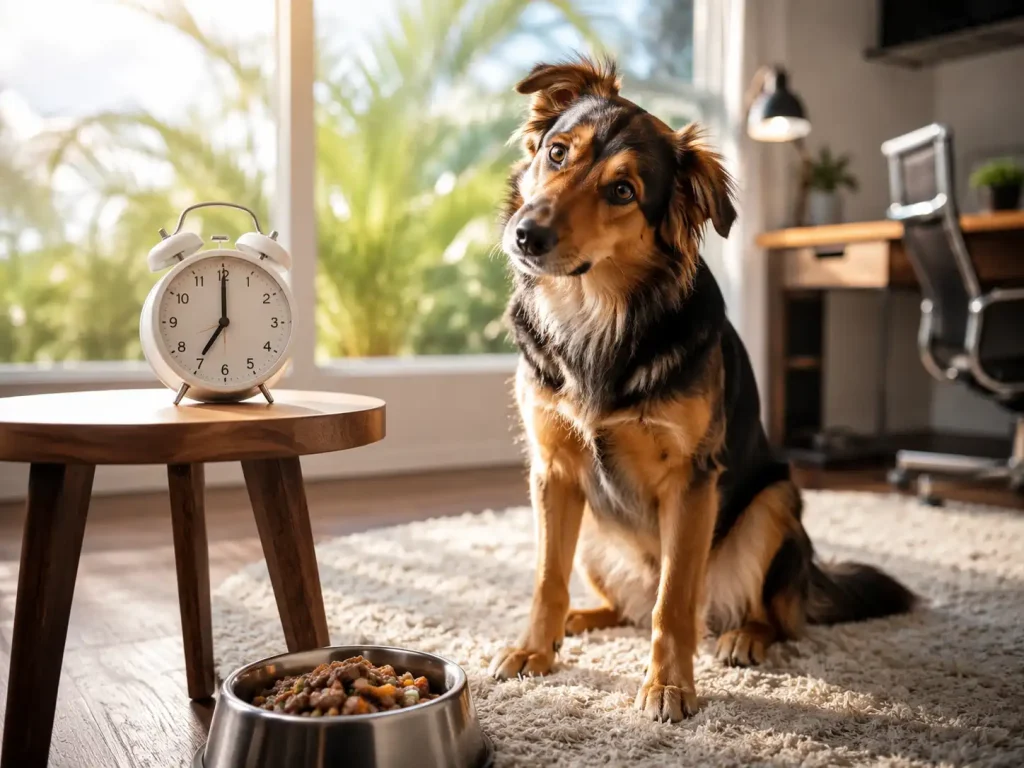
Twice a year, one of two things happens: an hour disappears or an hour appears. Your dog or cat has no idea why their breakfast is suddenly happening at the wrong time, and the result is anywhere from mild grumpiness to genuine digestive and behavioral upset.
Most owners do not bother adjusting pets in advance and just absorb 5-7 days of pet confusion. There is a better way that takes 4 days and works well.
Why Pets Struggle With the 1-Hour Shift
Pets are far more rhythm-driven than humans. Their digestion, sleep, activity cycles, and even hormone production follow predictable daily patterns. A sudden 1-hour shift can cause:
- Early-morning vocalization or pacing (especially with the fall change)
- Refusal to eat at the new meal time
- Bathroom timing problems (constipation or accidents)
- Increased anxiety or destructiveness
- Sleep disruption that compounds over the week
Cats often handle the shift better than dogs, but indoor cats with strict feeding schedules can still react.
The 15-Minute Gradual Method (4-Day Protocol)
Instead of changing everything at once, shift your pet’s schedule by 15 minutes per day for the four days leading up to the time change.
For the spring change (clocks forward, you lose an hour):
- Day 1 (4 days before): Feed, walk, and major activity transitions 15 minutes EARLIER than normal
- Day 2: 30 minutes earlier
- Day 3: 45 minutes earlier
- Day 4: 60 minutes earlier (matches the new schedule)
- Day 5 (Sunday, time change day): New schedule feels normal
For the fall change (clocks back, you gain an hour):
- Day 1: Feed, walk, etc. 15 minutes LATER than normal
- Day 2: 30 minutes later
- Day 3: 45 minutes later
- Day 4: 60 minutes later (matches the new schedule)
- Day 5: New schedule feels normal
The math is straightforward and the protocol is gentle. Your pet adjusts gradually rather than absorbing the whole shift in one day.
Spring Forward vs. Fall Back: Which Is Harder
In general, the spring change (losing an hour) is harder on pets than the fall change.
Why spring is harder: Pets often wake earlier than humans. With clocks moving forward, your pet’s internal clock is now 1 hour ahead of yours. They want breakfast at the new 6 AM (which feels like their old 5 AM). You want to sleep.
Why fall is easier: Your pet wakes earlier than usual relative to the new clock, but you have an extra hour of sleep banked. Most dogs and cats adjust within 2-3 days.
Use the gradual method for both, but expect spring to need slightly more attention.
What to Adjust
Shift these activities incrementally in the 4-day window:
Feeding times. The biggest one. Pets internal hunger cues are tightly linked to feeding schedules.
Walk times. Especially morning and evening walks. Dogs notice.
Medication timing. If your pet takes time-sensitive meds (especially insulin or seizure medications), do NOT shift medication times without consulting your vet. Some medications need exact 12-hour or 24-hour intervals regardless of clock changes.
Sleep cues. When you turn off lights, when household quiet begins, when crating happens.
Litter box maintenance for cats. Cats notice routine breaks in their environment.
For more on medication timing precision, see our pet medication administration guide.
Signs Your Pet Is Struggling
Most pets handle the shift within 3-5 days using the gradual method. Watch for:
- Continued early-morning vocalization or restlessness beyond day 7
- Persistent appetite changes
- Bathroom accidents in previously reliable pets
- New behavioral issues (destructiveness, increased clinginess, withdrawal)
- Aggression or unusual reactivity
If symptoms persist beyond a week, the cause is probably not the time change alone. Schedule a vet visit to rule out other issues.
Special Cases
Diabetic Pets
Insulin timing requires exactness. Do NOT shift medication timing for daylight saving without talking to your vet. Some vets advise keeping insulin on the old clock for a few days, others advise immediate switch. This is vet-directed.
Senior Pets
Older dogs and cats often handle routine changes worse than younger ones. Use the slower protocol (smaller daily shifts over 5-7 days instead of 4) and watch for confusion or accidents.
Pets With Anxiety
Dogs or cats with separation anxiety, generalized anxiety, or post-rescue settling issues may struggle more with routine shifts. Slower transitions help. Consider working with a pet sitter on a consistent schedule that does not require you to manage the transition alone.
Crate-Trained Dogs
If your dog has been alone in a crate during work hours, adjust the crate-out time gradually too. A 1-hour shift in alone time can result in accidents.
When You Need Help Managing the Transition
If you are traveling during the time change week, having a pet sitter who maintains the gradual protocol is genuinely valuable – it prevents the disruption stacking on top of your absence.
For routine sitter coverage, our in-home pet care and professional pet sitting services include schedule continuity for regular clients.
Frequently Asked Questions
Do I really need to do a gradual transition?
For most pets, no – they will adjust within a week regardless. The gradual method just reduces a few days of grumpiness. For sensitive pets, diabetic pets, anxious pets, or seniors, the gradual method makes a meaningful difference.
Can I just keep my pet on the old time?
Theoretically yes, if your schedule allows it. Practically difficult – your walks, vet appointments, and life events are all on the new time. Most owners adjust both their own and their pet’s schedules.
Do cats really notice daylight saving?
Indoor cats often notice, especially around feeding times. Outdoor or indoor-outdoor cats notice less because they follow sun cues rather than human schedules.
What about my dog’s bathroom schedule?
The 15-minute daily shift covers bathroom timing too. Take your dog out at the same gradually-adjusted times you would feed or walk them.
Will my pet’s appetite be off during the transition?
Possibly for 1-2 meals. Most pets self-correct quickly. If appetite loss continues beyond 48 hours or includes other symptoms (lethargy, vomiting), call your vet.
A Small Effort, A Better Week
The gradual method takes minimal effort and saves the household several days of pet confusion. It is one of those small lifestyle moves that pet owners often forget exists.
If you want a sitter who manages these kinds of small consistency details on your behalf during travel weeks, reach out about regular in-home pet care coverage.