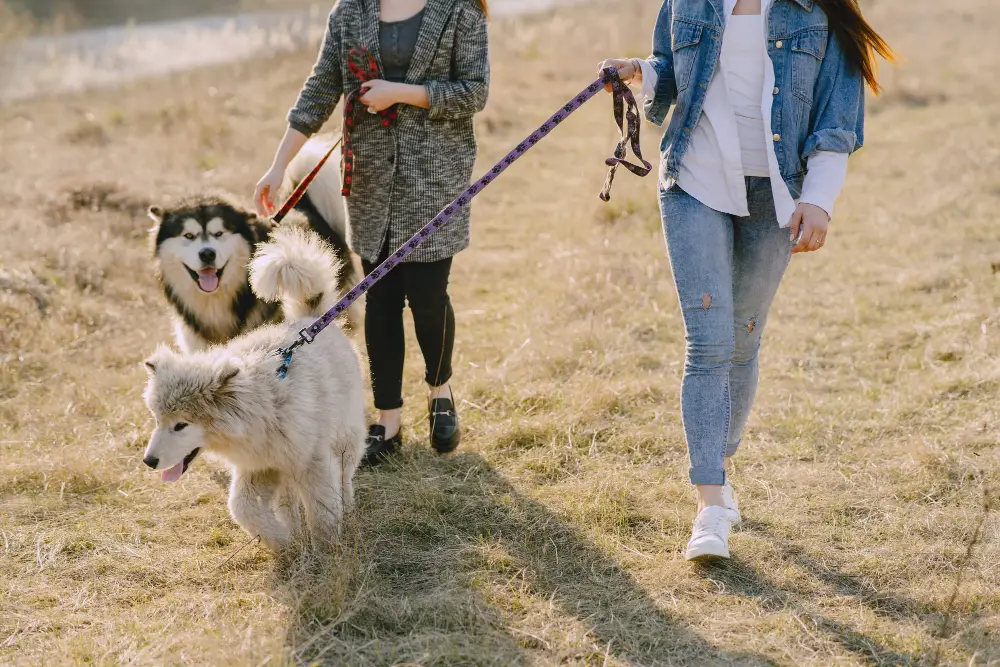
A leash reactive dog is the dog who lunges, barks, growls, or otherwise loses composure when they see another dog (or person, bicycle, skateboard, etc.) on a walk. This is one of the most common behavior problems Jacksonville dog owners face, and one of the most disruptive to daily life. The walk that should be enjoyable becomes stressful. Some owners stop walking their dogs altogether.
The good news: leash reactivity is highly treatable. It takes work, but the protocol is well-established. The other good news: Jacksonville has neighborhoods and routes that work better for reactive dogs while you do the training.
This is the working guide.
For broader behavior context, see our dog behavior training Jacksonville guide.
Understanding What Reactivity Actually Is
The most common misconception: reactivity is aggression. It usually is not.
Most leash reactive dogs are not trying to attack anything. They are either:
Fear-driven: Anxious about the trigger, trying to make it go away through loud, big behavior Frustration-driven: Excited and wanting to interact, but unable to because of the leash, creating frustration that expresses as lunging Mixed: Some of both, depending on the moment
The same lunging dog at the end of the leash might be terrified or eager. Reading which one yours is matters for treatment.
Common triggers:
- Other dogs (most common)
- Unfamiliar people
- Joggers, bicyclists, skateboards
- Children
- Specific dog breeds (often dogs that previously caused negative experiences)
- Wildlife (squirrels, cats)
Off-leash behavior often differs:
- Many leash reactive dogs are fine when off-leash with other dogs
- The leash itself contributes to the behavior (frustration, fight-or-flight limitations)
- This is why “your dog is friendly off-leash” is not contradictory to “reactive on leash”
The Treatment Protocol
The standard evidence-based approach is desensitization and counterconditioning. Like other behavior modification, it takes weeks of consistent work.
Phase 1: Distance Discovery
The first job is finding your dog’s threshold – the distance at which they notice triggers but do not yet react.
The threshold zone:
- Far enough away that your dog notices the trigger
- Close enough that your dog has some emotional response (interest, alertness)
- Far enough that your dog does NOT react with lunging, barking, or full panic
This distance might be 20 feet for one dog and 100 feet for another. Discover yours through controlled practice.
Phase 2: Counterconditioning at Threshold
The work happens at threshold distance. The goal: change your dog’s emotional response to the trigger from negative to positive.
The protocol:
- See the trigger at threshold distance
- The instant your dog sees the trigger, mark and treat (very high-value treats – chicken, cheese, hot dog, not regular kibble)
- Repeat: trigger appears, treats happen
- Over many repetitions (dozens to hundreds), your dog starts associating “trigger appears” with “treats appear”
The result: when your dog sees a trigger, instead of escalating to reactivity, they turn toward you expecting treats. This is the desired response.
Critical rule: stay at threshold distance. If you cross the threshold and trigger a reaction, you have set back the work. Better to do many sessions at the right distance than fewer sessions that fail.
Phase 3: Closing the Distance Gradually
Once your dog reliably looks at you for treats when seeing triggers at threshold distance, you can begin reducing distance.
- Reduce by 2-3 feet
- Continue the counterconditioning protocol
- Confirm the new distance is still under threshold
- Build positive associations
- Continue reducing distance only when the previous distance is solid
This phase typically takes 6-12 weeks for noticeable progress, and 6-12 months for full resolution.
Phase 4: Real-World Application
After meaningful progress, you start handling unplanned encounters:
- Use the same protocol when a trigger appears unexpectedly
- Have treats accessible at all times during walks
- Manage by creating distance when possible (cross the street, U-turn)
- Continue rewarding calm behavior
Equipment for Reactive Dogs
Equipment matters for reactive dogs:
Recommended:
- Front-clip harness (reduces pulling, gives owner more control – example: Freedom No-Pull, Balance Harness)
- Standard 4-6 foot leash (not retractable – retractables are dangerous for reactive dogs)
- High-value treat pouch
- Treats your dog only gets during training walks (not at home)
Generally not recommended:
- Prong collars: can increase reactivity by adding pain to the trigger experience
- Shock or e-collars: same issue, often worse
- Slip leads: limited control
- Retractable leashes: completely incompatible with reactive dog management
There are some advanced training contexts where balanced trainers use different tools. For most owners, positive reinforcement with front-clip harness and high-value treats is the recommended approach.
Lower-Trigger Walking Routes in Jacksonville
While you train, you need walking environments that allow practice without overwhelming triggers. Some Jacksonville areas work better than others for reactive dogs.
Generally easier (fewer surprise dogs):
- Low-traffic residential streets in quieter neighborhoods
- Wooded trails with good sightlines (you can see dogs approaching from distance)
- Times when fewer people are walking (very early morning, mid-day in summer)
- Less popular areas of large parks (away from the main entrance and main path)
Generally harder (more triggers):
- Riverside Arts Market area on weekends
- Popular dog parks (counter-intuitive – dog parks are NOT good for reactive dogs)
- Beach boardwalks during peak times
- Town Center area
- Crowded events
Specific helpful options:
- Hanna Park (Kathryn Abbey Hanna Park) on weekday mornings – long sightlines, can see other dogs coming
- Quieter portions of Jacksonville-Baldwin Rail Trail
- Black Creek Trail less-used sections
- Quiet residential cul-de-sacs in your own neighborhood
For broader walking route info, see our Jacksonville hiking trails dog guide.
Finding a Dog Walker Who Can Handle a Reactive Dog
Not every dog walker is equipped to handle a reactive dog. Walking a reactive dog incorrectly can:
- Set back your training progress
- Cause incidents with other dogs or people
- Create liability exposure
- Be unsafe for the walker and the dog
What to look for in a walker for a reactive dog:
- Experience with reactive dogs specifically (not just “experience with dogs”)
- Understanding of your specific training protocol
- Comfort with not socializing your dog mid-walk
- Knowledge of low-trigger routes
- Strong handling skills
- Calm energy that does not feed your dog’s stress
Questions to ask:
- Have you worked with reactive dogs before?
- What is your approach if my dog reacts during a walk?
- Will you use the equipment I provide (not their own corrective tools)?
- Can you describe how you would handle [specific scenario]?
Red flags:
- “Reactive dogs just need a firmer hand”
- Use of prong or e-collars
- Walking multiple dogs at once including your reactive dog (group walks usually unsuitable)
- Dismissing your training protocols
- Discomfort with not allowing your dog to greet others
A walker willing to walk your dog at your pace, on your routes, using your training methods, is worth significantly more than a cheaper option who undoes your work.
Our dog walking services include experience with reactive dogs and adherence to owner training protocols.
When to Bring in a Professional Trainer
Many cases of leash reactivity benefit significantly from professional guidance:
Consider a trainer when:
- You are not seeing progress after 4-6 weeks of consistent work
- Reactivity is severe (intense lunging, vocalization)
- Multiple triggers (not just dogs but also people, bikes, etc.)
- Aggressive elements suspected (vs. fear or frustration)
- You are unsure how to read your dog’s signals
Look for trainers with:
- Certified Dog Behavior Consultant (CDBC) credential
- Karen Pryor Academy certified training partner (KPA-CTP)
- CCPDT certification
- Specific experience with reactive dog training
- Positive reinforcement methods
For severe cases, board-certified veterinary behaviorist (DACVB).
Medication Consideration
For some reactive dogs, medication is part of effective treatment. This is appropriate for:
- Severe reactivity that is interfering with quality of life
- Reactivity that is not responding to behavior modification
- Multiple anxiety-related behavior issues
- Cases where the dog’s stress level seems disproportionate
Common medications (vet-prescribed):
- Fluoxetine for long-term anxiety
- Trazodone for situational anxiety (sometimes used pre-walk)
- Gabapentin
- Various combinations based on individual case
This is veterinary-directed and works alongside training, not instead of it.
Frequently Asked Questions
Will my reactive dog ever be “normal”?
Most reactive dogs improve significantly with treatment. Many become functionally non-reactive. Some maintain mild reactivity that owners manage. Few are fully “cured” but most reach a place where walks are enjoyable.
Should I avoid all triggers entirely?
Not entirely. Total avoidance prevents practice and treatment. The goal is to control distance to triggers – close enough to work, far enough to avoid full reactions.
Can I take my reactive dog to the dog park?
Generally no, especially during reactivity treatment. Dog parks have too many uncontrolled variables. They often set back reactive dog progress.
What if my dog reacts at someone walking their dog?
Brief reactions during the training process are normal. Apologize, manage by creating distance, do not punish your dog (this often worsens reactivity), continue your protocol. Most dog owners are understanding.
Should I cross the street when I see another dog?
Yes, during the training phase. Distance management is part of preventing rehearsal of reactivity. Once your dog has progressed sufficiently, you can stop crossing as often.
What if a loose dog approaches us?
Always a concern, especially in Jacksonville where loose dogs occasionally appear in neighborhoods. Strategies: body block your dog, drop treats in the path of the approaching dog (distraction), use a citronella spray (carry one), shout firmly. The single best protection is being able to identify and avoid loose-dog-prone routes.
Is reactivity my fault?
Probably not. Genetics, early socialization, prior experiences all contribute. Many owners do everything “right” and still have reactive dogs. Treatment is the focus, not blame.
A Common Problem With Real Solutions
Leash reactivity is one of the most common dog behavior issues Jacksonville owners encounter. It is also one of the most treatable when approached systematically. The dogs whose owners commit to the protocol typically reach a place where walks are pleasant within 6-12 months.
If you have a reactive dog and want a walker who supports your training rather than undermining it, our dog walking services and in-home pet care services include experience with this work.