When an unspayed female dog comes into heat, there’s a lot to keep track of: the bleeding, the behavior changes, the sudden interest from every male dog in the neighborhood, and the very real chance of an unplanned litter. Knowing how the heat cycle works, how long it lasts, and how to manage it makes the whole thing far less stressful.
This guide covers the four stages of the canine heat cycle, the signs to watch for, how long heat lasts and how often it happens, and how to care for your dog through it. As an in-home pet care service in Jacksonville, helping families manage a dog in heat safely is something we’re glad to support.
What does in heat mean?
In heat (estrus) is the part of the reproductive cycle when an unspayed female dog can become pregnant. Most dogs have their first heat around six months old, though it can be later, up to 18 to 24 months in some giant breeds. Unlike cats, dogs typically go through a full cycle just a couple of times a year.
The 4 stages of a dog’s heat cycle
| Stage | Roughly how long | What happens |
| Proestrus | ~9 days (3–17) | Bleeding and a swollen vulva; she attracts males but rejects them |
| Estrus | ~9 days (3–21) | The fertile phase; discharge lightens; she’s receptive and can get pregnant |
| Diestrus | ~2 months | The cycle winds down; she’s either pregnant or not (false pregnancy is possible) |
| Anestrus | ~4 months | The resting phase between cycles |
The part most people mean by “in heat”, the bleeding and fertility, covers proestrus and estrus, usually about two to three weeks total.
Signs your dog is in heat
Swollen Vulva
The outer genitals become noticeably enlarged, red, and engorged before bleeding begins.
Bloody Discharge
Active bloody discharge occurs as hormonal shifts prepare her reproductive tract.
Frequent Marking
Frequent urination deposit pheromones to advertise her fertile status to intact males.
Attracting Males
Intact male dogs can detect her scent and pheromones from immense distances.
Behavior Shifts
Restless, clingy, moody, or nesting behaviors are driven by massive progesterone changes.
Flagging Posture
Deflecting the tail firmly to one side when petted on her lower back to allow mating.
How long does a dog stay in heat?
The full heat (proestrus plus estrus) usually lasts about two to three weeks, sometimes up to four. The bleeding is typically heaviest in the first week or so and tapers off. The fertile window falls mainly during estrus (often around days 9 to 15 of the cycle), but it varies from dog to dog, which is exactly why she needs supervision the whole time, not just while she’s bleeding. First heats can be a bit irregular or even “silent.”
How often do dogs go into heat?
How to care for a dog in heat
- Supervise her at all times outdoors, on leash. Male dogs are remarkably determined, and she can become pregnant quickly. Never leave her unattended in the yard during heat. Skip the dog park, daycare and group settings for now.
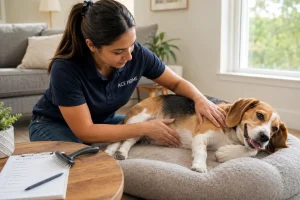
- Use dog diapers or washable wraps to manage the bleeding indoors, and change them regularly to keep her clean and comfortable.
- Keep her away from intact males, including any in your own home. A determined pair will find a way, so physical separation is the only reliable method.
- Be patient and comforting. She may be moody or clingy; extra quiet time helps.
- Don’t rely on scent-masking sprays. Products that claim to hide her scent from males aren’t dependable, supervision and separation are what actually prevent an accidental litter.
Spaying: the permanent solution
If you’re not planning to breed her, spaying ends heat cycles for good. It also prevents pregnancy and a dangerous uterine infection called pyometra, and greatly reduces the risk of mammary tumors. Spaying is usually done when a dog is not in heat, because the tissues are more engorged with blood during a cycle, making surgery riskier and costlier. Many vets prefer to wait a couple of months after a heat. Ask your vet about the best timing for your dog.
After heat: watch for pyometra
🚨 EMERGENCY ALERT: Understanding Pyometra Symptoms
Pyometra is a rapid onset, life threatening infection of the uterus that develops in the month or two following her heat cycle. If you notice pus like or foul vaginal discharge, sudden excessive drinking or frequent urination, extreme lethargy, vomiting, or a painful, swollen abdomen, treat this as an absolute emergency. Proceed to your vet or nearest emergency clinic immediately.
In the weeks after a heat, unspayed dogs are at risk of pyometra, a serious, life-threatening infection of the uterus. Call your vet right away if, in the month or two after a heat, your dog has pus-like or foul discharge, drinks and urinates much more than usual, is lethargic, off her food, vomiting, or has a swollen belly. Pyometra is an emergency, and it’s one of the strongest reasons to spay. Our guide on ER vet versus regular vet can help you act fast.
What about male dogs?
Males don’t have heat cycles, but an intact male near a female in heat will often whine, pace, mark, and try hard to escape and find her. Neutering reduces these behaviors and the urge to roam.
Could she be pregnant?
If your dog was around an intact male during her fertile window, even briefly, she may be pregnant. Dog pregnancy lasts about 63 days. If a litter is on the way, our new puppy owner guide will help you prepare. (Curious how this compares to cats? See our guide on a cat in heat, their cycle is quite different.)
A quick Jacksonville note
Managing a dog in heat mostly comes down to supervision, keeping her leashed, away from intact males, and out of group settings for those few weeks. If you’d like a hand with safe walks and care while you’re at work or away, our in-home pet care in Jacksonville can help.
Frequently asked questions
How long are dogs in heat? The full heat usually lasts about two to three weeks (sometimes up to four). The bleeding is heaviest in the first week or so, and the fertile window falls mainly in the middle of the cycle, though it varies, so supervise her the entire time.
How often do dogs go into heat? About twice a year on average (roughly every six months). Small breeds may cycle more often (every four months), while large and giant breeds may cycle less often (every 8 to 12 months).
How long do dogs bleed in heat? Bleeding is usually heaviest during the first week or so of the cycle and then tapers off, but she can still be fertile after the visible bleeding lessens, so keep supervising.
What are the four stages of a dog’s heat cycle? Proestrus (bleeding, swollen vulva, rejects males), estrus (the fertile, receptive phase), diestrus (the cycle winds down, pregnant or not), and anestrus (the resting phase between cycles).
Should I use diapers for my dog in heat? Dog diapers or washable wraps are a helpful way to manage bleeding indoors. Change them regularly to keep her clean and comfortable, they don’t prevent pregnancy, so supervision is still essential.
Can you spay a dog while she’s in heat? It’s possible, but the tissues are more engorged with blood during heat, making surgery riskier and more expensive, so many vets prefer to wait a couple of months. Ask your vet about timing.
When should I worry after my dog’s heat? In the weeks after a heat, watch for signs of pyometra, a serious uterine infection, such as pus-like discharge, excessive drinking and urination, lethargy, or a swollen belly. These need emergency veterinary care.