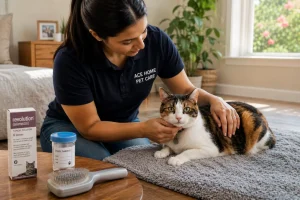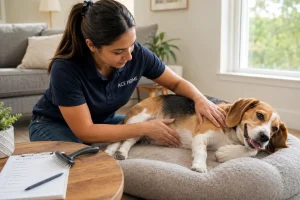
A lot of new Florida pet owners hear “year-round flea and tick protection” and assume it is marketing. It is not. Florida’s mild winters genuinely do not interrupt parasite life cycles, and the cost of finding out the hard way is dramatically higher than the cost of consistent monthly preventives.
This is the working guide to why year-round matters in Jacksonville and what your options are.
Florida’s Mild Winters: Why Parasites Never Sleep
In states with hard freezes, fleas and ticks experience seasonal die-back. The few that survive winter in protected indoor spots restart populations in spring, but the cycle is interrupted enough that some owners can take winter months off preventives.
Jacksonville does not work that way. Winter lows in Jacksonville typically range from the 40s to 60s, with occasional brief dips into freezing. That is warm enough for fleas, ticks, and mosquitoes to continue reproducing year-round.
The result: skip preventives in December and January, and by February-March you typically have:
- Flea populations in your yard, carpets, and pet bedding
- Tick populations on local wildlife passing through
- Heartworm exposure from mosquitoes that never fully went away
The math of skipping months almost never works in Florida. The savings on 2-3 months of preventive is wiped out by one infestation treatment, let alone heartworm treatment.
Fleas: Lifecycle in Florida Climate
A flea life cycle has four stages: egg, larva, pupa, adult. In Florida humidity and warmth, the cycle completes in 2-3 weeks year-round.
What this means practically:
- A pet brings home a few fleas from a walk
- Those fleas lay eggs in your carpet, bedding, yard
- Within 3 weeks you have 50-100x population
- Within 6 weeks you have a household infestation requiring treatment
Hot zones in Florida homes and yards:
- Carpets and rugs (eggs and larvae thrive)
- Pet bedding
- Furniture upholstery
- Crawl spaces and under-deck areas where wildlife also visits
- Shaded yard areas (sun kills eggs, shade preserves them)
Signs of fleas:
- Scratching, especially at the rear and base of tail
- Black specks (flea dirt) in pet fur or on bedding
- Visible fleas, especially on the belly or rear
- Hair loss in chronic cases
- Pale gums in heavy infestations (anemia in small pets)
Ticks: Florida Species and Disease Risks
Several tick species are common in Jacksonville:
- American dog tick – common, carries ehrlichiosis and Rocky Mountain spotted fever
- Brown dog tick – common, can complete entire life cycle indoors
- Lone star tick – very common in Florida, aggressive biter
- Gulf Coast tick – present in coastal areas
- Black-legged tick (deer tick) – carries Lyme disease, less common in FL than further north but present
Tick-borne diseases include ehrlichiosis, anaplasmosis, Rocky Mountain spotted fever, Lyme disease, and babesiosis. Some are immediately symptomatic; others can have a delayed onset weeks to months after the bite.
Tick check after outdoor time:
- Ears (inside and outside)
- Between toes and on paw pads
- Under collar
- Armpit and groin
- Around eyes and muzzle
- Along the spine and base of tail
Remove ticks with fine-tipped tweezers, grasping at the head as close to the skin as possible. Pull straight up with steady pressure. Do not twist. Clean the bite site with rubbing alcohol after.
Heartworm: Florida Has Among the Highest Rates in the Country
Heartworm is transmitted by mosquitoes. The American Heartworm Society’s incidence data consistently shows Florida as one of the highest-prevalence states in the US.
The mechanism:
- An infected mosquito bites your dog
- Heartworm larvae enter the bloodstream
- Over 6-7 months, larvae mature into adult worms that live in the heart and pulmonary arteries
- Untreated, heartworm causes heart failure and death
- Treatment is expensive (often several thousand dollars), takes months, and carries significant risk to the dog
Prevention vs. treatment math:
- Monthly preventive: roughly $10-30 per month depending on product
- Annual heartworm test at vet: roughly $35-65
- Heartworm treatment if diagnosed: $1,500-5,000 plus weeks of restricted activity
Skip prevention to save $250 per year, risk a $3,000+ treatment that may permanently damage your dog’s heart. This is not a close cost-benefit analysis.
Cats and heartworm:
Cats can get heartworm but show different symptoms than dogs (often respiratory rather than cardiac). There is no treatment for heartworm in cats – only prevention. Year-round prevention is even more important for cats because of this.
Comparing Prevention Methods
Three main categories of flea, tick, and heartworm prevention. Most owners use one product or a combination.
Oral Preventives
Examples: NexGard, Bravecto, Simparica, Trifexis, Heartgard, Interceptor
Pros: No topical residue. No washing-off concerns. Convenient. Some cover all three (fleas, ticks, heartworm) in one pill.
Cons: Some dogs have GI sensitivity. Cannot be used safely in dogs with certain seizure conditions (some brands). Cost slightly higher in some cases.
Topical Preventives
Examples: Frontline Plus, Advantix, Revolution, Advantage Multi
Pros: Apply once monthly between shoulder blades. Effective against fleas and ticks. Some products also cover heartworm. Often cat-safe versions.
Cons: Can wash off with frequent bathing. Some dogs are sensitive to the carrier. Application timing matters relative to baths and swimming.
Collars
Example: Seresto
Pros: Up to 8 months of protection from one collar. No remembering monthly doses. Effective against fleas and ticks.
Cons: Some controversy and complaint reports in recent years (verify current status with your vet). Must be properly fitted. Does not cover heartworm.
For heartworm specifically: A separate monthly heartworm preventive is still required if using a flea/tick collar. Heartgard, Interceptor, and Sentinel are common heartworm-only options.
Cat-Specific Considerations
Cats have specific parasite control needs that differ from dogs:
- Many flea/tick products labeled for dogs are toxic to cats – especially permethrin-containing products
- Indoor-only cats still need preventives – fleas come in on humans, dogs, mice, and outdoor cats visiting
- Heartworm cannot be treated in cats, only prevented
- Revolution and Bravecto have cat-safe versions
- Topicals applied between shoulder blades or at base of skull (cats lick off chest applications)
If you have a household with both cats and dogs, do not assume products are interchangeable. Always check the species labeling.
Yard Treatment Considerations
Beyond on-pet preventives, yard treatment reduces re-infestation risk:
- Professional pest control with pet-safe protocols can reduce yard flea and tick populations
- Wait times after treatment are typically 24-48 hours before pets re-enter the treated area
- Some products work via slow growth regulators rather than acute insecticides
Be careful about pet exposure to lawn chemicals – see our lawn chemical and pesticide safety guide for the broader picture.
What to Tell Your Sitter About Parasite Schedule
If you use a regular pet sitter, share:
- What preventive your pet is on and what schedule
- When the next dose is due
- Where you store the products
- Any sensitivities your pet has shown
This helps the sitter spot fleas or ticks during visits and not accidentally cause a missed dose during your travel.
Frequently Asked Questions
Can I really skip flea and tick prevention in Jacksonville winter?
Almost never. Florida winters are too mild to interrupt parasite life cycles. Skip 2-3 months and you typically see infestation by spring. The recommendation is year-round, every month, every product type.
How often should my dog be tested for heartworm?
Annual heartworm testing is standard, usually done at your dog’s annual exam. Cats can also be tested but the test interpretation is different and less straightforward.
What if I find a tick on my dog? Do I need to go to the vet?
Not usually for a single tick that has been on briefly. Remove with tweezers, clean the bite site, monitor for 30-45 days for tick-borne illness symptoms (lameness, fever, lethargy, decreased appetite). If you see symptoms, see your vet.
Are natural flea preventives effective in Florida?
Generally not at the level needed for Florida’s parasite pressure. Some natural products have modest deterrent effects but rarely match the efficacy of veterinary-grade preventives. Florida is not the state to experiment with reduced-effectiveness products.
My pet has been on prevention for years but just got fleas. What happened?
Possible reasons: missed dose, product wore off near end of monthly cycle, frequent bathing washed off topical, pet vomited within 2-3 hours of oral dose, or product is no longer effective against resistant flea populations in your area. Talk to your vet about switching products or rotating.
Is heartworm really that common in Florida?
Yes. Florida ranks consistently among the highest-prevalence states. Your vet sees heartworm-positive dogs every month. Some neighborhoods have higher mosquito loads (near water, undeveloped lots, golf courses with retention areas) but no Jacksonville neighborhood is exempt.
Year-Round Means Year-Round
The math always favors prevention in Florida. Set up auto-shipping from your vet or a pet pharmacy so you never have a gap. Calendar reminders work too. The investment is one of the highest-return decisions in Florida pet ownership.
If you want a sitter who keeps your preventive schedule on track during your travel weeks and notices fleas or ticks during visits, our in-home pet care and professional pet sitting services include this attention to detail.