When you are home with your indoor cat, low-grade enrichment is built into daily life. You move around the house. You sit on the couch and they curl up next to you. You open the refrigerator and they investigate. You play with them in the evening. Even without intentional enrichment, your presence is enrichment.
When you travel, all of that disappears. Your cat is alone for hours or days at a time, with whatever stimulation the environment provides. For most indoor cats, that is not enough.
This is the working guide to setting up your indoor cat’s environment for the days you are away, and what the sitter can do to keep enrichment fresh.
For broader cat care, see our Jacksonville cat care complete guide.
Why Enrichment Matters More When You Are Gone
Three reasons travel time is harder on cats than owners realize:
Reduced ambient stimulation. Without your movement, voice, and routine, the house is quieter. Cats notice.
Stress depresses normal play interest. Some cats stop their usual play behavior during owner absence. Enrichment compensates.
Idle time creates problems. Bored cats develop behavioral issues: overgrooming, destructive scratching, food anxiety, hiding excessively. Enrichment prevents these.
A well-enriched cat handles travel better. Less stress, less weight loss, better appetite, less behavioral issues to address when you return.
The 3-Pillar Setup
Effective enrichment hits three categories:
Food enrichment – making eating an activity rather than a passive event Mental enrichment – giving the cat something to think about Physical enrichment – opportunities for movement and play
A complete setup includes all three.
Puzzle Feeders: Top Picks by Budget
Food puzzles convert passive feeding into mental and physical exercise. They are the highest-impact enrichment for most cats.
Budget tier ($):
- Cardboard rolls stuffed with kibble
- Egg cartons with food in the cups
- DIY: poke holes in a small plastic container and fill with kibble
Mid-tier ($$):
- Pet feeding ball or rolling treat dispenser
- Stationary puzzle boards with food chambers
- Snuffle mats (cloth foraging mats)
- Multiple puzzle types rotated daily
Higher tier ($$$):
- Catit Senses feeding circuits
- Trixie multi-level food puzzles
- Doc and Phoebe’s Indoor Hunting Feeder (multiple small mouse-shaped feeders hidden around the house)
For trips of 3+ days, having 2-3 different puzzle options that the sitter can rotate prevents puzzle fatigue.
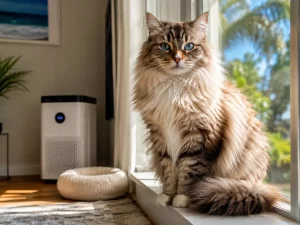
Window Perches and Bird TV
Cats are visually engaged for hours by what is happening outside. Practical setup:
Window perch placement:
- Facing trees, bird feeders, or active streets
- Bird feeder outside the window dramatically increases engagement
- Squirrel feeders count as bird TV – same visual reward
- Avoid placing perches in direct afternoon sun (heat risk)
For homes with limited windows:
- Bird videos on TV (search YouTube for “bird video for cats”)
- Cat-specific TV programming on streaming services
- Loop-playing nature videos on a tablet placed where your cat can see
Have the sitter turn on the bird video at the start of their visit if you typically have it on during the day.
Toy Rotation Schedule
The key insight: cats lose interest in toys they have constant access to. The same toy rotated in and out cycles fresh interest.
Rotation principle:
- Have a small number (5-7) of toys available at any time
- Store another 5-7 in a closet or container
- Each sitter visit, swap a few toys
Effective toy categories:
- Wand toys (interactive only, not left out unattended)
- Small soft toys for batting and carrying
- Catnip toys (rotate to prevent habituation)
- Crinkle toys (audio interest)
- Tunnel for hiding and pouncing
- Cat trees or climbing structures (left out, not rotated)
Sitter instructions:
- “Rotate three toys from the closet into the living area; put three current toys away”
- “Have one 5-minute interactive wand session per visit”
- Take 30 seconds of video if possible (you can see your cat playing while you are away)
Catnip, Silvervine, and Honeysuckle: Cycles and Cautions
Cat-safe herbs that trigger play and pleasure responses. Some cats are highly responsive; others are not (about 30% of cats do not respond to catnip due to genetics).
Catnip:
- Most familiar option
- Effect lasts 10-15 minutes
- Tolerance develops with constant access; let your cat have a break of a few days between
Silvervine:
- Often appeals to cats that do not respond to catnip
- Strong effect, sometimes stronger than catnip
Valerian and honeysuckle:
- Some cats respond strongly to these
- Available as dried herbs or stuffed in toys
For travel, having a small stash of fresh catnip or silvervine for the sitter to refresh toys with is a low-effort high-impact addition.
Cardboard Boxes and Free Enrichment
Some of the best enrichment is free:
- A large cardboard box (open or with a cat-sized hole cut) is endlessly interesting
- A paper bag (handles removed for safety) is hours of entertainment
- A clean cardboard cat scratcher refreshed quarterly
- Crinkled brown paper for batting around
- Empty toilet paper rolls (some cats love these)
Tell your sitter that boxes can be left out and rotated even after you have been “done” with them.
What to Avoid
A few things that look like enrichment but are not helpful:
Leaving your cat with constant catnip access. Tolerance builds, response decreases. Save it for rotation.
Laser pointer overuse. Without a physical “catch” at the end, repeated laser play can cause frustration and obsessive behaviors in some cats. Use briefly and always end with a tangible toy your cat can catch.
Loud TV or music left on. Some sources recommend this for anxious cats, but loud constant sound can be stressful. Calm music or specifically composed cat-music is better than regular TV.
Toys with small detachable parts. Choking and ingestion risk. Check toys for wear before leaving.
Strings and ribbons left out. Eating risk (linear foreign body – same surgical emergency as tinsel for cats).
Sample Daily Enrichment Schedule for Sitter
What the sitter can deliver during one visit:
Arrival (1-2 minutes):
- Quick check on cat location
- Refresh water
- Scoop litter
Active enrichment (10-15 minutes):
- Fresh food + puzzle feeder loaded
- Wand toy session (5-10 minutes)
- Rotate 1-2 toys from rotation
Departure setup:
- Bird TV or window blinds adjusted
- Treat hidden in puzzle for “after I leave” reward
- Light source check (avoid total darkness for cats with reduced vision)
A 30-minute visit done well includes all of these. A 15-minute visit hits the highlights but compromises engagement.
Frequently Asked Questions
How long can my indoor cat be alone without enrichment?
Healthy adult cats handle 24 hours alone with adequate baseline enrichment (food, water, litter, view). Beyond that, daily sitter visits with active enrichment significantly improve welfare.
Does my cat really need play sessions during sitter visits?
Yes, especially during longer absences. Play satisfies hunt drive, prevents weight gain, reduces stress, and gives cats a positive interaction with the sitter that builds trust over time.
What if my cat is too shy to play with the sitter?
Many cats will not play with a new sitter for the first several visits. Leave the toys in normal locations and have the sitter try briefly, but do not force it. The sitter’s main job for shy cats is making sure food, water, and litter are managed.
Should I buy automatic feeders for long trips?
Automatic feeders work for measured dry food but do not replace a sitter. Cats need human checks for litter, water freshness, and welfare. Automatic feeders can supplement (especially for cats fed multiple small meals) but are not a substitute for visits.
How often should toys be rotated?
Every 3-5 days for active engagement. For trips of a week or longer, plan multiple rotations across sitter visits.
Are cat fountains worth it?
For many cats, yes. Cats often drink more from moving water, and increased water intake reduces urinary issues common in cats. A fountain is a one-time purchase that pays off in long-term cat health.
Enrichment Is Not Optional
For indoor cats, enrichment is not a luxury – it is a core welfare requirement, especially during owner travel. Setup takes one or two evenings before your trip. The payoff is a cat who returns to normal quickly when you come home rather than spending several days decompressing.
If you want a sitter who actively delivers enrichment rather than just basic feeding and cleanup, our professional cat sitting and in-home pet care services include enrichment as standard practice.