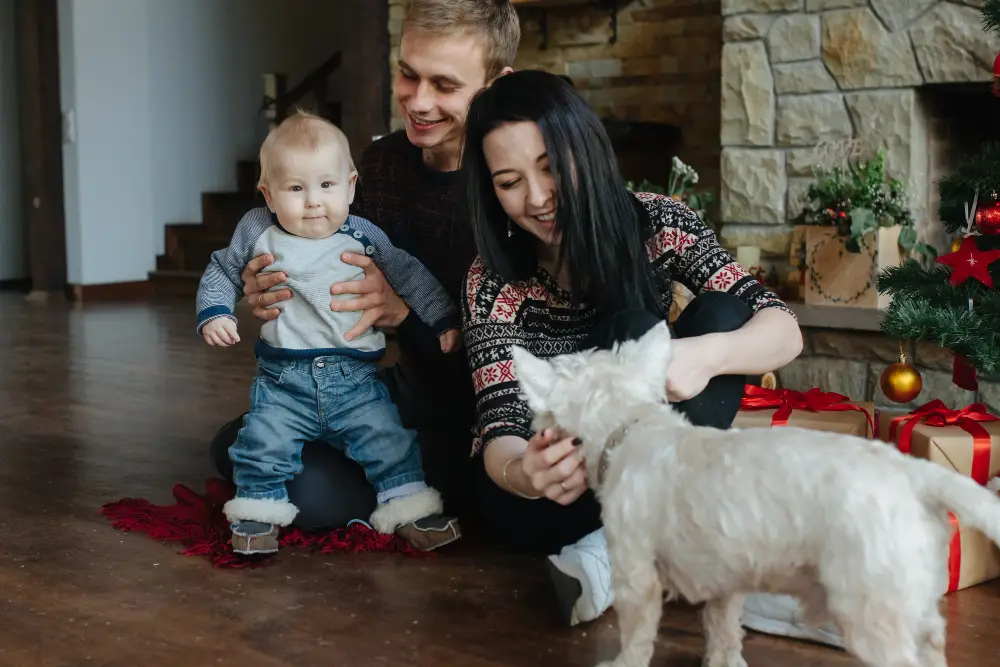
Bringing a baby home is one of the most disruptive household changes a dog can experience. The dog who was the center of attention becomes a secondary priority overnight. Sounds change, smells change, schedule changes, and the people who provided constant connection are suddenly distracted, exhausted, and stressed.
Done well, dogs adjust to babies within 2-3 months and form lifelong bonds with their human siblings. Done poorly, behavioral issues emerge that take months or years to resolve, and in worst cases, a dog and baby cannot safely share a home.
This is the working guide for Jacksonville families expecting a baby with a dog already in the home.
For broader transition context, see our pet life transitions guide.
Honest Assessment First
Before pregnancy progresses far, take an honest look at your dog:
- Has your dog ever shown aggression toward children?
- Is your dog reactive to loud noises (crying, alarms)?
- Does your dog get protective of food, toys, or sleeping spots?
- How does your dog behave around toddlers at parks or family gatherings?
- Has your dog ever bitten anyone, even mildly?
If you have concerns, consult a certified dog trainer or veterinary behaviorist EARLY – ideally in the first or second trimester. Issues found early can often be resolved. Issues found after baby arrives are harder to manage.
Phase 1: Early Pregnancy (Months 1-4)
Establish baseline good behavior:
- Reliable basic commands: sit, down, stay, leave it, come, off
- Polite leash walking
- Settling on a mat or bed when asked
- Comfortable being alone for normal periods
- Boundaries around furniture and rooms as you want them post-baby
If your dog does not have these skills solid, NOW is the time to invest in training. Working with a certified dog trainer for several months before the baby arrives is one of the highest-impact things you can do.
Vet check:
- Confirm vaccinations current
- Address any health issues
- Discuss any medications that might be affected by household chemistry changes
Phase 2: Mid Pregnancy (Months 4-7)
Sound desensitization:
- Download recordings of baby sounds (crying, cooing, infant gear sounds)
- Play at low volume during meals and play (positive associations)
- Gradually increase volume over weeks
- Most dogs adjust well to baby sounds with this preparation
Equipment introduction:
- Bring out stroller, baby carrier, swing, and other baby gear ahead of time
- Let dog investigate calmly
- Reward calm behavior around the equipment
- Practice walking with stroller (no baby in it) so the dog learns the new walking dynamic
Routine shifts:
- Gradually shift dog’s routine toward what it will be post-baby
- If walks need to move to different times, start adjusting now
- If feeding times need to shift, do so gradually
- If dog will sleep in a different room, start training that now
The key principle: never let your dog associate the baby with negative changes. Make the changes before the baby arrives so they are not blamed on the baby.
Phase 3: Late Pregnancy (Months 7-9)
Final training reinforcement:
- “Place” command (going to a specific bed or mat) is invaluable post-baby
- “Leave it” command absolutely solid
- Practice with food, toys, and pretend-baby items
Sitter and care backup:
- Identify pet sitter or dog walker for postpartum period
- Schedule meet-and-greets now
- Plan for postpartum dog care (you will be exhausted; outside help with dog walks matters)
- See our introducing dog to new pet sitter guide
Nursery preparation:
- Allow dog to investigate the nursery before baby arrives
- Decide whether dog will have access to nursery (most experts recommend no, at least initially)
- Train boundary at nursery door
Scent introduction (final week):
- Bring home a blanket or hat the baby has worn at the hospital
- Allow dog to smell while you maintain calm presence
- This is gentle preview before the actual introduction
Phase 4: First Meeting
Hospital/birth center bag:
- Have someone bring home a baby item with scent before mom and baby arrive
- Dog has time to investigate scent before live introduction
The actual homecoming:
- Have dog exercised and tired before arrival
- Have dog in a calm space (not at door barking) when you walk in
- Mom enters first, greets dog calmly without baby visible
- This step is important – the dog reconnects with mom first
- After several minutes of calm reunion, bring baby in (held by another person)
- Dog meets baby from a few feet away, on leash, with calm voices
- Brief observation only, do not push contact
- Reward calm behavior
First days:
- Maintain dog’s normal routine as much as possible
- Walks, meals, attention sessions continue
- Many dogs are surprisingly accepting if they continue to feel secure
- Some dogs need more time to adjust; do not force interaction
Phase 5: Ongoing Safety
Permanent rules:
- Dog never alone with baby, even briefly, especially for first year
- Dog has its own safe space the baby cannot reach
- Feed dog separately from baby’s environment
- Never tolerate any aggressive behavior, however mild
The “two doors” rule:
For households where ANY concern exists about dog-baby safety, maintain two doors between dog and baby when not actively supervised. Baby gate plus closed door. Crate plus closed door. This is overcautious for some families and life-saving for others.
Watch for warning signs:
- Dog avoiding the baby area (often early stress signal)
- Dog stiffening or staring at baby
- Dog growling (do NOT punish – it is communication)
- Snapping or air-bites
- Changes in dog’s appetite, sleep, or normal behavior
ANY warning sign means immediate professional behavior consultation. Do not “wait and see” with bite-risk behaviors.
As Baby Grows (Toddler Phase)
The dog-baby relationship changes as baby becomes mobile.
Toddler considerations:
- Toddlers move unpredictably (dogs find this stressful)
- Toddlers may grab dog ears, tails, fur
- Dog needs more protection from toddler than baby needed from dog
- Train both child and dog: child learns gentle hands; dog has escape routes
The retreat option:
Every dog needs a safe space the toddler cannot follow. A crate in another room, a baby gate around a corner, a dog bed in an off-limits area. The dog must know they can leave.
When You Need Help
Postpartum is exhausting. Asking for help with the dog is not failure – it is good parenting and good pet ownership.
Where help can come from:
- Family or friends willing to walk the dog
- Professional dog walker for regular mid-day walks (our dog walking services include postpartum coverage)
- Professional dog trainer if behavioral issues emerge
- Veterinary behaviorist for serious concerns
- Family who can take dog for occasional respite
The dog needs continued attention and exercise. Letting that slide creates behavioral problems that will compound the household stress.
Frequently Asked Questions
Should I rehome my dog before the baby arrives?
Not unless there is a specific safety concern. Most dogs adjust to babies fine with proper preparation. Rehoming a family dog can be traumatic for everyone and is rarely necessary.
My dog is older. Will the baby be too much?
Older dogs sometimes do fine – they often have lower energy and patience. The challenge is ensuring the older dog still gets attention, walks, and care while you are baby-focused.
Can I trust my dog with my baby?
In honest terms: no dog should be left unsupervised with a baby. Even the most trusted family dog can have unexpected reactions to a baby. Continuous supervision is the standard, not optional.
What if my dog is jealous?
“Jealousy” is owner interpretation of stress behaviors (whining, attention-seeking, sometimes possessiveness). Address it by maintaining dog routines and giving regular dedicated dog time, even short sessions.
Should the dog meet the baby right away?
Calm, controlled brief introduction within first days is fine. Long extended interaction is not necessary or beneficial. Let the relationship build gradually.
What if I need to leave my dog with a sitter postpartum?
Plan ahead. Find a sitter you trust before the baby arrives. Postpartum is not the time to be vetting new sitters. See our introducing dog to new pet sitter guide.
A Family of Four (Plus the Dog)
Most family dogs and babies adjust to each other and become lifelong companions. The transition takes preparation, patience, and ongoing safety vigilance. The investment in proper preparation pays back in years of harmony.
If you are expecting a baby in Jacksonville and want a dog walker or sitter who supports postpartum families, our dog walking and in-home pet care services are designed for these higher-need periods.