When you are planning a trip or dealing with a stretch of long workdays, one of the first decisions you face as a pet owner is figuring out what happens to your dog or cat while you are gone. For most people in Jacksonville, that question comes down to two options: a boarding facility or an in-home pet sitter. Both get the job done on a basic level, but they are not the same experience for your pet — and the differences are worth understanding before you make a call.
For the majority of dogs and cats, staying home with a sitter is the better choice. Here is why.
Your Pet Does Not Have to Go Anywhere
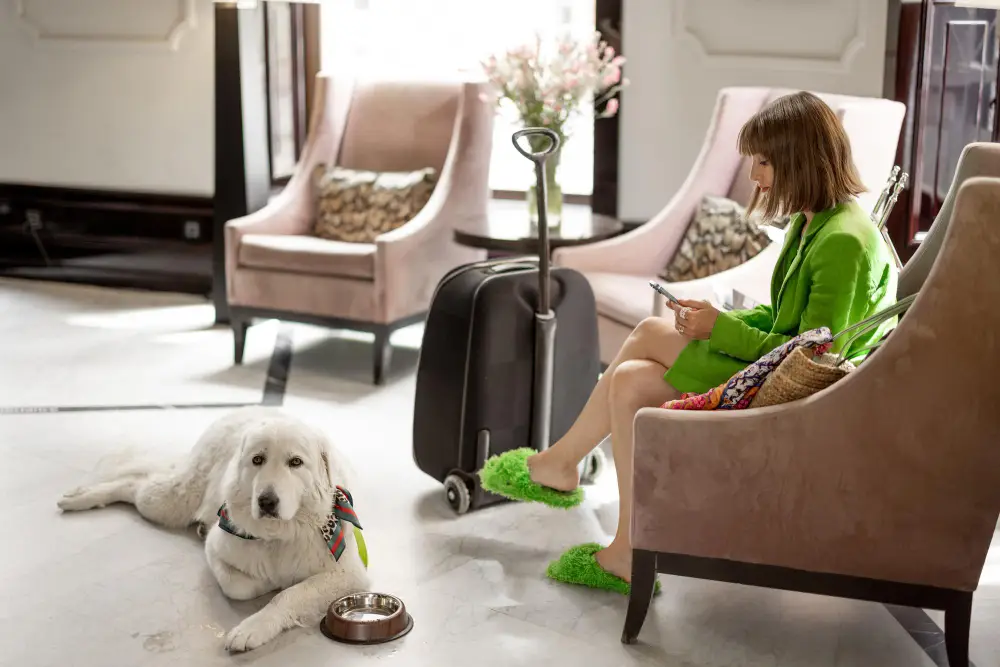
This sounds simple, but it matters more than most pet owners realize. Boarding requires your pet to be transported to an unfamiliar location, placed in a new space surrounded by new smells, new sounds, and other animals they have never encountered. For many pets — particularly those that are older, anxious, or simply homebodies — this alone is enough to cause real stress before anything else even happens.
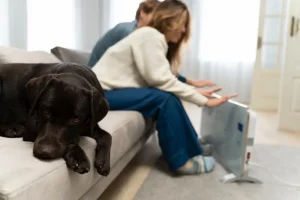
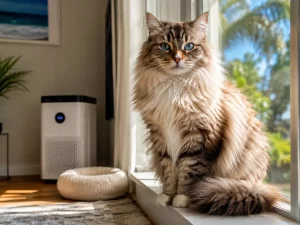
In-home pet sitting removes that disruption entirely. Your pet stays in the house they know. Their bed is where it always is. Their food bowl is in the same corner. The yard smells like their yard. That consistency is not a small thing — it is the foundation of a low-stress experience for an animal that cannot be told where you are going or when you are coming back.
| Pets that are anxious, reactive, older, or used to a quiet home almost universally do better when they stay in their own environment rather than being placed in a group facility. |
Their Daily Routine Stays Intact
Dogs and cats are creatures of habit. They expect to eat at certain times, go outside at certain times, and sleep in certain spots. A boarding facility operates on its own schedule — group feeding times, group outdoor sessions, and a level of attention that gets divided across every animal in the building.
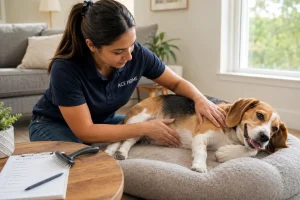
An in-home sitter works around your pet’s actual schedule. If your dog eats at 7 a.m. and needs a walk by 8, that is what happens. If your cat expects a midday check-in and gets anxious without it, the sitter shows up at midday. The routine does not bend to fit a facility’s operations — it stays the same because the care is built around your pet specifically.
No Exposure to Other Animals
Boarding facilities bring together pets from many different households, with different vaccination histories, different health statuses, and different behavioral tendencies. Even well-run facilities with strict health requirements cannot eliminate the risk entirely. Kennel cough, parasites, and other communicable conditions are more likely to be picked up in a group setting than in a controlled home environment.
Beyond illness, group settings can be genuinely stressful for pets that are not accustomed to being around other animals. A dog that is fine at home may become reactive or anxious in a facility where there is constant noise, movement, and unpredictability. With in-home care, your pet is the only animal in the equation.
| Note for pet owners: Even if your dog is social and loves other dogs, the stress of a new environment combined with unfamiliar animals is a different experience than a planned playdate with a familiar friend. |
One-on-One Attention Every Visit
A boarding staff member caring for thirty dogs is not able to give your pet the same quality of attention that a sitter who is there specifically for your pet can. That is not a criticism of boarding staff — it is just arithmetic. The ratio makes individualized care difficult in a way that in-home sitting simply does not have to contend with.
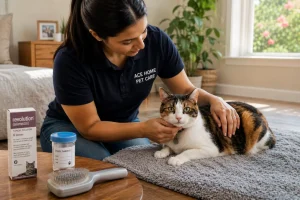
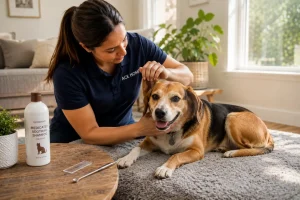
When a sitter comes to your home, your pet is the job. Every minute of that visit is focused on feeding them, playing with them, checking on how they are doing, and making sure they are comfortable. That level of attention shows up in how your pet behaves during the stay and how they feel when you return.
In-Home Pet Sitting vs. Boarding: A Quick Comparison
| Factor | In-Home Pet Sitting | Boarding Facility |
| Environment | Pet’s own home | Unfamiliar facility |
| Routine | Unchanged | Disrupted |
| Other animals | No exposure | Group setting |
| Stress level | Low | Often high |
| Attention | One-on-one | Shared among many pets |
| Illness risk | Minimal | Higher in group settings |
| Home security | Regular presence while you’re away | Home sits empty |
| Best for | Most pets, especially anxious ones | Social dogs, short stays |
Your Home Is Not Left Empty
This is a benefit that does not always come up in the pet care conversation but matters to a lot of Jacksonville pet owners. When a sitter comes to your home regularly, the house does not sit unoccupied. Lights go on, mail gets collected, and there is a visible presence in and around the property. For people who travel frequently or live in neighborhoods where security is a consideration, this is a real secondary benefit of in-home care over boarding.
When Boarding Still Makes Sense
In-home sitting is not the right call in every situation. If your dog is highly social and genuinely thrives around other animals, a reputable boarding facility with good outdoor space might be an environment they actually enjoy. Some dogs do well in that kind of stimulating setting, particularly younger, high-energy animals that benefit from play groups.
Boarding also makes sense when the length of stay is very short and the logistics of in-home visits are harder to arrange, or when a pet has a condition that requires around-the-clock veterinary-level supervision that a home sitter is not equipped to provide.
For most situations, though — especially multi-day stays for dogs or cats that are not heavily social — in-home care is the less disruptive, lower-stress option. The difference in how your pet looks and acts when you get home tends to be noticeable.
The Bottom Line
The question of pet sitting versus boarding in Jacksonville is not really about which option is more convenient for you — it is about which one is better for your pet. For the majority of animals, staying home with a consistent, attentive sitter is a calmer, healthier experience than spending time in a facility, no matter how well-run that facility is.
If your pet is anxious, older, medically complex, or simply used to a quiet home routine, in-home sitting is almost certainly the better fit. And even for pets that are generally easygoing, the comfort of their own space is hard to compete with.