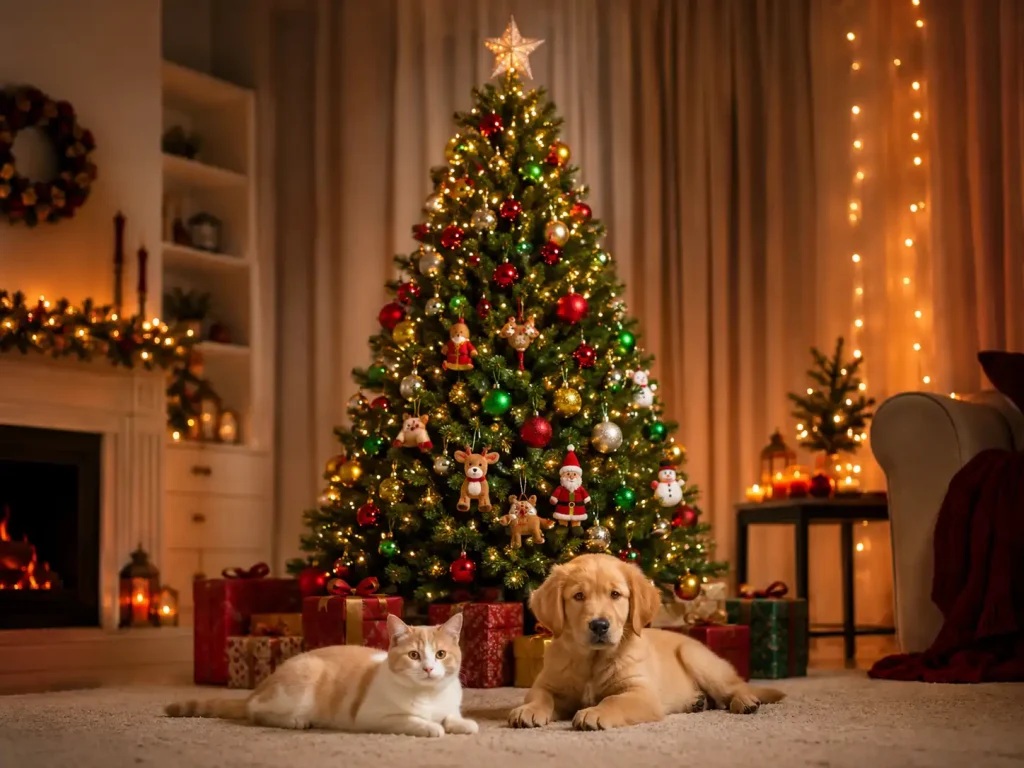
Christmas decorations are responsible for a steady stream of December and early-January emergency vet visits across Jacksonville. The hazards range from genuinely catastrophic (lilies and cats) to merely annoying (pine needle GI upset). Knowing the difference matters when you are making decisions about what to bring into a pet-occupied home.
This is a working hazard ranking, from most dangerous to least, with what to do if exposure happens.
The Deadliest: Lilies and Cats
If you have a cat and you remember nothing else from this article, remember this: true lilies cause acute kidney failure in cats. Even small exposure can kill.
True lilies (the dangerous ones) include:
- Easter lily
- Tiger lily
- Asiatic lily
- Stargazer lily
- Oriental lily
- Daylily (technically not in the Lilium genus but equally toxic to cats)
Plants commonly called “lilies” that are NOT in this danger category for cats (still keep them away, but different toxicity profile):
- Peace lily (mild oral irritation)
- Calla lily (mild oral irritation)
For cats, all parts of true lilies are toxic – flowers, leaves, stems, pollen, even water from the vase. A cat that walks past lily pollen, gets it on their fur, and grooms it off can be exposed to a dangerous dose.
Onset timeline:
- 0-2 hours: vomiting, drooling, loss of appetite
- 12-24 hours: kidney damage begins
- 24-72 hours: kidney failure if untreated
If you suspect any cat exposure to a true lily, go to the ER vet immediately. This is not a wait-and-see situation. The earlier IV fluid treatment starts, the better the outcome. Bring photos of the plant if you can.
Our Easter lily warning for cat owners goes into deeper detail on lily exposure.
Tinsel: A Surgical Emergency for Cats
Tinsel is the second-most-dangerous Christmas hazard, especially for cats who find string-like objects irresistible.
The danger: tinsel does not pass through the GI tract. It catches in the intestines and becomes a “linear foreign body” that can saw through intestinal walls. Surgery is required to remove it.
Signs of tinsel ingestion:
- Vomiting (often persistent)
- Loss of appetite
- Lethargy
- A piece of tinsel visibly hanging from the mouth or anus (do NOT pull on it – this can cause more damage)
If you see tinsel hanging from your pet, do not pull. Go to the ER vet. They will image (X-ray or ultrasound) and surgically remove if needed.
Cleanest solution: if you have cats, do not use tinsel. Ribbon ornaments, garlands, or fabric tree skirts work just as well visually without the surgical risk.
Christmas Tree Hazards
Christmas trees are less acutely dangerous than lilies or tinsel but cause more cumulative incidents.
Pine Needle Ingestion
Pine needles are sharp and not digestible. Small amounts cause GI upset. Larger amounts can perforate or obstruct.
Prevention:
- Sweep fallen needles daily
- Block tree access if your pet shows interest in chewing
Tree Water (With Preservatives)
The water in tree stands often contains tree preservatives, fertilizers, or bacteria. Pets that drink tree water can experience GI upset and toxicity from additives.
Prevention:
- Cover the tree stand
- Use only plain water in stands accessible to pets
- Refresh water frequently
Climbing and Tipping Risk
Cats climb trees. Some dogs knock them over. Falling Christmas trees cause injury (pets and humans), broken ornaments (sharp edges, ingestion risks), and electrical fires if lights are damaged.
Prevention:
- Anchor the tree to a wall using fishing line and an anchor screw, or use a heavy-base tree stand
- Place breakable or precious ornaments on upper branches, plain ones below
- Avoid edible ornaments (popcorn strings, gingerbread) that draw climbing/chewing
Other Holiday Plants: Relative Danger
A quick ranking of common December plants:
High risk:
- True lilies (cats): deadly, treat any exposure as emergency
- Sago palm (rarely sold as holiday decor but worth mentioning – some live arrangements include): deadly to dogs
Moderate risk:
- Mistletoe: GI upset, cardiovascular issues at higher doses
- Holly: GI upset from spiny leaves; berries cause vomiting
- Amaryllis: vomiting, depression, abdominal pain
Lower risk (still keep away):
- Poinsettia: contrary to popular belief, mostly mild GI upset, not deadly
- Christmas cactus: mild GI upset if eaten
- English ivy: mild GI upset, can be more severe in cats
The point: poinsettia is famous as the holiday pet danger, but lilies and tinsel are far more dangerous and get less attention.
Electrical Cords and Ornament Hazards
Beyond plants and tinsel:
Electrical cords: Holiday lights mean extra extension cords and unfamiliar wiring. Pets (especially puppies and young cats) sometimes chew. Burn risk and electrocution risk are real.
- Use cord protectors or hide cords behind furniture
- Unplug holiday lights when you leave the home
- Watch new puppies near any cord setup
Glass ornaments: Broken ornaments create paw cuts and ingestion risks.
- Hang fragile ornaments out of pet reach
- Sweep immediately if anything breaks
Snow globes: Some contain ethylene glycol (antifreeze), which is highly toxic if the globe breaks.
Wrapped presents under the tree: Pets can rip into packages. Be careful about leaving chocolate, candy, or toxic items in accessible wrapped gifts.
Pet-Safe Decoration Swaps
If you have pets and want to decorate, lower-risk swaps:
- Tinsel -> ribbon garland or fabric garland
- Real lilies -> roses, sunflowers, orchids (all generally safer)
- Real Christmas tree -> artificial tree (no needles or water)
- Glass ornaments low -> shatterproof plastic or felt ornaments on lower branches
- Open Christmas tree water -> covered stand or watering system
- Candles -> flameless LED candles
What to Do If Your Pet Eats a Decoration
The decision tree:
- Identify what was eaten. Plant name and quantity, ornament material, or product label if it has one.
- Look up acute danger.
- True lily and a cat: ER immediately, no delay
- Tinsel, ribbon, or any string: ER, especially if you cannot find part of it
- Sago palm: ER immediately
- Chocolate (gift package, advent calendar): see our Halloween chocolate dose info, or call poison control
- Mistletoe, holly: call your vet or poison control to determine severity
- Pine needles in small quantity, otherwise asymptomatic: monitor, call vet if symptoms develop
- Call ASPCA Animal Poison Control (1-888-426-4435) or Pet Poison Helpline (1-855-764-7661) when in doubt. Consultation fee applies but they can tell you whether to head to ER.
For nearby 24-hour emergency vets, see our Fleming Island emergency vets guide.
Frequently Asked Questions
Is poinsettia really deadly to pets?
No, despite the persistent myth. Poinsettia causes mild GI upset (vomiting, mild drooling) if eaten in significant quantity. It is uncomfortable, not life-threatening. Lilies, tinsel, and chocolate are far more dangerous.
Can my dog drink Christmas tree water?
Avoid it. Tree preservatives, sap, and bacteria in stand water can cause GI upset and chemical exposure. Cover the stand or use plain water.
What is the most dangerous Christmas plant to my cat?
True lilies (Easter lily, tiger lily, Asiatic lily, stargazer, daylily). Even pollen exposure can be deadly. If you have cats, do not have lilies in the home, period.
Are real or artificial Christmas trees safer with pets?
Artificial trees are slightly safer (no needles, no water, no sap). Real trees can work fine with pets if you sweep needles, cover water, and anchor the tree. Choose whichever fits your household.
What if my dog chewed an extension cord and seems okay?
Even if your pet appears fine, electrical cord chewing can cause delayed lung edema (fluid in the lungs). Have them examined that day. Watch for coughing, rapid breathing, or lethargy over the next 24 hours.
Can I have wrapped chocolate gifts under the tree?
Risk-management call. If you have a dog that has shown food-curiosity around the tree, keep chocolate gifts out of reach until gift-opening time. The number of December emergency visits caused by dogs ripping into wrapped candy is real.
Pre-Holiday Sweep
Before December starts, do a 10-minute pet-safety sweep:
- Confirm no lilies (or accidentally received as gifts later)
- Audit your tinsel/ribbon plan
- Check cord routing
- Anchor the tree
- Note your nearest ER vet number
The work is small and prevents most December emergency visits.
If you are traveling between Christmas and New Year and want a sitter who knows what to watch for in a decorated home, our overnight pet care and in-home pet care services cover holiday travel. Book by early November – the week between Christmas and New Year fills early.