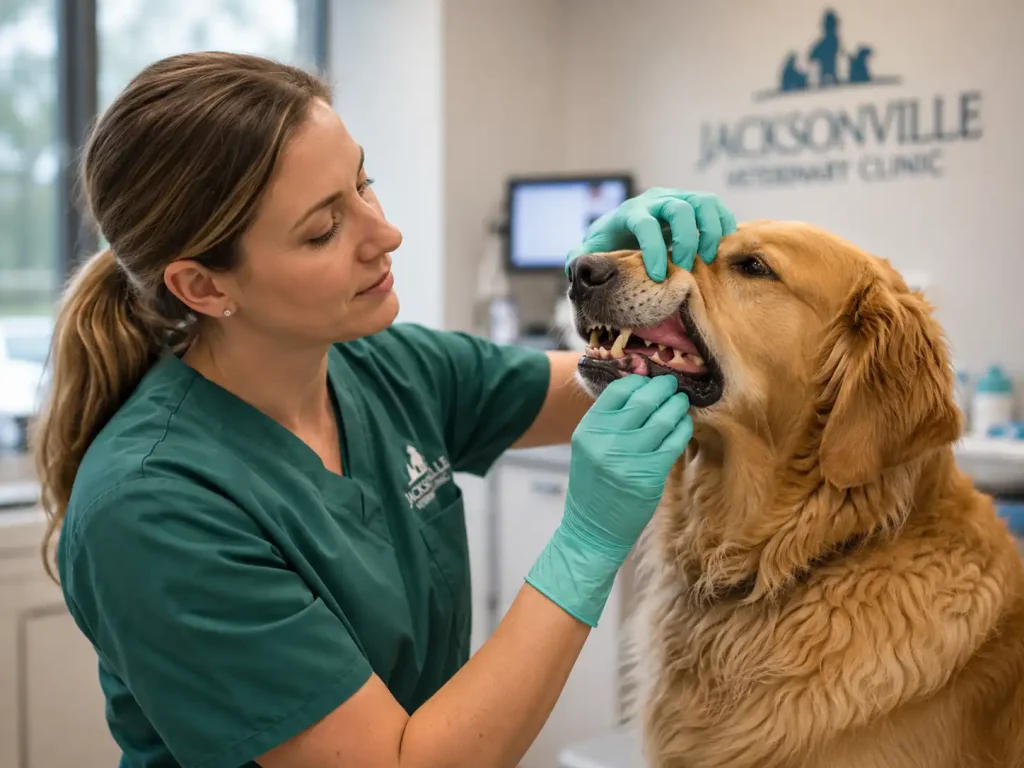
Finding a tooth on the floor or noticing a loose one in your dog’s mouth is unsettling, and the first thing most owners want to know is simple: is this normal, or is something wrong? The honest answer depends almost entirely on your dog’s age. For a puppy, losing teeth is a healthy, expected part of growing up. For an adult dog, a loose or missing tooth is never normal and almost always points to a problem that needs attention.
This guide walks through exactly how to tell the difference, what causes tooth loss at every life stage, the warning signs you can catch at home before things get serious, and what actually works to prevent it. As an in-home pet care service in Jacksonville, we spend a lot of time noticing the small changes owners miss, and dental problems are one of the most common, and most preventable, issues we see.
The short answer
Puppies lose all 28 of their baby teeth between roughly three and seven months of age, and this is completely normal. Adult dogs have 42 permanent teeth that are meant to last for life. If an adult dog loses a tooth or has a loose one, it is a sign of injury or disease, usually advanced dental disease, and it warrants a vet visit. Unlike puppies, adult dogs cannot regrow a lost tooth.
Puppies lose teeth, and that’s completely normal
Like people, dogs are born without teeth. Puppies grow a set of 28 temporary “baby” teeth (called deciduous teeth), and those are designed to fall out and make way for the 42 permanent adult teeth that follow.
The puppy teething timeline
Here is the general schedule, though it varies a little by breed and size:
- 2 to 4 weeks: The first baby teeth begin to erupt, starting with the small front incisors.
- 3 to 6 weeks: The rest of the baby teeth come in, including the canines and premolars. By about 6 to 8 weeks, a puppy usually has all 28 deciduous teeth.
- 3 to 4 months: Baby teeth start to fall out as permanent teeth push through underneath. Incisors typically go first.
- 4 to 6 months: This is peak teething. Canines and premolars are replaced during this window, and chewing usually intensifies.
- 6 to 7 months: Most dogs have their full set of 42 adult teeth, including the molars, which only come in as permanent teeth.
If you only ever find a few of these tiny teeth, do not worry. Puppies swallow most of their baby teeth while eating or chewing, and that is harmless.
Signs your puppy is teething
Teething puppies commonly show increased chewing, drooling, mild irritability or whining, and sometimes a little blood on a chew toy or a spot of pink in their water bowl. You might notice them reluctant to eat hard kibble for a day or two. All of this is normal.
What to do (and what not to do) during teething
Give your puppy appropriate chew toys to relieve discomfort, such as rubber teething toys or ones you can chill in the freezer. Avoid anything rock-hard (real bones, antlers, hard nylon) that can fracture developing teeth. Never pull on a loose baby tooth to “help” it out; you risk breaking the root or causing infection. Let nature take its course, and check in with your vet only if a tooth seems stuck or the gum looks swollen or infected.
Watch for retained baby teeth (the problem most articles skip)
Here is something most owners are never told: sometimes a baby tooth refuses to fall out, even though the adult tooth has already come in. This is called a retained deciduous tooth, and it is especially common in small and toy breeds like Yorkshire Terriers, Chihuahuas, Pomeranians, Maltese, and Poodles. The upper canine teeth are the most common offenders.
The tell-tale sign is a “double row” of teeth, where you can see the baby tooth and the adult tooth sitting side by side. This is not just cosmetic. Two teeth crowding one socket traps food and plaque, throws off the bite, and dramatically speeds up dental disease in exactly the breeds already prone to it.
Retained baby teeth need to be removed by a veterinarian, and the timing is often convenient: most vets extract them during the spay or neuter procedure, since the dog is already under anesthesia. If your young dog has a double row of teeth, mention it at the next appointment rather than waiting.
Adult dogs do not lose teeth naturally
Once your dog has all 42 permanent teeth, those are meant to stay put for the rest of their life. A wobbly tooth, a gap where a tooth used to be, or a tooth you find on the floor is a red flag in an adult dog. And because adult teeth do not grow back, every lost tooth is permanent.
A loose adult tooth is also painful, even though dogs are remarkably good at hiding it. They are hardwired to mask weakness, so most will keep eating and acting normal long after a tooth has become a real problem. That is why owners are often shocked when a vet finds multiple diseased teeth on a dog that “seemed fine.”
What actually causes tooth loss in adult dogs
Periodontal disease (the leading cause)
The vast majority of adult tooth loss comes down to periodontal disease, the progressive infection and inflammation of the structures that hold teeth in place. It is staggeringly common: veterinary sources estimate that the majority of dogs show some degree of periodontal disease by age three. It starts when plaque hardens into tartar, which pushes under the gumline, triggers infection, and slowly destroys the bone and ligament anchoring the tooth until it loosens and falls out or has to be removed.
The four stages of periodontal disease
Catching it early changes everything, because the early stages are reversible and the later ones are not:
- Stage 1 – Gingivitis: Red, inflamed gums but no bone loss yet. This stage is fully reversible with cleaning and home care. Fully Reversible
- Stage 2 – Early periodontitis: Up to about 25% of the tooth’s support is lost. Some damage is now permanent.
- Stage 3 – Moderate periodontitis: 25 to 50% attachment loss, with noticeable gum recession and often pain.
- Stage 4 – Advanced periodontitis: More than 50% of support is gone. Teeth are loose, often infected, and usually need extraction. Requires Extraction
Other causes of adult tooth loss
Periodontal disease is the headline, but not the only culprit:
- Trauma and fractured teeth: Chewing on hard objects, rough play, or an accident can crack a tooth or knock one loose. A fracture that exposes the inner pulp is painful and prone to infection.
- Tooth root infection or abscess: A pocket of infection at the root can destroy bone and is often signaled by facial swelling below the eye.
- Tooth resorption: The body breaks down the tooth structure itself. It is more famous in cats but does occur in dogs.
- Tumors or growths in the mouth, which can affect the jaw and surrounding teeth.
- Genetics and breed: Some breeds are simply predisposed to crowding and early dental disease.
Warning signs you can spot at home
You do not need to be a vet to catch dental trouble early. Check your dog’s mouth regularly and watch for:
- Persistent bad breath (not just “dog breath” – a genuinely foul, sour smell is the most common early sign)
- Yellow or brown tartar buildup, especially along the gumline of the back teeth
- Red, swollen, or bleeding gums
- Drooling, sometimes tinged with blood
- Dropping food, chewing on only one side, or suddenly preferring soft food
- Pawing at the mouth or rubbing the face on the floor or furniture
- Reluctance to eat, play with chew toys, or be touched around the muzzle
- Facial swelling, particularly under one eye
- A visibly loose, discolored, or missing tooth
Because dogs hide oral pain so well, a change in appetite or a new reluctance to chew on one side is often the only behavioral clue you will get. (If you want help reading subtle discomfort, our guide on recognizing pain in dogs and cats goes deeper.)
🚨 Urgent Dental Red Flags
If your dog displays significant swelling under the eye, exhibits active bleeding from a fractured socket, or completely refuses meals due to oral distress, proceed directly to an emergency vet clinic.
When tooth loss is an emergency
Most dental disease is a “schedule an appointment soon” situation, not a midnight dash. But treat these as urgent and call a vet right away:
- Significant facial or jaw swelling (a possible abscess)
- A fractured tooth with the pink or bleeding pulp exposed
- A tooth knocked out by trauma, along with bleeding that won’t stop
- Your dog cannot or will not eat, or seems to be in obvious pain
If you are unsure whether something rises to the level of an emergency, our breakdown of when to use an ER vet versus your regular vet can help you decide.
Why dental health matters beyond the mouth
Tooth loss is the visible problem, but the bigger concern is what dental disease does to the rest of the body. The mouth is highly vascular, and chronic infection there allows bacteria to enter the bloodstream. Advanced periodontal disease has been linked in dogs to changes in the heart, kidneys, and liver over time. In other words, keeping your dog’s mouth healthy is not just about saving teeth, it is part of protecting their overall health and adding good years to their life.
How to prevent tooth loss in dogs
The encouraging news is that periodontal disease, and the tooth loss it causes, is largely preventable. The two pillars are daily home care and regular professional cleanings.
Brush your dog’s teeth (the right way)
Daily brushing is the single most effective thing you can do at home. A simple approach:
- Use a dog-specific toothbrush or a finger brush, and toothpaste made for dogs.
- Never use human toothpaste. It can contain fluoride and sometimes xylitol, which is highly toxic to dogs. (Xylitol shows up in more products than people realize – see our list of toxic foods for dogs and cats.)
- Start slow. Let your dog lick the toothpaste off your finger, then off the brush, before you ever try to brush.
- Lift the lip and focus on the outer surfaces of the teeth, especially the large back teeth where tartar collects. Aim for gentle circular motions.
- Keep early sessions short and positive, and build up over days or weeks. Reward generously.
If daily is not realistic, even a few times a week makes a real difference.
Dental chews, diets, and water additives
These support a brushing routine, but should not fully replace it. When choosing products, look for the VOHC seal (Veterinary Oral Health Council), which means the product has been shown to reduce plaque or tartar. Options include dental chews, prescription dental diets with larger kibble designed to scrub the tooth surface, and water additives. Skip anything too hard to dent with your thumbnail, since rock-hard chews fracture teeth.
Professional dental cleanings
Even with great home care, dogs need periodic professional cleanings, because brushing cannot reach below the gumline where disease takes hold. A proper veterinary cleaning is done under general anesthesia, which allows the vet to clean beneath the gums, take dental X-rays, and assess each tooth safely. Be cautious of “anesthesia-free” cleanings advertised as a cheaper alternative; they only scrape the visible surface and miss the disease that actually causes tooth loss.
Cost varies widely by region and by how much work is needed, typically a few hundred dollars for a routine cleaning and more if extractions or X-rays are required. Most dogs benefit from an annual cleaning, though small breeds and dogs with existing disease often need them more often. (Giving medications or following an aftercare routine post-extraction is something we handle routinely; see pet medication administration.)
Special considerations: small breeds, flat-faced breeds, and seniors
Some dogs need extra attention:
- Small and toy breeds have the same number of teeth crammed into a much smaller jaw, so crowding traps plaque and accelerates disease. They are also the most likely to have retained baby teeth.
- Flat-faced (brachycephalic) breeds like Bulldogs, Pugs, and Shih Tzus often have misaligned or rotated teeth that are harder to keep clean.
- Senior dogs have had a lifetime of wear and are most likely to show advanced disease and tooth loss. Gentle, consistent care matters most here. Our guide to senior dog care in Jacksonville covers the broader picture.
Finding dental care in Jacksonville
If you suspect a dental problem, start with your regular veterinarian, who can perform a full oral exam and, if needed, refer you to a board-certified veterinary dentist for advanced cases. Build the relationship before there is a crisis, and ask about a dental check at your dog’s annual wellness visit.
For Jacksonville families juggling work and travel, the day-to-day consistency is often the hard part. As an in-home care service, we help keep oral-hygiene routines on track, watch for the early warning signs during regular visits, and support recovery and medication schedules after a dental procedure, all in the comfort of your dog’s own home.
When to call your vet (quick reference)
- Adult dog with any loose, broken, or missing tooth
- Persistent bad breath, bleeding gums, or heavy tartar
- A young dog with a “double row” of teeth (retained baby teeth)
- Dropping food, chewing on one side, or new reluctance to eat
- Facial swelling, a fractured tooth with exposed pulp, or trauma (urgent)
Frequently asked questions
Is it normal for dogs to lose teeth? It is normal only for puppies, who lose all 28 baby teeth between about three and seven months of age. In adult dogs, losing a tooth is not normal and usually signals dental disease or injury that needs veterinary care.
Do dogs’ teeth grow back? Puppy (baby) teeth are replaced by permanent adult teeth. But once an adult tooth is lost, it is gone for good – dogs cannot regrow permanent teeth.
Why is my older dog losing teeth? The most common cause is periodontal disease, which slowly destroys the support around the teeth. Trauma, infection, abscesses, and tumors can also be responsible. An older dog losing teeth should be seen by a vet.
Does losing a tooth hurt my dog? Often yes, though dogs instinctively hide oral pain. A loose or infected tooth can be quite painful, which is why behavioral clues like eating less or chewing on one side matter.
Can I prevent my dog from losing teeth? Largely, yes. Daily tooth brushing with dog-safe toothpaste, VOHC-approved dental products, and regular professional cleanings prevent the periodontal disease that causes most tooth loss.
Should I pull my dog’s loose tooth? No. Never pull a loose tooth yourself, in a puppy or an adult. You can break the root or cause infection. Let a puppy’s baby teeth fall out naturally, and have a vet handle any loose adult tooth.