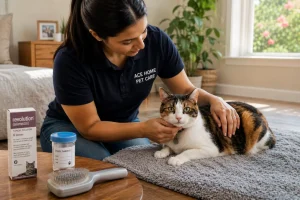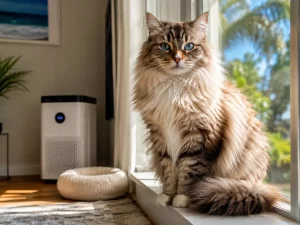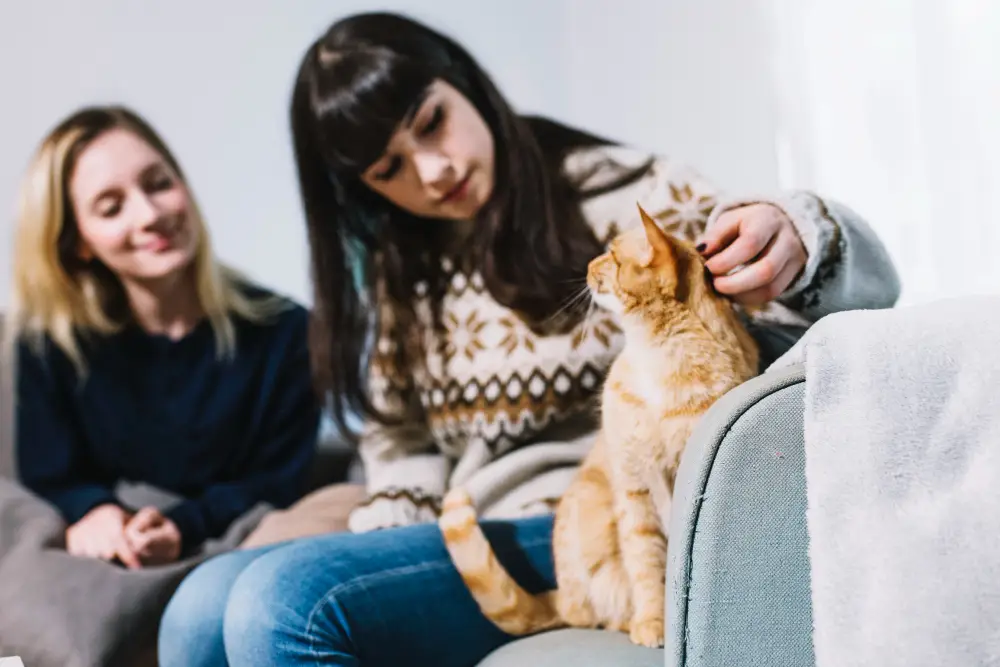
When you have one cat, pet sitting is fairly straightforward. When you have two or more cats, it is a different job. The cats have politics among themselves, resource competition that may not be visible to you, and dynamics that an outside person walking into the house has to understand to keep things calm.
This is the working brief for what your Jacksonville pet sitter needs to know about your multi-cat household, and what you should know yourself about the dynamics in your home.
For the broader cat care context, see our Jacksonville cat care complete guide.
The Hidden Dynamics in a Multi-Cat Home
Cats look like they coexist peacefully. Sometimes they do. Often there is a hierarchy and tension that the owners do not fully see.
Common patterns owners miss:
One cat eats first, always. This is dominance. The second cat eats what is left, or only when the first cat has finished. Subordinate cats often have weight or stress issues.
One cat controls the litter box approach. Sometimes a dominant cat blocks access by sitting in a doorway or hallway. The subordinate cat then eliminates elsewhere or holds it too long.
One cat is consistently in the “best” sleeping spot. Window perch in afternoon sun, cat tree top, owner’s lap. The other cats yield.
One cat ambushes another. Often a younger cat targeting an older one, or a more energetic cat targeting a calmer one. Owners often interpret this as “playing.”
These dynamics happen in many multi-cat homes. The peaceful ones are not without dynamics – they have managed dynamics. The unhappy ones often have dynamics the owners do not see.
Resource Rules: The N+1 Standard
The veterinary behaviorist standard for multi-cat homes: one resource per cat, plus one extra. So:
Litter boxes:
- 2 cats = 3 litter boxes
- 3 cats = 4 litter boxes
- 4 cats = 5 litter boxes
This is not negotiable for harmony. Cats are extremely territorial about litter, and a shared box situation is one of the most common causes of inappropriate elimination (cats peeing outside the box).
Placement matters too: boxes should be spread across the home, ideally on different floors. Two boxes side-by-side count as one location. The cats should never have to pass another cat to get to a litter box.
Water stations:
- 2 cats = 3 water locations
- 3 cats = 4 water locations
Multiple water stations ensures access even if one is being blocked by a dominant cat.
Food bowls:
- One per cat at minimum, ideally separated by sight lines so cats are not competing during meals
- Some homes need fully separated feeding stations in different rooms
Beds and resting spots:
- Multiple per cat, at different heights and locations
- Cats need elevation choices
Scratching posts:
- One per cat plus one
- Distributed across the home
Food Bowl Placement Strategy
In multi-cat homes, mealtime is one of the most common conflict triggers. The fix is not faster eating – it is bowl placement that prevents conflict in the first place.
Working setup:
- Bowls placed where each cat can eat without seeing the other cats
- If using a single feeding area, bowls placed at least 2-3 feet apart with visual barriers (corners, low walls, separate rooms)
- For cats with significantly different feeding needs (one diabetic, one healthy; one senior, one young), feeding stations may need full separation
Common mistake: putting all food bowls in a row in one kitchen corner. This creates competitive tension every meal and can lead to one cat overeating or another undereating.
Detecting Bullying When You Are Away
This is the sitter-specific challenge: identifying issues that may only manifest when stress is higher (during your absence).
Watch for during sitter visits:
- One cat eating noticeably more or less than usual
- Litter box use changes
- One cat consistently hiding when the sitter arrives
- Aggression near food or litter
- Unusual hairballs or vomiting
- One cat appearing in different locations from previous visit
Have your sitter document:
- Where each cat was found at the start and end of each visit
- Which cats ate
- Which used the litter box
- Any unusual interactions observed
This information helps you spot dynamics shifting during your absence.
Medicating One Cat in a Multi-Cat Home
Common challenge: one cat needs medication (insulin for diabetic, thyroid pills, antibiotics) but the others should not have it.
Strategies:
- Separate feeding in different rooms during medication time
- Hand feeding the medicated cat in a closed bathroom
- Compounded liquid medications administered without food
- For long-term medications (thyroid, kidney), training the cat to accept pills with positive association
If you have a diabetic cat, see our diabetic cat care during travel guide for the full protocol. For general medication tips, see our pet medication administration guide.
What Photos and Videos to Request From the Sitter
In multi-cat homes, sitter updates should include:
- A photo of each cat each visit (proves all cats located and visible)
- Food bowl status (which cats ate, in which bowls)
- Any unusual interactions observed
- Video clips during meals or play if helpful
The “send a photo of all my cats together” request is sometimes asking the impossible (some cats simply do not coexist in one frame). But individual photos confirming each cat was seen, eating, and acting normal is reasonable to request and important to track.
Sitter Briefing Checklist for Multi-Cat Homes
A working briefing document for any sitter who covers your multi-cat household:
Cats:
- Names, ages, and color descriptions of each
- Photos of each cat
- Microchip numbers
- Vet name and phone
- ER vet name and phone
- Any medical conditions or medications
Personality and dynamics:
- Each cat’s personality (social, shy, food-motivated, aggressive)
- Known intercat dynamics (“Cat A guards food; feed Cat B in the bathroom”)
- Known hiding spots
- Cats that should not be picked up
- Cats that should not be approached when eating
Resources:
- Locations of all litter boxes
- Locations of all food and water stations
- Where extra litter, food, medications are stored
Routine:
- Feeding times and amounts per cat
- Medication times per cat
- Play routines for socially-active cats
- Sleep locations to check
Emergency:
- Vet contact
- ER vet contact and address
- Your emergency contact (someone reachable during your travel)
- ASPCA Poison Control: 888-426-4435
Frequently Asked Questions
How many cats is too many?
There is no fixed number. Some households thrive with five cats; some have constant issues with two. The factors are: home size, resource availability (litter boxes, feeding stations), cat personalities, and owner attention. If your cats consistently show stress signs (inappropriate elimination, fighting, hiding), the household has too many for the current setup.
Why does my cat pee outside the box only when I am away?
This is often stress combined with subordinate-cat dynamics. When you are not present to mediate, the dominant cat may guard the litter box more aggressively. The fix is more litter boxes spread further apart, plus addressing why one cat is dominant in this way (sometimes medical, sometimes behavioral).
My cats fight only sometimes. Is that normal?
Occasional disagreements are normal. Pattern of fighting, especially during feeding or near resources, signals dynamics that need management. Watch for repeated targets – if the same cat is always the loser, intervention may be needed.
Should I separate my cats when I travel?
Usually no. Sudden separation creates stress. Better approach: have a sitter who knows the dynamics and can manage during visits. If one cat genuinely cannot coexist with the others, that is a deeper issue requiring professional behavior consultation.
How do I know if my cats are friends or just tolerating each other?
Friends groom each other, sleep curled up together, play together. Tolerators stay in the same home but maintain space, do not interact, may compete for resources. Both are valid outcomes – tolerators do not need to become friends, just need enough resources to avoid conflict.
My cats were fine for years, now they are fighting. What happened?
Common triggers: introduction of a new pet, household change (moving, new baby), medical change in one cat (often the targeted cat is the one with a new medical issue), or aging dynamics. Vet checkup first, then assess household changes, then consult a behavior professional if needed.
A Functional Multi-Cat Home
Living with two, three, four, or more cats in Jacksonville is wonderful when the dynamics are managed. The key principles are simple: enough resources, spread out enough, with attention to the social dynamics that may not be visible from the outside.
If you are looking for a sitter who treats your multi-cat household with the attention it deserves, our professional cat sitting and in-home pet care services include multi-cat protocols as standard. Cats are not interchangeable, and our visits reflect that.