A puppy is not a small dog. They have different vaccination status, different bladder timing, different behaviors, and different ways of getting into trouble. A pet sitter who’s great with a 7-year-old Labrador is not automatically the right person to care for a 12-week-old puppy.
This is the puppy-specific sitter selection process different from our general what to look for before hiring a pet sitter and how to find a trusted Jacksonville sitter guides, which apply to adult dogs. Use both together.
For the broader new puppy roadmap, our complete puppy owner guide walks you through everything else.
Why Puppies Need a Different Kind of Sitter
Adult dogs are in maintenance mode. Puppies are in formation mode what they experience between weeks 8 and 16 shapes who they are as adults. A sitter who is functionally a stranger to your puppy during this window adds a person to the “scary unknown adult” mental category. A sitter who is introduced during this window becomes a familiar face for life.
Puppies also have:
- Stricter vaccination concerns (sitter behavior between visits matters more)
- Tighter potty windows (can’t hold it 6 hours)
- Active bite inhibition learning (sitter’s response shapes whether they nip strangers as adults)
- More frequent emergencies (eating dumb things, GI upsets, sudden vet visits)
- A socialization window the sitter can either contribute to or wreck
The right puppy sitter knows this and works around it. The wrong one treats your puppy like a small adult dog.
7 Puppy-Specific Questions to Ask
When you interview prospective sitters, work these in alongside your general vetting questions.
1. What vaccination stage do you require before taking a puppy?
A serious sitter has a clear policy: typically, at least the first DHPP and a healthy vet exam. They should also ask about your recent vet visits and whether your puppy has been around any sick dogs. If they don’t ask, that’s a flag.
2. How do you handle bite inhibition and nipping?
Puppies bite. Hard, sometimes. The right answer involves: yelping or redirecting (not punishing), pulling hands back calmly, offering an appropriate chew, and ending play if needed. Wrong answers: scruffing, pinning, “alpha rolls,” yelling. If you hear those words, end the interview.
3. What’s your potty schedule philosophy?
For a 3-month-old, you want to hear something like “every 2 hours when awake, and immediately after eating, drinking, sleeping, or playing.” A sitter who says “I take them out twice during my visit” doesn’t get how puppies work.
4. Do you do socialization outings, and at what age?
For weeks 12-16, the right sitter is happy to do short carry outings front porch sit, drive-through visit, brief carry through a pet-friendly store provided your puppy is comfortable. For weeks 8-12, they should be expanding stranger and sound exposure inside the home. The wrong answer: “I just stay in the house with them.” That’s storage, not care.
5. How do you crate-train if needed?
Some puppies arrive already comfortable in a crate; others don’t. A sitter should be able to describe a gentle protocol: short positive crate exposures, never as punishment, food rewards, gradual duration. Our Florida puppy crate training guide covers the protocol your sitter should be aligned with.
6. Have you cared for [your puppy’s breed] before?
This isn’t a deal-breaker if the answer is no, but it’s good context. Brachycephalic breeds (Frenchies, Bulldogs, Pugs) need a sitter who understands heat limits. Working breeds (Shepherds, Malinois) need a sitter who can read drive vs. anxiety. Toy breeds need a sitter aware of hypoglycemia risks.
7. What’s your emergency vet protocol for puppies?
The answer should include: knowing your regular vet’s contact and hours, having a backup ER vet number, knowing the Pet Poison Helpline number, and contacting you immediately for anything significant. They should not be hesitant or vague. See also our Jacksonville pet emergency plan.
Red Flags Specific to Puppy Care
Some warning signs you’ll only see in the puppy-care context:
One-Size-Fits-All Schedules
A sitter who has the same visit pattern for an 8-week-old puppy and a 10-year-old Beagle is not adapting. Different needs require different visit lengths, different frequencies, and different focus.
“I Just Let Them Play Together”
If your sitter cares for multiple dogs and proudly says they “just let everyone play,” that’s a puppy safety issue. Unsupervised group play with an under-vaccinated, smaller puppy is one of the highest-risk daycare-like scenarios physical injury, disease transmission, and trauma from a too-rough adult dog can all happen fast.
No Interest in Your Vet Contact
If a sitter doesn’t ask for your vet’s name, after-hours number, and current health concerns, they’re not planning for the possibility of emergency. With puppies, emergency is more likely than with adult dogs.
Treating the Crate as a Solution
Some sitters will crate a puppy for most of their visit “for safety.” That’s storage, not care. The crate is one tool — for naps, transitions, and brief safety. Most of the visit should involve active engagement.
Verifying Insurance for Puppy-Specific Risks
Any sitter you hire should be insured but for puppies, the insurance details matter more. Ask:
- Does your policy cover veterinary emergencies during a visit?
- What’s the liability limit?
- Are puppies covered the same as adult dogs?
Some less-experienced sitters carry insurance that has age restrictions or excludes puppies under 16 weeks. Check the actual policy.
What Pricing Looks Like for Puppy Visits in Jacksonville
Puppy visits typically cost slightly more than adult visits because they often run longer (cleanup, multiple potty breaks, training engagement) and require more frequent visits per day. Expect to pay a small premium over the standard rates in our Jacksonville pet sitter cost guide.
What you don’t want: a sitter charging the same flat rate for a puppy visit as an adult visit and cutting corners to make it work. The economics force the bad outcomes.
Meet-and-Greet Checklist Before Hiring
Before committing to a sitter, have them come for an introductory meet-and-greet. Look for:
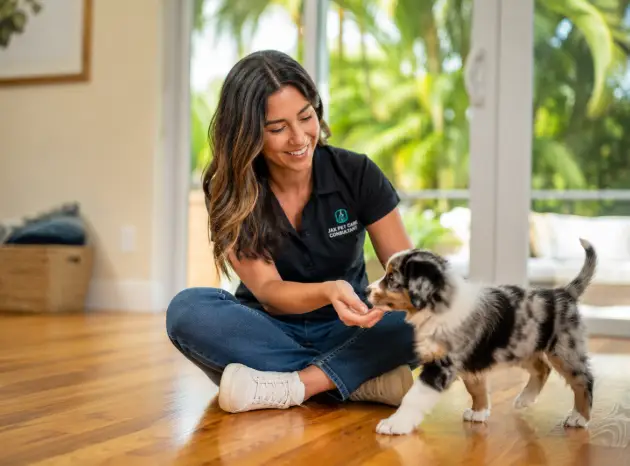
- Do they sit on the floor or stand and tower over the puppy? (Floor = better.)
- Do they let the puppy approach them, or do they grab the puppy?
- Do they ask about food, schedule, and medications, or do they wing it?
- Do they engage with you about your puppy’s specific quirks?
- Does your puppy seem relaxed or guarded around them after 10 minutes?
We cover the general meet-and-greet process in how to introduce your dog to a new pet sitter. For puppies specifically, the meet-and-greet matters even more.
Frequently Asked Questions
Is hiring a Rover sitter or a local sitter better for a puppy?
For puppies specifically, we lean strongly toward established local sitters. Continuity matters (your puppy should ideally see the same person on every visit), insurance is more reliable, and accountability is higher. We compare in detail in our Rover vs. local Jacksonville pet sitter post.
When should I introduce my puppy to a sitter?
Ideally between weeks 12-14 fully within the socialization window so they’re imprinted as a known person. Even one paid drop-in visit during this period is worth it.
What if my puppy hates the sitter at first?
Some shyness on day one is normal. Within 2-3 visits, you should see steady warming. Persistent hiding, refusing to eat, or visible fear past visit 3-4 means the match isn’t working. A good sitter will tell you if it’s not working before you do.
Can my regular sitter just start visiting more often once we get the puppy?
Yes, and this is often the easiest path. Your existing sitter already knows the household. They just need to learn the puppy-specific protocols. Have them re-orient before your puppy’s first solo visit.
How do I know if a sitter is actually puppy-experienced?
Ask for puppy-specific references. A sitter who’s cared for 50 adult dogs and 2 puppies is different from one who’s done 20 puppies. The reference call (where you ask about how problems were handled) tells you what you need to know.
The Right Match Lasts 15 Years
A great puppy sitter often becomes your dog’s adult sitter, then their senior sitter. Getting the match right early pays off for the entire life of your dog.
If you’re in the Mandarin, Southside, Fleming Island, Ponte Vedra, or Jacksonville Beach areas, we’d be happy to talk through your puppy’s specific needs and whether we’re the right fit. Our professional pet sitting service and in-home pet care options both work for puppies, depending on your schedule.