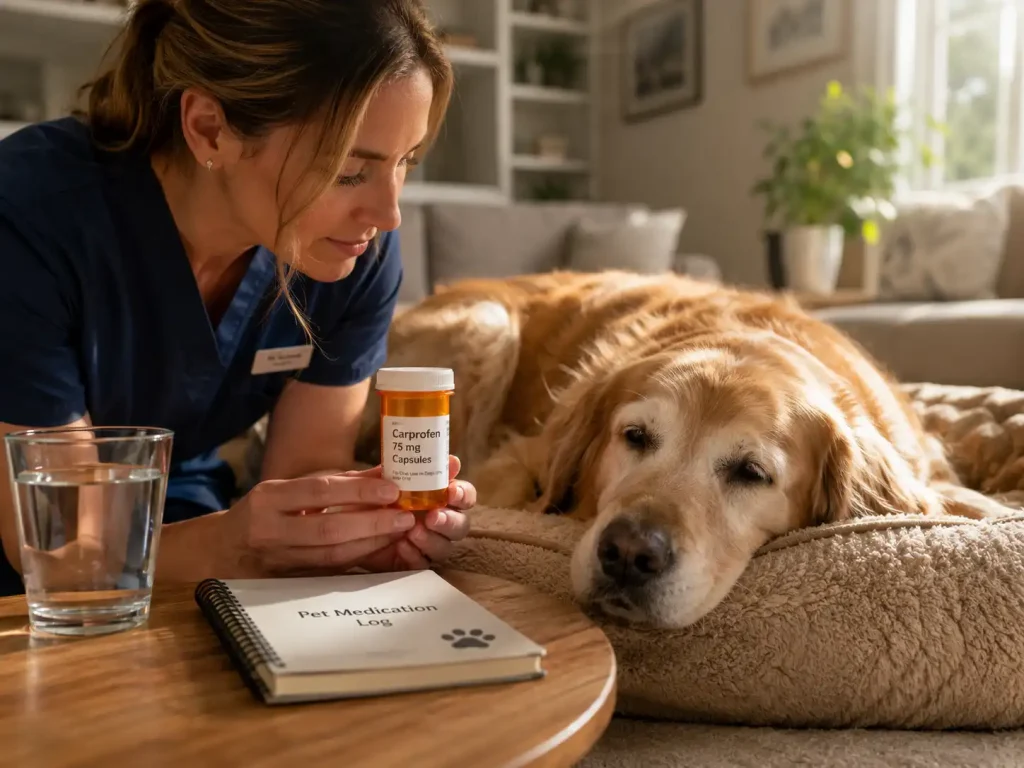
Gabapentin has become one of the most commonly prescribed medications in veterinary medicine, and for good reason: it’s versatile, generally well tolerated, and helps with everything from arthritis pain to vet-visit nerves. Unlike an over-the-counter option, though, gabapentin is a prescription medication, so it should only be given to your dog when, and how, your veterinarian directs.
This guide explains what gabapentin is used for in dogs, how dosing works (and why there’s no single “chart”), the side effects to expect, the all-important xylitol warning, and how it’s often paired with trazodone. As an in-home pet care service in Jacksonville, giving prescribed medications correctly and on time is part of what we do, see our pet medication administration service.
Important: This article is general information, not a prescription. Gabapentin must be prescribed by your veterinarian, and you should follow their exact dose and instructions for your specific dog.
Read this first: the safety essentials
⚠️ CRITICAL SAFETY MANDATE: Prescribed Medication Protocol
Gabapentin is a highly regulated, short-acting prescription drug. For absolute safety, strictly implement these veterinary precautions:
What is gabapentin, and how does it work?
Gabapentin is a medication originally developed for humans that vets now use widely in dogs. It’s thought to work mainly by calming overactive nerve signals (by changing how calcium enters nerve cells), which helps with nerve pain, seizures, and anxiety. It’s short-acting, effects usually begin within one to two hours and wear off within about a day.
What is gabapentin used for in dogs?
Vets prescribe gabapentin for three main reasons:
- Pain, especially nerve pain and chronic pain. It’s often used alongside other pain relievers (like certain NSAIDs) for senior dogs with arthritis, or after orthopedic or spinal issues. See our guides on recognizing pain in dogs and senior dog care.
- Anxiety and situational stress. Its mild sedative effect makes it useful before stressful events, vet visits, grooming, travel, thunderstorms, and fireworks. It’s frequently combined with trazodone (more below). Our guide on helping your dog through fireworks has more.
- Usually as an add-on to other anti-seizure medications when needed.
What about the dosage?
This is the most-searched question, so here’s the honest answer: there isn’t one universal gabapentin dose or chart for dogs. The right dose varies a lot depending on why it’s being used:
- For anxiety, it’s often a single dose given one to two hours before the stressful event.
- For pain, it’s typically given two to three times a day, on an ongoing basis.
- For seizures, it’s dosed as part of a broader plan.
Your vet calculates the dose based on your dog’s weight, the reason for treatment, and how your dog responds, often starting low and adjusting. So the most accurate “dosage chart” for your dog is the one on your prescription label. Please don’t try to dose leftover human gabapentin yourself, both because the amount needs to fit your dog and the situation, and because the wrong form (liquid) can be dangerous.
Forms: gabapentin commonly comes as 100 mg, 300 mg, and 400 mg capsules (and tablets). For very small dogs, or dogs that won’t take capsules, a compounding pharmacy can make a smaller dose or a dog-safe (xylitol-free) liquid.
Gabapentin and trazodone together
Side effects of gabapentin in dogs
Gabapentin is usually well tolerated. The most common side effects are:
- Sedation/sleepiness (the main one)
- Wobbliness or loss of coordination (ataxia)
- Occasionally mild vomiting or diarrhea, more likely at higher doses
These are usually mild, tend to be strongest the first time, and often ease within about 24 hours, and many dogs become more tolerant of them over time. Starting at a low dose helps. Tell your vet if the sleepiness or wobbliness is excessive, the dose can often be adjusted.
Safety, cautions, and the xylitol warning
Gabapentin is generally safe, with a few important caveats:
- Never the human liquid. The human oral solution is commonly sweetened with xylitol, which can cause dangerous low blood sugar, seizures, and liver damage in dogs. Only use the capsules/tablets or a vet-compounded dog-safe liquid.
- Kidney or liver disease: the drug clears more slowly, so the dose may need adjusting.
- Pregnancy and known allergy: discuss with your vet.
- Drug interactions: antacids can reduce absorption, and combining with opioids or other sedatives increases drowsiness, so keep your vet informed of everything your dog takes.
Overdose (too many pills, a double dose, or a xylitol-containing product) can cause extreme sedation, severe wobbliness, or worse. If you suspect an overdose, contact your vet, an emergency clinic, or the Pet Poison Helpline at (855) 764-7661 right away, and treat any xylitol exposure as an emergency. Our guide on ER vet versus regular vet can help.
Common questions, answered
- Is dog gabapentin the same as human gabapentin? It’s the same drug, but only give what your vet prescribed for your dog, and never the human liquid (xylitol).
- Is gabapentin available over the counter? No, it’s prescription-only.
- How long does it take to work / last? It usually takes effect within one to two hours and wears off within about a day, which is why anxiety doses are given shortly before an event.
A quick Jacksonville note
Gabapentin comes up a lot here, for senior dogs with arthritis, and for the storm-and-fireworks anxiety our summers bring. If your dog is prescribed gabapentin (or any medication) and you’d like a hand giving it correctly and on schedule while you’re at work or away, our pet medication administration and in-home pet care in Jacksonville can help. (For a milder, over-the-counter antihistamine option for itching and allergies, see our guide on Benadryl for dogs.)
Frequently asked questions
What is gabapentin used for in dogs? Vets prescribe gabapentin for pain (especially nerve and chronic pain, often with other pain relievers), for anxiety and situational stress (like vet visits, travel, and fireworks), and as an add-on for seizures.
How much gabapentin can I give my dog? There’s no single dose, it varies widely depending on whether it’s for pain, anxiety, or seizures, and on your dog’s weight and response. Your veterinarian sets the exact dose, so follow your prescription rather than a generic chart or leftover human medication.
What are the side effects of gabapentin in dogs? The most common are sleepiness and wobbliness (loss of coordination), and sometimes mild stomach upset at higher doses. These are usually mild and often improve within a day, and many dogs tolerate the medication better over time.
Can dogs take gabapentin and trazodone together? Yes, vets often prescribe them together for anxiety, such as before vet visits, and they’re considered safe in combination. Expect more sedation since both are calming, and follow your vet’s instructions.
Can I give my dog human gabapentin? Only the capsule or tablet form your vet specifically approves, never the human liquid solution, which usually contains xylitol that is toxic to dogs. When in doubt, ask your vet.
Is gabapentin available over the counter for dogs? No. Gabapentin is a prescription medication and must be prescribed by your veterinarian.
How long does gabapentin take to work in dogs? It typically starts working within one to two hours and wears off within about 24 hours, which is why anxiety doses are usually given shortly before a stressful event.