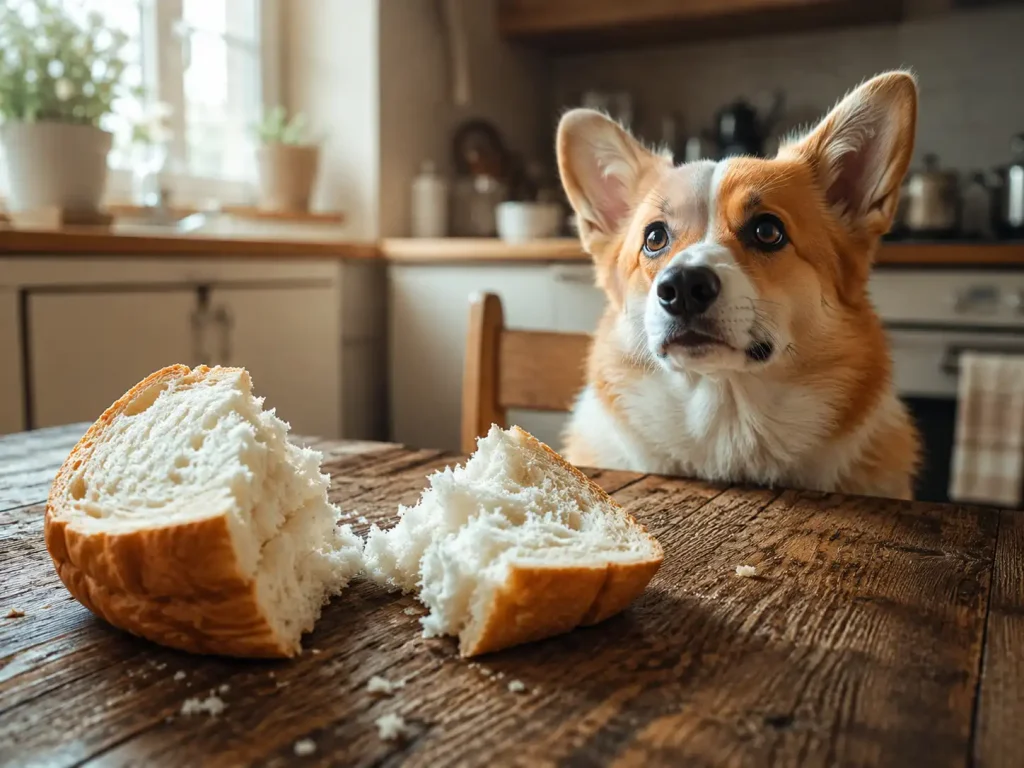
Yes, most dogs can eat a small piece of plain bread without harm. But can dogs eat bread hides a lot of important detail: plain white or wheat bread is harmless in moderation, yet raw bread dough can be a life-threatening emergency, and breads with garlic, raisins, or lots of sugar are genuinely dangerous.
This guide breaks it all down: which breads are safe, which to avoid, how much is okay, and exactly what to do if your dog gets into something they shouldn’t. As an in-home pet care service in Jacksonville, we’d rather you know the difference before you toss your dog that crust.
The short answer
Plain, fully baked white or wheat bread is safe for most dogs as an occasional treat in small amounts. Bread offers no real nutritional benefit, though, so it’s “harmless,” not “healthy.” Never give raw bread dough, garlic bread, raisin bread, or sweet breads, and always check for hidden toxic ingredients like xylitol.
Is bread actually good for dogs?
Not really. Bread is mostly carbohydrates and calories with little your dog needs, so think of it as an empty treat rather than a nutritious one. A small piece of plain bread won’t hurt a healthy dog, but it adds calories without much benefit, which is why moderation matters, especially for dogs watching their weight. There are far better treats (more on those below).
The serious risks of bread for dogs
Raw bread dough is a medical emergency
🛑 Immediate Veterinary Emergency: Expansion & Toxicity
Raw yeast dough does not remain static. Once inside a dog’s stomach, the dark environment triggers rapid expansion causing extreme, agonizing bloating (GDV risk). Simultaneously, chemical fermentation converts sugars into lethal ethanol, resulting in rapid alcohol poisoning.
This is the single most important thing to know. Never let your dog eat raw, rising bread dough. Two dangerous things happen at once:
- The warm, moist stomach acts like a proofing oven, so the dough keeps rising and expanding. This can cause painful bloating and even a twisted stomach (GDV), which is life-threatening.
- The yeast ferments the dough’s sugars into alcohol, which is absorbed into the bloodstream and causes alcohol poisoning.
Signs include a swollen or hard belly, unproductive retching, drooling, weakness, stumbling as if drunk, vomiting attempts, or collapse. If your dog eats raw dough, call your vet or an emergency clinic immediately. This is not a “wait and see” situation.
Toxic add-ins hiding in bread
Many breads contain ingredients that are dangerous to dogs:
- Raisins (raisin bread, some banana breads) can cause kidney failure.
- Garlic and onion (garlic bread, some flavored loaves) damage red blood cells.
- Xylitol, an artificial sweetener in some breads, is extremely toxic.
- Chocolate and macadamia nuts, sometimes in banana or sweet breads, are toxic.
- Nutmeg, common in pumpkin and banana breads, contains a toxin harmful to dogs.
(See our full toxic foods list for dogs and cats.)
Weight gain and blood sugar
Bread is calorie-dense and high in carbohydrates, so regular bread can contribute to weight gain and blood-sugar spikes. Dogs with diabetes or weight problems should generally skip it.
Wheat or gluten sensitivity
Some dogs are allergic or sensitive to wheat. If your dog gets itchy skin, ear issues, or an upset stomach after bread, talk to your vet about a possible wheat allergy.
Sodium and digestive upset
Bread can be surprisingly high in salt, and too much at once can cause gas, bloating, or an upset stomach. Keep portions small.
Which types of bread are safe for dogs?
Here’s the quick verdict on the breads people ask about most:
| 🍞 Bread Variant | 🛡️ Status | 💡 Operational Notes |
|---|---|---|
| Plain White / Whole Wheat | Safe | Completely empty calories, but entirely harmless in tiny pieces. No spreads. |
| Toasted / Plain Crusts | Safe | Ensure it is cooled down completely and lacks any toxic honey/butter toppings. |
| Sourdough (Fully Baked) | Safe | Safe once fully baked and cold. Raw sourdough starters are strictly dangerous. |
| Banana / Pumpkin Loaf | Caution | Check thoroughly for hidden raisins, chocolate chips, nutmeg spices, or Xylitol. |
| Garlic / Onion Loaves | Toxic | The allium compound damages canine red blood cells causing severe anemia. |
| Raisin Bread | Toxic | Even a singular stray raisin can trigger irreversible acute kidney failure. |
How much bread can a dog eat?
Treats, including bread, should make up no more than 10% of your dog’s daily calories. In practice that means a small piece now and then, not a daily habit:
- Small dogs: a bite or two, occasionally.
- Medium dogs: a small piece, occasionally.
- Large dogs: a slice at most, occasionally.
Because bread adds calories without nutrition, less is better. If you’re feeding it regularly, you’re better off swapping in a healthier treat.
How to feed bread safely
If you do share a little bread, keep it simple: plain, fully baked bread only, with no butter, spreads, garlic, seeds, raisins, or sweeteners. Tear it into small pieces, offer it occasionally, and watch a first-timer for any digestive upset.
Special cases: puppies, seniors, and dogs with health issues
Puppies don’t need bread, and their growing bodies do better with proper puppy food and healthy treats. Diabetic and overweight dogs should usually avoid bread because of the carbs and calories. Dogs with wheat allergies should skip it entirely. When in doubt, ask your vet what treats fit your dog’s needs.
What to do if your dog eats raw dough or a toxic bread
Act fast, don’t wait for symptoms:
- Raw bread dough: call your vet or an emergency clinic right away. Watch for a swollen belly, retching, drooling, weakness, or acting drunk.
- Raisin or garlic bread: contact your vet or the ASPCA Animal Poison Control Center at (888) 426-4435 immediately, even if your dog seems fine.
Not sure how urgent it is? Our guide on ER vet versus regular vet can help you decide.
Better treats than bread
Since bread is just empty calories, these make smarter, tastier rewards:
- Apple slices (core and seeds removed)
- Safe vegetables like carrots and green beans
- Bananas and other dog-safe fruits
- A little xylitol-free peanut butter
For the full picture of what’s safe, see our master guide on what dogs can eat.
A quick Jacksonville note
If you’d like a hand keeping your dog’s feeding, treats, and routine on track while you’re at work or away, our in-home pet care in Jacksonville keeps everything exactly as it should be, healthy treats included.
Frequently asked questions
Can dogs eat white bread? Yes, a small piece of plain white bread is harmless for most dogs, but it’s empty calories with no real benefit, so keep it occasional.
Can dogs eat sourdough bread? Fully baked, cooled sourdough is fine in small amounts. Never let a dog eat raw sourdough starter or dough, which can cause dangerous bloating and alcohol poisoning.
Can dogs eat banana bread? Only if it contains no nuts, raisins, chocolate, xylitol, or nutmeg, and even then just a tiny amount because of the sugar. When unsure, skip it.
Can dogs eat garlic bread? No. Garlic is toxic to dogs, and garlic bread also adds butter, oil, and salt. Keep it away from your dog.
Can dogs eat raisin bread? No. Raisins can cause kidney failure in dogs, so any bread with raisins is unsafe. Contact your vet if your dog eats some.
How much bread can a dog have? Very little, as an occasional treat only. Bread should fall within the 10% of daily calories reserved for treats, so a small piece now and then is plenty.
Can puppies eat bread? Puppies don’t need bread, and they do better with proper puppy food and healthy treats. A tiny piece of plain bread won’t harm them, but it isn’t necessary.
Can dogs eat bread crust? Yes, plain bread crust is fine in small amounts, as long as it has no butter, garlic, seeds, or sweet toppings.