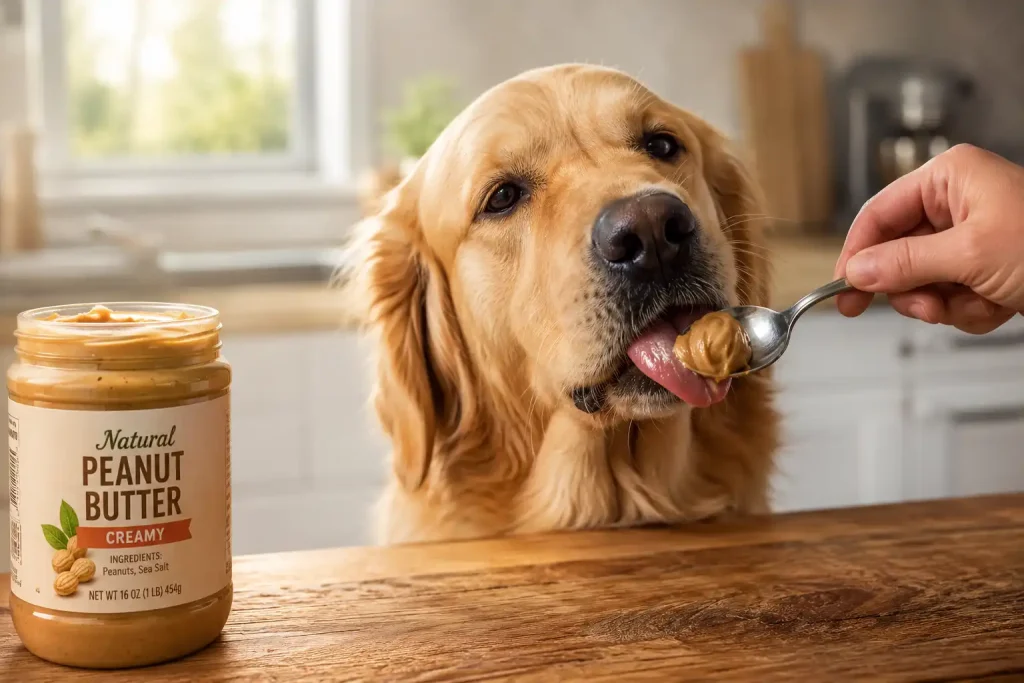
Yes, dogs can eat peanut butter, and most dogs absolutely love it. It’s a classic for stuffing a Kong, hiding a pill, or rewarding good behavior. But peanut butter comes with one serious, non-negotiable rule: never give your dog peanut butter that contains xylitol, a sugar substitute that is toxic, even deadly, to dogs.
This guide covers which peanut butter is safe (including the common grocery brands people ask about), how much to give by dog size, how to serve it, and the xylitol warning every dog owner needs to know. As an in-home pet care service in Jacksonville, a smear of dog-safe peanut butter is one of our favorite ways to make medication time or a quiet afternoon a little happier.
The short answer
Plain, xylitol-free peanut butter, served in small amounts, is safe and even nutritious for most dogs. The healthiest choices are unsalted, no-sugar-added, natural peanut butter (just peanuts) or a dog-specific peanut butter. Always read the ingredient label for xylitol (sometimes listed as “birch sugar”) before giving any peanut butter to your dog.
Is peanut butter good for dogs?
In moderation, plain peanut butter offers some real nutrition:
- Protein to support muscles.
- Healthy fats for skin, coat, and energy.
- Vitamins B and E and niacin for overall health.
The catch is that peanut butter is high in fat and calories, so it should be an occasional treat, not an everyday habit, and portions need to stay small.
The big warning: xylitol is toxic to dogs
🚨 Critical Emergency Alert: The Insulin Crash Factor
Xylitol induces a severe, near-instantaneous insulin release in a canine’s bloodstream. This biochemical reaction causes their blood sugar levels to drop dangerously (acute hypoglycemia) within 10 to 60 minutes. Left untreated, it progresses to total hepatic/liver failure and life-threatening seizures.
This is the single most important thing to know about peanut butter and dogs.
Some peanut butters, especially “low-sugar,” “reduced-calorie,” or specialty protein varieties, are sweetened with xylitol. It’s safe for people and shows up in many sugar-free products: gum, breath mints, toothpaste, chewable vitamins, and some baked goods. In dogs, even a small amount can be life-threatening.
Why it’s so dangerous: xylitol causes a rapid release of insulin in dogs, which makes blood sugar crash (hypoglycemia) within about 10 to 60 minutes. In larger amounts it can also cause liver failure.
Signs of xylitol poisoning: weakness, staggering or lack of coordination, vomiting, lethargy, collapse, and seizures.
What to do: if you think your dog ate anything with xylitol, treat it as an emergency. Call your veterinarian or the ASPCA Animal Poison Control Center at (888) 426-4435 right away, this is faster and safer than waiting to see symptoms. Our guide on ER vet versus regular vet can help you decide where to go. (See also our toxic foods list for dogs and cats.)
How to avoid it: read the label every time. If xylitol or “birch sugar” is listed, do not give it to your dog, and keep those products out of reach.
Other risks to keep in mind
- High fat and calories: too much can lead to weight gain and, in some dogs, pancreatitis, a painful and serious condition. Be especially careful with overweight dogs and breeds prone to pancreatitis.
- Added salt and sugar: look for unsalted, no-sugar-added options.
- Chocolate peanut butter spreads (and Nutella): never, chocolate is toxic to dogs.
- Choking and sticky texture: for small dogs, spread it thin or mix it into food rather than giving a big sticky glob.
- Allergies: rare, but stop if you notice itching or stomach upset.
What kind of peanut butter is safe for dogs?
| 🥜 Peanut Butter Form | 🛡️ Safety Status | 💡 Ingredient Guidelines |
|---|---|---|
| Plain Natural (Just Peanuts) | Safe | The gold standard. Completely unsalted, sugar-free, and oil-free. |
| Standard Jif, Skippy, Peter Pan | Safe | Currently xylitol-free, but always read labels as manufacturers update recipes. |
| Crunchy / Chunky Spread | Safe | Perfect if xylitol-free. Spread very thin for small dogs to prevent choking. |
| Low-Sugar / “Diet” Spreads | High Caution | Most likely to hide artificial sweeteners. Audit every single ingredient. |
| Spreads with “Birch Sugar” | Fatal | This is simply a marketing synonym for pure Xylitol. Do not feed. |
| Chocolate Spreads / Nutella | Fatal | Theobromine chemical bases in chocolate are completely toxic to dogs. |
About the brands people ask about: popular grocery peanut butters like Jif, Skippy, and Peter Pan do not use xylitol and are generally fine in moderation. The ones to watch are specialty “low-sugar” or “protein” peanut butters, which are the most likely to contain it. Whatever the brand, the rule is the same: check the label every time.
How much peanut butter can a dog eat?
Because peanut butter is high in fat, keep servings small and within the 10% of daily calories treat limit:
| 🐕 Dog Weight Class | 🥄 Safe Serving Threshold | 📊 Caloric Best Practice |
|---|---|---|
| Extra-Small (2–10 lbs) | 1/4 to 1/2 teaspoon max | Feed only occasionally as a high-value reward. |
| Small (11–20 lbs) | About 1/2 teaspoon max | Feed only occasionally as a high-value reward. |
| Medium (21–50 lbs) | About 1 teaspoon max | Feed only occasionally as a high-value reward. |
| Large (51–90 lbs) | Up to 1 tablespoon max | Ensure it aligns strictly with the 10% daily treat rule. |
| Extra-Large (91+ lbs) | About 1 tablespoon max | Ensure it aligns strictly with the 10% daily treat rule. |
These are general guidelines, dogs with weight issues, diabetes, or a history of pancreatitis should have less, or none, unless your vet okays it.
How to serve peanut butter safely
Peanut butter really shines as a “busy” treat:
- Stuff a Kong or fill a lick mat and freeze it for a long-lasting, calming activity.
- Hide a pill in a small dab, a classic trick for medication time. (See our guide to giving your dog medication.)
- Pair it with dog-safe foods: a thin smear on a slice of apple, a little mashed with banana, or a dab on a celery stick (see safe vegetables for dogs).
- Use it for training as a high-value reward, in tiny amounts.
Always introduce it slowly the first time and watch for any digestive upset.
Puppies, diabetic dogs, and special cases
Puppies can have a tiny bit of xylitol-free peanut butter once they’re on solid food, keep it minimal because of the fat. Diabetic dogs should only have it with a vet’s approval. Overweight dogs or those prone to pancreatitis should avoid it or have only a very small amount under veterinary guidance, since the fat content is the main concern. When in doubt, ask your vet.
Can dogs eat peanut butter every day?
A small amount of plain, xylitol-free peanut butter is okay fairly often for a healthy dog, as long as it stays within the 10% treat limit. But because it’s calorie-dense, it’s better as an occasional treat than a daily one, and it shouldn’t crowd out a balanced diet.
Other dog-safe foods to try
If your dog loves peanut butter on apples or bananas, they may enjoy other treats in moderation, like watermelon (rind and seeds removed), strawberries, and blueberries. For the full picture, see our master guide on what dogs can eat.
A quick Jacksonville note
A frozen peanut-butter Kong is a lifesaver for keeping a dog happily occupied, whether it’s a thunderstorm, a vet-medication routine, or just a long afternoon. If you’d like a hand keeping your dog’s care and treats on track while you’re at work or away, our in-home pet care in Jacksonville keeps everything just as it should be.
Frequently asked questions
Is peanut butter toxic to dogs? Plain peanut butter is not toxic, but peanut butter containing xylitol is extremely toxic and can be deadly. Always check the label for xylitol (or “birch sugar”) before giving any to your dog.
What kind of peanut butter can dogs eat? Plain, unsalted, no-sugar-added natural peanut butter or dog-specific peanut butter is best. Common grocery brands like Jif, Skippy, and Peter Pan are xylitol-free and fine in moderation, but always read the label.
How much peanut butter can a dog eat? Keep it small: roughly 1/2 teaspoon for small dogs up to about 1 tablespoon for large dogs, as an occasional treat within the 10% treat limit. Less for dogs with weight or health issues.
Can dogs eat crunchy or chunky peanut butter? Yes, as long as it’s xylitol-free. For small dogs, spread it thin or mix it into food so the texture isn’t a choking concern.
Can dogs eat peanut butter cookies or peanut butter and jelly? It’s best to skip them. Cookies, crackers, pretzels, and PB&J have added sugar, salt, and other ingredients dogs don’t need. Stick to plain peanut butter.
Can puppies eat peanut butter? Yes, a tiny amount of xylitol-free peanut butter once they’re eating solid food. Keep it minimal because of the fat content.
Can dogs eat peanut butter every day? A little is okay fairly often within the 10% treat limit, but because it’s high in fat and calories, it’s better as an occasional treat than a daily one.