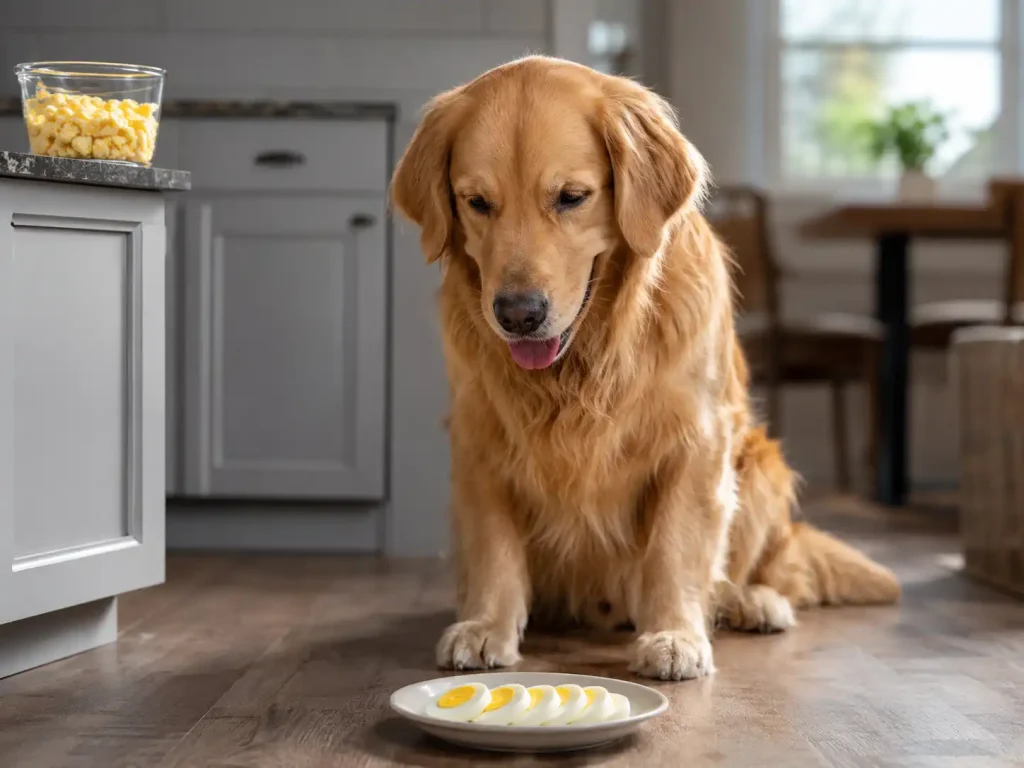
Yes, dogs can eat eggs, and a plain cooked egg is one of the most nutritious treats you can share. Eggs are packed with high-quality protein and are gentle enough that vets sometimes suggest them to help settle an upset stomach. The golden rules: cook them, keep them plain, and serve in moderation.
This guide covers the real benefits, the cooked-versus-raw question, exactly how much to give by dog size, and the egg questions people actually ask, from scrambled and boiled to eggshells, quail eggs, and deviled eggs. As an in-home pet care service in Jacksonville, a little cooked egg is one of our favorite protein-rich toppers for a fussy eater.
The short answer
Plain, fully cooked eggs (boiled or scrambled with no butter, oil, salt, or seasoning) are safe and healthy for most dogs in moderation. Avoid raw eggs (risk of salmonella and a biotin-blocking compound), fried eggs, and any egg dish made with onion or garlic, both of which are toxic to dogs.
Are eggs good for dogs?
Eggs are a nutritional powerhouse. In moderation, they provide:
- Complete, high-quality protein with all the essential amino acids.
- Vitamins A, B12, riboflavin, and folate for energy and overall health.
- Iron and selenium to support the body’s systems.
- Fatty acids and biotin, which support healthy skin and coat.
Because they’re so digestible, a little cooked egg can be a good protein boost or topper, and may even help calm a mild upset stomach.
Cooked vs. raw eggs: what’s safe?
⚠️ Biological Hazard: The Avidin Deficit Curve
Raw uncooked egg whites hold specific protein structural chains containing avidin. When processed natively by a canine, avidin aggressively binds to dietary biotin (vitamin B7), locking absorption channels inside cell walls. Over continuous intervals, this biological deficit compromises cell duplication loops, prompting severe hair loss and epidermal scaling. Cooking completely deactivates avidin.
Cooked eggs are the safe choice. Cooking removes the main risks while keeping the nutrition.
Raw eggs carry two concerns:
- Bacteria: raw eggs can carry salmonella or E. coli, which can make your dog (and your household) sick.
- Biotin blocking: raw egg whites contain a compound called avidin that binds biotin (a B vitamin). An occasional raw egg is unlikely to cause problems, but a lot over time could contribute to a biotin deficiency. Cooking deactivates avidin.
Some raw-feeders include eggs in their dogs’ diets, but most veterinarians recommend cooking them to be safe. When in doubt, cook the egg.
What about eggshells?
Eggshells are a natural source of calcium, and some owners grind clean, dried shells into a powder to add to a homemade diet. A few cautions: raw shells carry the same bacteria risk as raw egg, and sharp shell pieces can be a choking hazard. If your dog already eats a complete, balanced diet, eggshells aren’t necessary, talk to your vet before adding them, especially for home-cooked diets.
Which forms of egg are safe?
| 🍳 Egg Form / Dish | 🛡️ Status | 💡 Operational Framework |
|---|---|---|
| Plain Boiled / Scrambled | Best Choice | Completely oil-free, butter-free, and salt-free. Clean protein booster. |
| Quail / Duck / Chicken (Cooked) | Safe | All variants are excellent once cooked. Scale down portions for smaller breeds. |
| Clean Ground Eggshell Powder | Optional | High calcium compound; ensure shells are dried and ground micro-fine. |
| Raw Eggs / Raw Yolks | Avoid | Salmonella hazard vectors combined with active avidin biotin blocking. |
| Fried Eggs / Deviled Eggs | Never | Excessive processing oil lipids, heavy salts, mayonnaise, or toxic chives. |
| Omelets with Onion / Garlic | Toxic | Allium chemical bases cause life-threatening red blood cell oxidation. |
Safe Egg Serving Sizes by Dog Weight
Eggs are calorie dense (about 70 calories each), so they count toward the 10% of daily calories
| 🐕 Canine Mass Index | 🍳 Maximum Safe Allocation | 🔄 Weekly Intake Constraints |
|---|---|---|
| Extra-Small (2–10 lbs) | 1 to 2 tablespoons of cooked egg max | A few times per week as a food topper. |
| Small (11–20 lbs) | About 1/4 of a standard egg | A few times per week as a food topper. |
| Medium (21–50 lbs) | About 1/2 of a standard egg | A few times per week as a food topper. |
| Large (51–90 lbs) | Up to 1 full egg load | Strictly monitor under the 10% daily treat ceiling. |
| Extra-Large (91+ lbs) | 1 full large egg maximum | Strictly monitor under the 10% daily treat ceiling. |
Eggs are a supplement, not a meal. Start with a small amount the first time and watch for any digestive upset or signs of allergy.
How to cook eggs for your dog
- Cook them plain, boiled or scrambled, with no butter, oil, salt, or seasoning.
- Let them cool and cut or break into bite-sized pieces.
- Serve a small amount on its own or as a topper on their food.
- Introduce slowly and watch how your dog does.
Puppies, diabetic dogs, and special cases
Puppies can have a little cooked egg once they’re on solid food, keep it occasional and within the 10% treat rule. Dogs with pancreatitis should usually avoid eggs or have only the white (the yolk is high in fat), check with your vet first. Diabetic or overweight dogs should have eggs only with a vet’s okay. Egg allergies are possible, so watch for itching or stomach upset after the first servings.
Can dogs eat eggs every day?
A small amount of cooked egg can be fine several times a week for a healthy dog, as long as it stays within the 10% treat limit and doesn’t unbalance their diet. For most dogs, a daily whole egg is more than they need, smaller, less frequent portions are better.
Other dog-safe protein treats
If your dog loves eggs, they may enjoy other treats in moderation, like a little cheese or xylitol-free peanut butter, or fruits like apples and bananas. For the full picture, see our master guide on what dogs can eat and our list of safe vegetables for dogs.
A quick Jacksonville note
A spoonful of plain scrambled egg is a great way to tempt a fussy eater or add a protein boost at mealtime. If you’d like a hand keeping your dog’s meals, treats, and routine on track while you’re at work or away, our in-home pet care in Jacksonville keeps everything just as it should be.
Frequently asked questions
Can dogs eat scrambled eggs? Yes, as long as they’re plain, cooked with no butter, oil, salt, or seasoning. Plain scrambled egg is a dog favorite and an easy way to serve eggs.
Can dogs eat raw eggs? It’s not recommended. Raw eggs can carry salmonella, and raw egg whites contain avidin, which blocks biotin over time. Cooking removes both concerns, so cooked is safer.
Can dogs eat boiled eggs? Yes. Plain hard-boiled or soft-boiled eggs, with nothing added, are one of the safest and simplest ways to give your dog egg.
Can dogs eat eggshells? Eggshells are a calcium source and some owners grind clean, dried shells into food, but they’re not necessary for dogs on a balanced diet, and raw shells carry bacteria and a choking risk. Ask your vet first.
How many eggs can a dog eat? Eggs should stay within the 10% treat limit, from a spoonful for small dogs up to about one egg for large dogs, a few times a week. Start small and adjust to your dog’s size and diet.
Can dogs eat fried eggs or deviled eggs? It’s best to skip them. Fried eggs are cooked in oil or butter, and deviled eggs and egg salad contain mayonnaise, salt, and seasonings dogs don’t need. Stick to plain boiled or scrambled.
Can dogs eat quail or duck eggs? Yes, when cooked. Quail, duck, and chicken eggs are all fine for dogs cooked and plain, just adjust the amount, quail eggs are smaller and duck eggs are larger.