We tend to laugh off dog breath, but it isn’t actually normal for a healthy dog’s mouth to smell bad. Most of the time, bad breath is the first sign of dental disease, and sometimes it points to a health problem somewhere else in the body. The good news: once you know the cause, it’s usually very fixable.
This guide explains what causes bad breath in dogs, what different smells can tell you, how to get rid of it (and keep it gone), and when the odor is a reason to see your vet. As an in-home pet care service in Jacksonville, keeping an eye on dental health is part of looking after the dogs in our care.
What causes bad breath in dogs?
Dental disease is the number one cause. Plaque builds up on the teeth, hardens into tartar, and leads to gum disease (gingivitis and periodontal disease). The bacteria involved are what produce that strong odor. It’s extremely common, most dogs have some degree of dental disease by age three, and our guide on dog tooth loss and dental health goes deeper.
Other causes include:
- Eating something gross. Garbage, dead things, or feces (their own or another animal’s) can cause short-term bad breath.
- Something stuck in the mouth. A piece of stick, bone, or food lodged in the teeth or gums can rot and smell.
- Oral growths or tumors, which can cause a foul odor.
- A health problem elsewhere in the body. This is the important one, certain illnesses change how a dog’s breath smells (see the next section).
What your dog’s breath smell can tell you
The type of smell is a useful clue. It’s not a diagnosis, but it tells you how urgently to act:
| 👃 Distinct Halitosis Scent | 🔬 Potential Systemic Pathology | 💡 Strategic Urgency Vector |
|---|---|---|
| Rotten, Foul, or Decaying | Advanced periodontal gum disease, hardened calculus accumulation, or an undiagnosed necrotic oral growth. | Schedule Dental Check |
| Sweet, Fruity, or Acetone | Metabolic Ketoacidosis indicative of underlying Canine Diabetes. System requires fast regulation. | Veterinary Evaluation |
| Urine-Like or Ammonia (“Pee Breath”) | Severe toxic waste buildup in the bloodstream pointing directly to acute or chronic Kidney Failure. | HIGH URGENCY VET |
| Strongly Fishy Odor | Oral bacterial buildup, or residue transfer from active self-grooming of impacted anal sacs. | Monitor & Audit Glands |
| Resembles Feces / Poop | Coprophagia habits (eating waste material) or severe lower intestinal tracking blockages. | Correct Behavior Base |
Sweet/fruity and urine/ammonia breath are the two that most often signal a whole-body illness, so don’t brush those off.
When bad breath is a warning sign
See your vet promptly if the bad breath:
- Came on suddenly or has gotten noticeably worse
- Smells sweet, fruity, or like urine/ammonia
- Comes with drooling, pawing at the mouth, or bleeding or red gums
- Comes with loose or broken teeth
- Comes with not eating, weight loss, vomiting, or drinking and peeing more than usual
These can point to dental infection or an underlying illness that needs treatment, not just a breath mint.
How to get rid of dog bad breath
Fresh breath comes from treating the cause and then keeping the mouth clean. Here’s the order that works:
- Start with a vet dental check. Your vet can spot gum disease, infected or broken teeth, growths, or signs of other illness, and tell you what’s actually going on.
- Get a professional cleaning if needed. A veterinary dental cleaning (done under anesthesia) removes tartar above and below the gumline, the part you can’t reach at home. This often fixes the smell at its source.
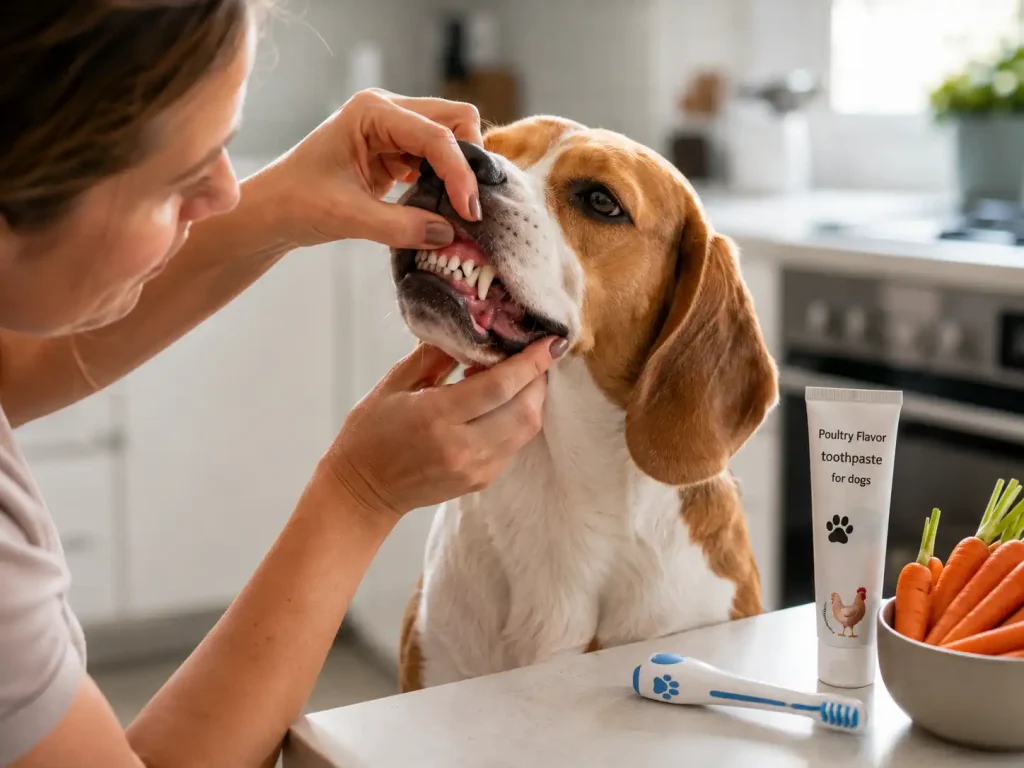
- Brush your dog’s teeth daily. This is the single most effective at-home step. Use a dog toothbrush (or finger brush) and dog toothpaste only, see the warning below.
- Add dental chews. Look for products with the VOHC seal (Veterinary Oral Health Council), which means they’re proven to reduce plaque and tartar, not just freshen breath.
- Consider a dental diet or water additive. Some vet-recommended dental diets and water additives help slow plaque buildup.
- Stop the gross stuff. If your dog eats poop or raids the trash, managing that removes a common odor source.
Home remedies and what actually helps
🚨 Critical Danger: Human Toothpaste Additives
Never use human toothpaste brands under any circumstances. Human dental care formulas contain massive concentrations of Xylitol as a flavor enhancement sweetener alongside heavy foaming agents like sodium lauryl sulfate. While benign to humans, standard swallows trigger rapid systemic toxic shocks and acute liver destruction in canines.
For mild, day to day freshness (alongside, not instead of, the steps above):
- Daily brushing, the most effective thing you can do at home.
- VOHC-approved dental chews and treats.
- Crunchy snacks like raw carrot pieces can help scrape a little plaque, see our list of safe vegetables for dogs.
- A spoonful of plain, unsweetened yogurt (for dogs that tolerate dairy) adds probiotics that may help a little.
- A sprinkle of fresh parsley on food is a natural, dog-safe breath freshener.
- Water additives made for dogs.
Important, what NOT to do: never use human toothpaste. Many contain xylitol, which is toxic to dogs, and fluoride, which isn’t meant to be swallowed. And remember: home remedies only freshen breath. If the smell is strong or persistent, it’s almost always dental disease or a health issue that needs a vet, no chew or additive will fix that on its own.
Products that can help
When you’re shopping, these categories can support fresh breath, look for the VOHC seal where you can:
- Dog toothbrushes and dog toothpaste
- Dental chews and dental treats
- Dental diets (vet-recommended)
- Water additives
- Dental toys that help scrub teeth during play
Think of these as support for a brushing-and-vet routine, not a replacement for it.
How to prevent bad breath
- Brush daily (or as often as you can, something is better than nothing).
- Offer VOHC dental chews
- Schedule regular vet dental checkups and cleanings as advised.
- Feed a quality diet and limit access to garbage and feces.
A little routine now prevents the painful (and expensive) dental problems later.
Puppies and senior dogs
Puppies can have slightly funky breath while teething, which usually passes. But strong or lasting puppy bad breath isn’t normal, it can mean a retained baby tooth or something stuck, so have it checked; our new puppy owner guide covers early care. Senior dogs are more likely to have built-up dental disease and are also more prone to conditions like kidney disease, so new or worsening bad breath in an older dog deserves a vet visit, see our senior dog care guide. Persistent bad breath can also be a sign of mouth pain, which dogs hide well, our guide on recognizing pain can help.
A quick Jacksonville note
Dental care is one of the easiest things to let slide, and one of the most important for your dog’s comfort and health. If you’d like a hand keeping up with brushing, chews, and your dog’s overall routine while you’re at work or away, our in-home pet care in Jacksonville keeps the little daily habits on track, the ones that add up to a healthier dog.
Frequently asked questions
Why does my dog have bad breath? The most common cause is dental disease, plaque and tartar leading to gum infection. Bad breath can also come from eating something gross, an object stuck in the mouth, or a health problem like diabetes or kidney disease. Persistent bad breath should be checked by a vet.
How do I get rid of my dog’s bad breath? Start with a vet dental check and a professional cleaning if needed, then keep the mouth healthy with daily brushing (using dog toothpaste), VOHC-approved dental chews, and regular checkups. Treating the underlying cause is what truly fixes the smell.
What home remedy works for dog bad breath? Daily brushing, dental chews, crunchy carrots, a little plain yogurt or fresh parsley, and dog water additives can help freshen breath. But these only help mildly, strong or lasting odor means it’s time for the vet.
Can I use human toothpaste on my dog? No. Human toothpaste often contains xylitol, which is toxic to dogs, and fluoride, which shouldn’t be swallowed. Always use toothpaste made for dogs.
My dog’s breath smells like pee or fish, what does that mean? Urine or ammonia breath can be a sign of kidney disease, and fishy breath can come from dental issues or anal-gland licking. Either way, if it’s persistent, have your vet check your dog.
Do dental chews actually work for bad breath? The ones that carry the VOHC seal are proven to reduce plaque and tartar, which helps with breath. They work best alongside brushing and vet care, not on their own.
Is bad breath in an old dog normal? No. Senior dogs are more likely to have dental disease and other conditions, so new or worsening bad breath in an older dog should be checked by a vet.