The moment you wish you had read this is not the moment to start reading it. Pet first aid is one of those skills you build before you need it, like learning CPR for humans. Most owners never have to use most of these protocols, but the handful who do are profoundly grateful they knew them.
This is the working pet first aid guide for Jacksonville households. Save it. Print the protocol summaries for your fridge. Tell your sitter what you keep in your kit.
For broader Florida health hazards context, see our Florida pet hazards guide.
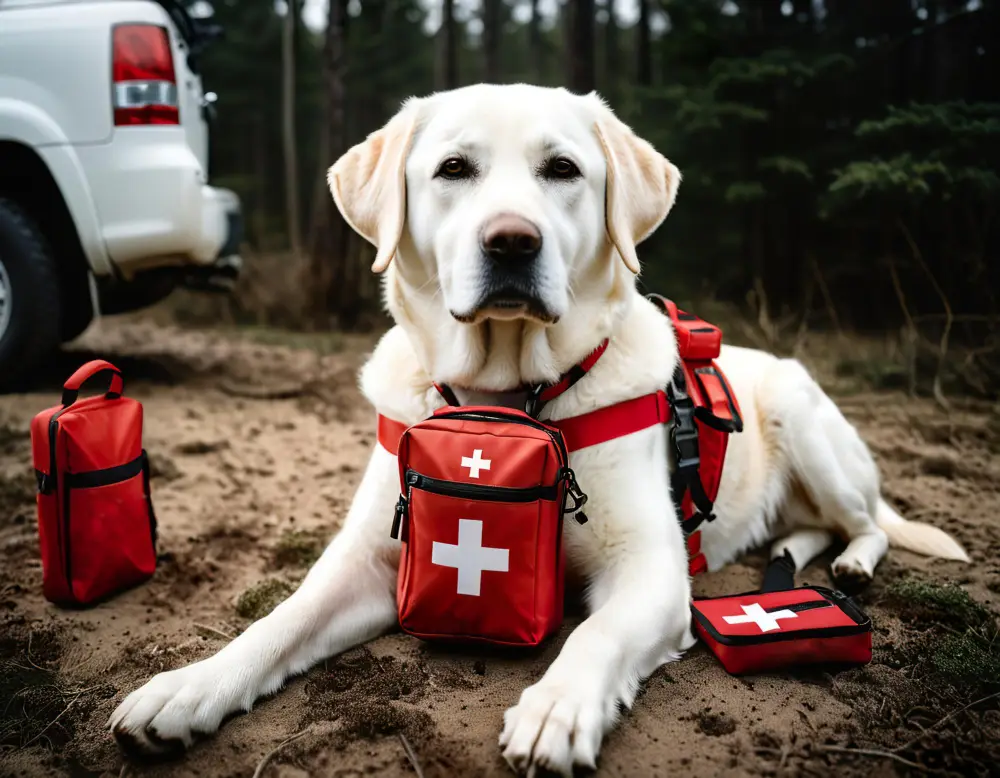
Build Your Pet First Aid Kit
A working kit lives in one labeled container near where you store pet supplies. Contents:
Cleaning and wound care:
- Gauze pads (assorted sizes)
- Self-adhering bandage tape (Vetrap or similar)
- Hydrogen peroxide (3 percent – for wound cleaning only, not for inducing vomiting unless directed by vet/poison control)
- Saline solution (sterile eye wash)
- Clean towels
- Latex or nitrile gloves
Tools:
- Digital rectal thermometer (yes, that kind – it is the only reliable temperature method for pets)
- Petroleum jelly (lubricant for thermometer)
- Tweezers (fine-tipped for tick or splinter removal)
- Round-tipped scissors
- Tick removal tool
- Muzzle (even a calm pet may bite when in pain)
- Pet carrier ready and accessible
Emergency supplies:
- Karo syrup or honey (for hypoglycemic emergencies)
- Activated charcoal (only use if directed by vet/poison control)
- Benadryl (for allergic reactions – only with vet-confirmed dosing)
- Styptic powder (for nail bleed)
Documentation:
- Copy of vaccination records
- Photos of your pet (recent, clear)
- Microchip number
- Vet contact info
- 24-hour ER vet contact
- ASPCA Animal Poison Control: 888-426-4435
- Pet Poison Helpline: 855-764-7661
Store everything in one container. Replace expired items annually.
Recognizing a True Emergency
Not every health issue is an emergency. These ARE:
- Difficulty breathing or rapid breathing at rest
- Pale, blue, or bright red gums
- Suspected toxin ingestion (chocolate, xylitol, antifreeze, rat poison, human medications, lilies for cats)
- Trauma (vehicle impact, fall, fight injury)
- Suspected bloat in deep-chested dogs (distended abdomen, retching without producing, restlessness)
- Seizures lasting longer than 2 minutes or back-to-back seizures
- Inability to urinate (especially male cats and dogs)
- Severe bleeding that does not slow with pressure
- Severe or persistent vomiting or diarrhea, especially with blood
- Suspected heatstroke
- Sudden collapse or weakness
- Eye injuries
If in doubt, call your vet’s emergency line. The phone staff can help you decide whether to come in.
CPR for Dogs and Cats
CPR for pets follows a similar structure to human CPR but with adaptations. CPR has variable outcomes – it works best when started immediately after collapse and continued until vet care can take over.
Step 1: Check for breathing and pulse.
- Look for chest movement
- Feel for pulse at the femoral artery (inside of the thigh, near the groin)
- If unresponsive, no breathing, no pulse: begin CPR
Step 2: Chest compressions.
For dogs and cats:
- Lay the pet on their right side on a flat surface
- For small dogs and cats: place one hand around the chest, thumb on one side and fingers on the other, just behind the front leg
- For medium and large dogs: place both hands stacked on the widest part of the rib cage
- Compress to one-third to one-half the depth of the chest
- Rate: 100-120 compressions per minute (think the beat of “Stayin’ Alive” by the Bee Gees)
- Allow full chest recoil between compressions
Step 3: Rescue breaths.
After every 30 compressions:
- Close the mouth
- Place your mouth over the nose
- Blow gently until you see the chest rise
- 2 breaths, then resume compressions
Step 4: Continue and transport.
- Continue CPR while another person drives to the ER vet
- Do not stop unless the pet recovers or you arrive at the vet
- Even if CPR appears unsuccessful, professional intervention may still help
Choking Response
Signs: gagging, pawing at the mouth, difficulty breathing, blue tinge to gums.
If you can see the object:
- Open the mouth carefully (use both hands if needed)
- Try to remove the object with your fingers (only if visible and reachable)
- Do not push the object further down
If you cannot remove the object:
For small dogs and cats:
- Lift them by their hind legs with their head down
- Strike between the shoulder blades firmly several times
For medium and large dogs:
- Lay them on their side
- Apply firm pressure to the abdomen below the rib cage (the Heimlich position for dogs)
After object dislodged, go to the vet even if your pet seems fine. Throat injury or aspiration is possible.
Bleeding Control
Apply direct pressure.
- Place a clean cloth or gauze pad over the wound
- Apply firm steady pressure for at least 3-5 minutes without lifting
- Wrap with bandage tape if you can do so without releasing pressure
For bleeding on a limb:
- Elevate the limb above the heart if possible
- If bleeding does not stop with pressure, apply a pressure bandage
For nail bleeds:
- Use styptic powder, cornstarch, or flour
- Apply firmly to the nail tip
- Wait several minutes
When to head to the vet:
- Bleeding that does not stop within 5-10 minutes of pressure
- Spurting blood (arterial bleeding)
- Heavy bleeding from the head, neck, chest, or abdomen
- Any bleeding with visible severe injury
Burns
Heat burns (hot pavement paw burns, kitchen accidents):
- Run cool (not cold) water over the burn for 10-15 minutes
- Do not apply ice
- Cover with clean damp gauze
- Head to the vet
Chemical burns:
- Flush with copious cool water for 15-20 minutes
- Wear gloves to protect yourself
- Do not apply neutralizing agents (water is best)
- Head to the vet, bring the chemical container if possible
Poisoning Response
The single most important step: identify the substance and call poison control.
ASPCA Animal Poison Control: 888-426-4435 Pet Poison Helpline: 855-764-7661
Both charge a consultation fee but can advise whether home action is appropriate or ER vet is needed.
Do NOT induce vomiting unless directed. Some toxins are more dangerous coming back up.
Information to have ready:
- What was ingested (name, container if possible)
- How much
- When
- Your pet’s weight
- Symptoms so far
For toxic food specifics, see our toxic foods complete list guide. For toxic plants, see our toxic plants in Jacksonville yards guide.
Heatstroke
Florida-specific and one of the most common Jacksonville pet emergencies. The protocol: cool first, transport second.
- Move to a cool environment
- Pour cool water (NOT ice water) over the body
- Direct a fan or breeze across the wet pet
- Goal: reduce body temperature to about 103 degrees F, then transport to vet
- Call the ER vet while cooling
Full coverage in our dog heatstroke first aid guide.
Seizures
During the seizure:
- Do not put hands near the mouth (you can be bitten unintentionally)
- Move objects away that could cause injury
- Time the seizure (over 2 minutes is concerning)
- Speak calmly
After the seizure:
- Your pet may be disoriented for minutes to hours
- Keep them in a quiet, safe location
- Do not try to walk them around
- Contact your vet
When to go to the ER:
- Seizure lasting longer than 2 minutes
- Multiple seizures back-to-back
- First-ever seizure (warrants workup)
- Pet not returning to normal after the post-ictal period
Insect Stings and Bites
Bee/wasp stings:
- Remove visible stinger by scraping (not pinching)
- Apply cool compress
- Watch for allergic reaction (facial swelling, hives, breathing difficulty)
- For mild reactions, vet may approve Benadryl (always confirm dose with vet first)
- For severe reactions (anaphylaxis), ER immediately
Spider bites:
- Most bites are minor
- Brown recluse and black widow bites can be serious
- If you suspect a venomous spider bite, head to the vet with the spider if possible
Snake Bite (Florida Specific)
Florida has venomous species: cottonmouths, copperheads, rattlesnakes, coral snakes.
Action:
- Get the pet to the ER vet immediately
- Keep the bite area lower than the heart if possible
- Carry the pet (do not let them walk) to limit venom spread
- Do NOT try to suck out venom, apply ice, or cut the wound
- Try to identify the snake (photo if safe) but do not handle it
When to Call vs. When to Drive
For non-critical situations: call your vet first. The phone staff can help triage and avoid an unnecessary ER trip or confirm immediate action.
For critical situations: drive while calling. The ER vet can prep on arrival if they know you are coming.
See our ER vet vs regular vet decision guide for more detailed triage by symptom.
What Your Sitter Should Know
If you use a pet sitter, briefly walk them through:
- Where your first aid kit is
- Your vet contact information
- Your ER vet contact information
- The Pet Poison hotlines
- Any pet-specific risk (heat sensitivity, known allergies, chronic conditions)
- Basic recognition of emergencies
For sitter briefing details generally, see our what to tell your pet sitter before you leave post.
Frequently Asked Questions
Should I take a pet first aid class?
If you can find one, yes. The Red Cross and some veterinary practices offer them. Hands-on practice with CPR and bandaging is dramatically better than reading about it. The Red Cross also has a pet first aid app that is useful for in-the-moment reference.
How long should I do CPR before giving up?
There is no fixed time. Continue until vet care takes over or you reach the ER vet. The longer you continue without a response, the lower the likelihood of recovery, but CPR success has been documented after extended efforts.
Can I do CPR alone?
It is significantly easier with two people (one driving, one performing CPR). Solo CPR is very limiting because you cannot also transport. If you are alone, do CPR for 1-2 minutes, then call 911 or animal control for assistance, then continue.
Should I induce vomiting at home?
Generally no, not without veterinary direction. Some toxins are more dangerous when vomited (caustic substances cause additional esophageal burns). Always call poison control first.
What is the most useful first aid skill to know?
For Florida pet owners: heatstroke first aid. It is the most common emergency, the most preventable, and the one where minutes count most. Read our dog heatstroke first aid guide and commit the basics to memory.
How often should I check my first aid kit?
Twice a year. Replace expired items, check that any medications you might use are still good, confirm contact information is current.
A Skill Worth Building
Pet first aid is one of those skills you almost never use and are profoundly grateful for when you do. The kit takes one afternoon to assemble. The basic protocols can be reviewed in 30 minutes. The peace of mind is permanent.
If you want a sitter who is trained in pet first aid as standard practice, our in-home pet care and professional pet sitting services include this competency. We are not vet techs, but we know enough to manage situations well and get pets to the right professionals fast.