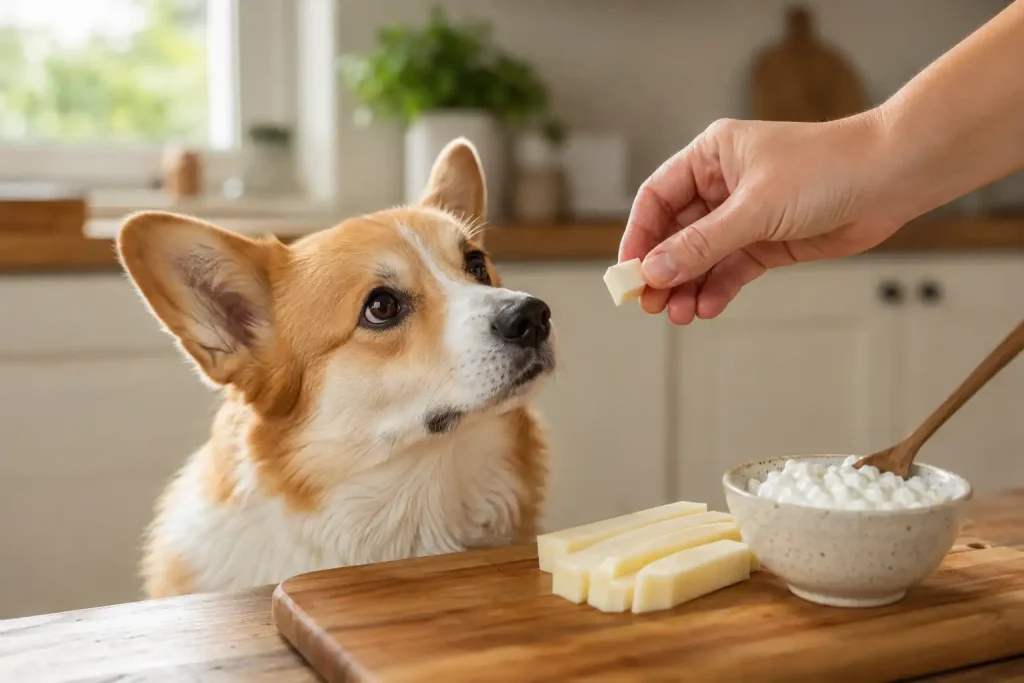
Yes, most dogs can eat cheese in moderation, and it’s one of the most useful treats a dog owner has. Trainers love it as a high-value reward, and it’s perfect for hiding a pill. But cheese is high in fat, many dogs are a little lactose intolerant, and a few types, like blue cheese or anything with garlic or onion, are genuinely unsafe.
This guide breaks down exactly which cheeses are best, which to limit, and which to avoid completely, plus how much to give by dog size. As an in-home pet care service in Jacksonville, a small cube of cheese is one of our go-to tricks for medication time and training.
The short answer
Plain, low-fat cheese like cottage cheese or mozzarella, given in small amounts, is safe for most dogs. Keep it occasional because of the fat, watch your dog for any tummy upset (lactose), and avoid blue cheese, very salty or processed cheeses, and any cheese containing garlic, onion, or chives.
Is cheese good for dogs?
In small amounts, cheese does offer some nutrition:
- Protein to support muscles.
- Calcium for bones and teeth.
- Vitamin A and B-complex vitamins for overall health.
- Essential fatty acids for skin and coat.
Just as importantly, cheese is high-value, most dogs love it, which makes it excellent for training and for hiding medication.
Risks of cheese for dogs
High in fat
This is the main concern. Too much cheese can lead to weight gain and, in some dogs, pancreatitis, a painful and potentially serious illness. Be extra careful with overweight dogs and breeds prone to pancreatitis.
Lactose intolerance
Dogs don’t digest dairy as well as people. Cheese has far less lactose than milk, but sensitive dogs can still get gas, diarrhea, or an upset stomach. Start with a tiny amount and watch how your dog reacts.
Salt and additives
Some cheeses are very salty, and processed cheeses often contain extra sodium and additives that dogs don’t need.
Toxic add-ins
Never give cheese flavored with garlic, onion, or chives, these are toxic to dogs. (See our toxic foods list for dogs and cats.)
Blue cheese
Blue-veined cheeses (see below) can be genuinely dangerous and should be avoided entirely.
Which cheeses are safe for dogs?
<
| 🧀 Cheese Variety | 🛡️ Safety Rating | 💡 Operational Profile |
|---|---|---|
| Plain Low-Fat Cottage Cheese | Best Pick | Lowest in fat, sodium, and lactose. Exceptionally gentle on canine digestive tracts. |
| Low-Fat Mozzarella / String Cheese | Safe | Lower overall fat matrix. Highly ideal as a quick training snack reward. |
| Swiss / Aged Cheddar | Moderation | Naturally lower lactose markers, but fat values require strict portion boundaries. |
| American Slices / Feta / Brie | Avoid | Packed with chemical additives, intense sodium loads, or dense saturated fats. |
| Blue-Veined Varieties (Stilton, Gorgonzola, Roquefort) | Toxic | Can contain mold-generated roquefortine C, causing immediate neurological muscle tremors. |
Cheesy foods to skip
These popular cheese foods aren’t really about the cheese, they’re loaded with fat, salt, sugar, or unsafe ingredients:
| 🍟 Human Food Form | 🛡️ Status | ⚠️ Underlying Core Hazard |
|---|---|---|
| Mac and Cheese / Pizza Slices | Avoid | High processing lipid levels combined with toxic hidden garlic and onion seasoning powders. |
| Cheesecake Desserts | Never | Heavy structural fats and refined sugars. High risk of encountering invisible Xylitol substitutes. |
| Cheese Crackers, Puffs & Balls | Avoid | Industrial sodium chemicals, preservation junk, and intense flavor enhancements. |
A closer look at blue cheese
⚠️ Critical Roquefortine C Exposure Danger
The distinct fungal mold structures used to age blue cheese produce a chemical mycotoxin known as roquefortine C. Canine neurological networks are uniquely sensitive to this compound; ingestion can provoke rapid muscle tremors, sharp core hyperthermia spikes, and acute seizures.
Blue cheeses like Stilton, Roquefort, Gorgonzola, and Danish blue are made with a specific mold that can produce a substance called roquefortine C. In dogs, especially if they eat a fair amount, this can cause vomiting, diarrhea, tremors, a high temperature, and even seizures. It’s best to keep all blue-veined cheeses well out of reach.
Lactose intolerance in dogs
Many dogs have some degree of trouble digesting dairy. Cheese is lower in lactose than milk, so most dogs handle a little just fine, but if your dog gets gas, loose stools, or an upset stomach after cheese, it’s a sign to cut it out. Always introduce cheese in a small amount the first time and watch for the next day.
How much cheese can a dog eat?
Cheese is calorie-dense, so keep it within the 10% of daily calories treat limit, and lean toward less:
| Dog size | Cheese amount | Frequency |
| Extra-small (2–10 lb) | A few shreds or a tiny cube | Occasionally |
| Small (11–20 lb) | 1 small cube | Occasionally |
| Medium (21–50 lb) | 1–2 small cubes | Occasionally |
| Large (51–90 lb) | 2 small cubes | Occasionally |
| Extra-large (91+ lb) | 2–3 small cubes | Occasionally |
Dogs that are overweight, prone to pancreatitis, or sensitive to dairy should have even less, or none, unless your vet says it’s fine.
How to serve cheese safely
- Cut it into small cubes or shreds for training or as a reward.
- Hide a pill in a small piece, a classic trick at medication time.
- Choose plain, low-fat cheese over processed or flavored kinds.
- Introduce slowly and watch for any digestive upset.
Puppies, diabetic dogs, and special cases
Puppies can have a little cheese as a training reward once they’re on solid food, keep it tiny. Diabetic, overweight, or pancreatitis-prone dogs should have cheese only with a vet’s okay because of the fat. Lactose-sensitive dogs may need to skip it altogether. When in doubt, ask your vet.
Other dog-safe treats to try
If you’re looking for treats beyond cheese, many dogs enjoy peanut butter (xylitol-free), apples, bananas, and watermelon in moderation. For the full picture, see our master guide on what dogs can eat and our list of safe vegetables for dogs.
A quick Jacksonville note
A small cube of low-fat cheese is one of the easiest ways to make medication time or training go smoothly. If you’d like a hand keeping your dog’s routine, treats, and any medications on track while you’re at work or away, our in-home pet care in Jacksonville keeps everything just as it should be.
Frequently asked questions
What kind of cheese can dogs eat? Plain, low-fat cheeses are best, cottage cheese, mozzarella, and plain string cheese are good choices. Cheddar and Swiss are okay in small amounts. Avoid blue cheese, very salty or processed cheeses, and any cheese with garlic or onion.
Can dogs eat cottage cheese? Yes, cottage cheese is one of the best cheese choices for dogs. It’s low in fat, sodium, and lactose, so it’s gentle on the stomach in small amounts.
Can dogs eat cream cheese? Only a tiny amount of plain cream cheese, and not often, it’s high in fat. Never give flavored cream cheese, which may contain garlic, onion, or other unsafe ingredients.
Can dogs eat cheddar or string cheese? Yes, in small amounts. Plain cheddar is higher in fat, so keep portions tiny, and plain string cheese (mozzarella) is fine as an occasional treat.
Can dogs eat blue cheese? No. Blue cheeses like Stilton, Roquefort, and Gorgonzola can contain a toxic compound (roquefortine C) that may cause vomiting, tremors, or seizures. Keep them away from dogs.
Can dogs eat mac and cheese? It’s best to skip it. Mac and cheese is rich and fatty and often contains onion or garlic powder, which are toxic to dogs.
Can dogs eat cheese every day? A small amount can be okay for a healthy dog within the 10% treat limit, but because cheese is high in fat, it’s better as an occasional treat, and dairy-sensitive dogs should avoid it.