Diarrhea is one of the most common reasons dogs (and their owners) have a rough day. Often it’s a passing upset from something they ate, and it clears up within a day or two with simple home care. But diarrhea can also be a sign of something more serious, and in puppies or sick dogs it can lead to dangerous dehydration fast. Knowing how to treat the mild cases, and spot the ones that need a vet, makes all the difference.
This guide covers what causes dog diarrhea, how to safely settle a mild case at home (including the pumpkin trick), and the warning signs that mean it’s time to call the vet. As an in-home pet care service in Jacksonville, keeping an eye on a dog’s appetite, energy, and bathroom habits is part of every visit.
First: when to call the vet
Diarrhea needs prompt veterinary attention if your dog:
🚨 High-Urgency Symptoms: Contact Your Vet Immediately
Do not attempt home care or wait if your dog exhibits any of these critical warning signs. Dehydration and clinical decline can occur rapidly:
When diarrhea comes with other symptoms, don’t wait it out. Our guide on ER vet versus regular vet can help you judge how fast to act.
What the stool can tell you
The look of the diarrhea offers clues (not a diagnosis on its own):
| 🔬 What you see | 🩺 What it might mean |
|---|---|
| Soft or watery, brown | A common, often mild upset, frequently dietary |
| With mucus or slime | Irritation of the large intestine (colitis) |
| Yellow or greenish | Fast transit, a food issue, or eaten grass |
| Bright red streaks | Bleeding low in the gut, see the pooping-blood guide |
| Black and tarry | Possible bleeding higher up, a vet concern |
| With visible worms | Intestinal parasites |
What causes diarrhea in dogs?
- Eating something they shouldn’t. Garbage, table scraps, rich or fatty foods, or something off the ground, the most common cause.
- A sudden diet change. Switching foods too quickly is a classic trigger; always transition over about a week.
- Food intolerance or allergy. Certain ingredients can upset some dogs’ stomachs.
- Travel, boarding, new environments, or anxiety can cause “stress colitis.”
- Intestinal parasites. Worms and protozoa like giardia, especially in puppies.
- Viral or bacterial, including parvovirus in unvaccinated puppies.
- Some, including certain antibiotics, can loosen stools.
- Various foods, plants, and chemicals, see our toxic foods list.
- Ongoing conditions. Inflammatory bowel disease, pancreatitis, or organ disease can cause chronic or recurring diarrhea.
Causes at a glance
| 🧬 Cause | 📋 Clues | 🔄 What to do |
|---|---|---|
| Ate something / scraps | One-off, dog otherwise bright | Home care; bland diet |
| Diet change | Switched food recently | Transition slowly |
| Stress (colitis) | After travel/boarding; mucus | Often settles; vet if it persists |
| Parasites | Puppy, worms, dull coat | Vet deworming |
| Infection (parvo) | Puppy, with vomiting, lethargy | Emergency vet |
| Toxin | Sudden, very unwell | Emergency vet |
| Chronic condition | Recurring, weight loss | Vet workup |
How to treat mild dog diarrhea at home
If your adult dog has mild diarrhea but is otherwise bright, alert, eating, and drinking (this is not for puppies, seniors, or any dog with blood in the stool, vomiting, or low energy):
- A short fast. For a healthy adult dog, resting the gut for around 12 hours can help, but always keep water available. Don’t fast puppies or seniors.
- A bland diet. Offer small amounts of plain boiled chicken (no skin or oil) with plain white rice. Feed small portions a few times a day.
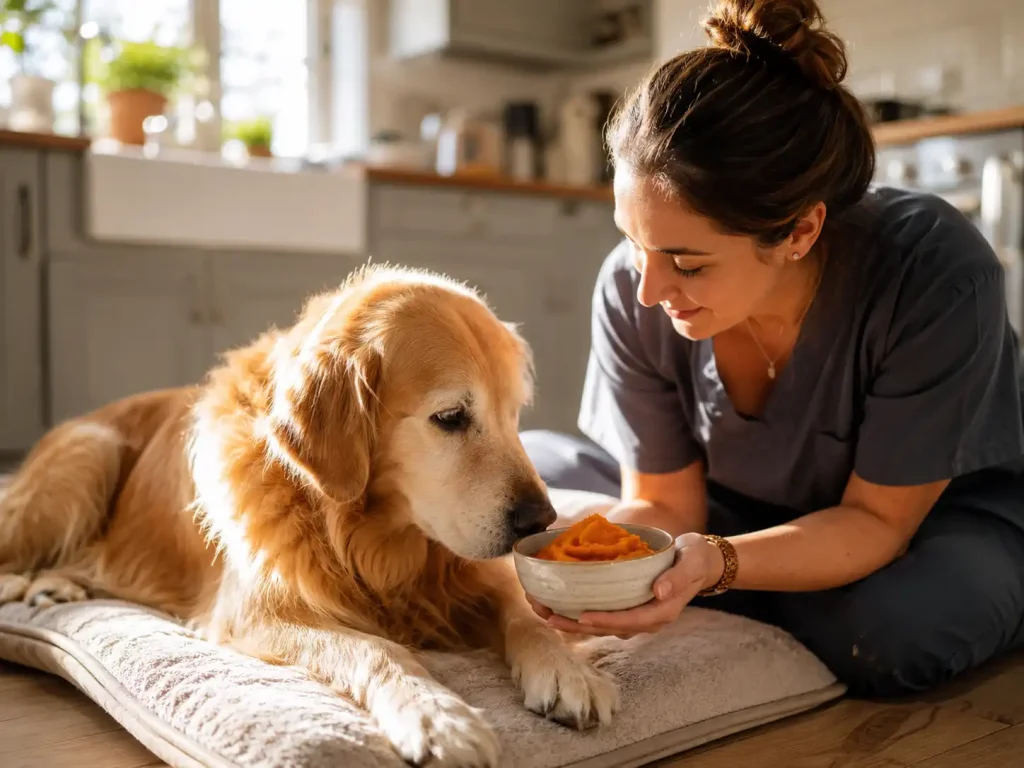
- A little pumpkin. Plain canned pumpkin (not pie filling, and no spices or sweeteners) adds fiber that can help firm up stools, a spoonful for small dogs up to a few tablespoons for large dogs.
- A dog-specific probiotic can help restore healthy gut bacteria.
- Keep them hydrated. Make sure fresh water is always available; diarrhea causes fluid loss.
- Ease back to normal food over a couple of days once stools firm up.
⚠️ Critical Danger: Never Give Human OTC Medication
Do not administer human anti-diarrheal or stomach distress medications (such as Imodium, Pepto-Bismol, or Kaopectate) unless directly prescribed by a veterinarian. Several human OTC products contain active salicylate compounds or pharmacological additions that are highly toxic to canines, potentially triggering gastrointestinal bleeding, renal distress, or severe toxic reactions.
Important, what not to do: don’t give human anti-diarrheal or stomach medicines (like Imodium or Pepto-Bismol) unless your vet specifically tells you to, some are unsafe or even toxic for certain dogs. And if home care doesn’t help within a day or so, or any warning sign appears, stop and call your vet.
Does pumpkin help dog diarrhea?
Yes, in the right form. Plain, 100% canned pumpkin (or plain cooked pumpkin) is a gentle source of soluble fiber that can help firm up loose stools. Avoid pumpkin pie filling, which contains sugar and spices (like nutmeg) that aren’t good for dogs. Start with a small amount mixed into food. Pumpkin is a helpful tool for mild cases, not a fix for diarrhea that’s severe, bloody, or lasting, those need a vet. (For more dog-safe produce, see our safe vegetables for dogs.)
Blood in the diarrhea
A little bright-red streaking can come from straining or a brief bout of colitis, but it shouldn’t be ignored, and black, tarry stool or larger amounts of blood are more concerning. Because bloody stool deserves its own careful look, see our dedicated guide on a dog pooping blood. When in doubt, call your vet.
Diarrhea and vomiting together
When diarrhea and vomiting happen at the same time, the risk of dehydration rises quickly, and the combination is more likely to point to an infection, a toxin, or a blockage. This pairing deserves a prompt vet call, especially in puppies and seniors. See our guide on why dogs throw up for more.
How long is too long?
A single soft or loose stool in a happy dog often resolves on its own. But diarrhea that lasts more than 24 to 48 hours, that keeps coming back, or that’s paired with other symptoms, isn’t something to wait out, especially the “my dog has had diarrhea for 3 days” situation, which warrants a vet visit.
How to help prevent diarrhea
- Change foods gradually, over about a week.
- Avoid table scraps, rich or fatty foods, and letting your dog scavenge.
- Keep up with parasite prevention and vaccines.
- Manage stress around travel, boarding, and big changes.
- Keep trash, toxins, and small objects out of reach.
Puppies and senior dogs
Puppies dehydrate fast and are vulnerable to parvovirus, so puppy diarrhea, especially with vomiting or low energy, is more urgent and shouldn’t be managed at home alone; see our new puppy owner guide. Senior dogs and those with health conditions also need quicker veterinary attention; see our senior dog care guide.
A quick Jacksonville note
Heat, scavenging on walks, and our long parasite season all play a role in tummy troubles here. If you’d like trained eyes on your dog’s appetite, energy, and bathroom habits while you’re at work or away, our in-home pet care in Jacksonville helps catch problems early, and if your dog is also scarfing things they shouldn’t, our guide on why dogs eat poop may help.
Frequently asked questions
What can I give my dog for diarrhea at home? For a bright, otherwise-well adult dog, a short fast (water available), then a bland diet of boiled chicken and plain rice, a little plain canned pumpkin, and a dog probiotic can help. Avoid human anti-diarrheal medicines unless your vet directs. See a vet if it doesn’t improve in a day or so.
Does pumpkin help dog diarrhea? Yes, plain canned pumpkin (not pie filling) adds fiber that can firm up loose stools. Use a small amount mixed into food. It’s for mild cases only, not severe, bloody, or lasting diarrhea.
How do I stop my dog’s diarrhea? Rest the gut briefly, feed a bland diet, add a little pumpkin or a probiotic, and keep them hydrated. If it lasts more than a day or two, returns, or comes with blood, vomiting, or low energy, see your vet.
My dog has had diarrhea for 3 days, should I worry? Yes. Diarrhea lasting more than about 24 to 48 hours, or that keeps returning, should be checked by a vet to find the cause and prevent dehydration.
Why does my dog have diarrhea but is acting fine? Often it’s a mild dietary upset that home care can settle. Still monitor closely, and if it continues, returns, or develops blood or other symptoms, call your vet.
My dog has diarrhea and is vomiting, what should I do? That combination raises the dehydration risk and is more likely to be serious, contact your vet promptly, especially for puppies, seniors, or dogs that also seem unwell.
Why does my puppy have diarrhea? Common causes include diet changes, parasites, and stress, but puppy diarrhea can also signal serious infections like parvo and leads to dehydration quickly, so it’s safest to call your vet rather than wait.